How Do Managed Coffee Services Actually Work?
Setting up a high-volume beverage program often starts with a simple purchase of a machine, but the operational reality is far more complex. I've seen countless business owners in Mount Pleasant and beyond struggle with the "hidden" costs of coffee: the sudden equipment failure during a morning rush, the inconsistent taste of a poorly calibrated grinder, and the endless cycle of ordering consumables. The most efficient way to solve this is through managed coffee services, which shift the burden of equipment ownership, maintenance, and supply chain management to a professional partner. To implement this, you move from a CapEx (Capital Expenditure) model of buying machines to an OpEx (Operational Expenditure) model where you pay a predictable monthly fee for a fully managed ecosystem of specialty coffee.

What Exactly Are Managed Coffee Services?
At its core, a managed coffee service is a comprehensive partnership where a provider handles everything required to deliver a premium coffee experience. This isn't just a delivery service for beans; it is an end-to-end operational solution. It encompasses the hardware, the software (in the case of smart machines), the raw materials, and the human expertise required to keep the system running at peak performance.
📚
Definition
Managed coffee services refer to an all-inclusive membership or contract where a provider supplies professional-grade coffee equipment, regular maintenance, and a steady supply of specialty coffee beans for a fixed recurring fee, eliminating the need for the business to own or maintain the assets.
In my experience working with hospitality groups and corporate offices, the biggest misconception is that this is just "leasing." Leasing only solves the financing problem. A truly managed service solves the performance problem. When you engage in these services, you are paying for a guaranteed standard of quality. This includes the precise calibration of the espresso machine, the sourcing of high-grade Coffea arabica, and the technical support that ensures your downtime is near zero.
The technical depth of these services is often overlooked. For instance, maintaining a consistent extraction rate requires regular water filtration changes to prevent scale buildup, which is a primary cause of machine failure. According to the NSF International standards for food equipment, sanitary design and regular maintenance are fundamental to preventing contamination and ensuring equipment longevity. A managed service ensures that these NSF/ANSI 4 standards are met without the business owner having to track the maintenance calendar themselves.
Why Does Your Business Need a Managed Approach?
The shift toward managed models is driven by the increasing complexity of specialty coffee and the rising cost of specialized labor. Finding a skilled barista who can maintain an espresso machine is difficult; finding one who can also manage inventory and perform technical repairs is nearly impossible for most small to mid-sized businesses.
From a financial perspective, the impact of downtime is staggering. If a hotel's coffee station goes offline during breakfast, the loss isn't just the missed revenue from a few cups of coffee; it is the degradation of the guest experience and a direct hit to their online reviews. Research from the National Coffee Association USA indicates that coffee quality is one of the most frequently cited factors in customer satisfaction within the foodservice industry. When quality dips because a machine hasn't been calibrated in three months, you lose customers.
Furthermore, the volatility of the coffee bean market makes inventory management a nightmare. Prices for Arabica coffee fluctuate based on weather patterns in Brazil and Vietnam. A managed service provider absorbs much of this volatility through larger-scale sourcing and contract hedging, providing the business with price stability.
The mistake I made early on—and that I see constantly in other operators—is underestimating the "labor leak." This is the time spent by a manager trying to fix a clogged steam wand or spending hours on the phone with a technician. When you calculate the hourly rate of a manager spending five hours a month on coffee troubleshooting, the "savings" of owning your own equipment vanish instantly. By moving to a managed model, you recapture that labor and refocus it on customer service and growth.
Step-by-Step: How to Implement Managed Coffee Services
Transitioning to a managed model requires more than just signing a contract; it requires an audit of your current consumption and a strategic layout of your beverage stations. Here is the professional process for implementation.
Step 1: Volume and Flow Analysis
Before selecting a plan, you must analyze your peak hours. Do you have a "morning spike" where 50 people need coffee in 30 minutes, or a steady stream throughout the day? This determines whether you need a super-automatic machine or a semi-automatic setup with a dedicated barista.
Step 2: Equipment Matching and Placement
The equipment must match the environment. A high-traffic lobby requires a machine with rapid recovery times and high-capacity hoppers. At Busy Bean Coffee, we analyze the physical footprint to ensure the machine is placed near water lines and power sources to avoid unsightly extensions and safety hazards.
Step 3: Integration of the Supply Chain
Establish a "just-in-time" delivery schedule for your beans. You want the freshest roast possible without stockpiling bags that will go stale. This is where the "managed" part of the service shines—the provider monitors your usage and automatically triggers shipments.
Step 4: Technical Calibration and Staff Training
Even the best equipment is useless if the user doesn't know how to dial in the grind. This step involves setting the precise grind size and temperature for the specific coffee roasting profile of the beans being used.
Step 5: The Maintenance Loop
Establish a preventative maintenance schedule. This includes weekly deep cleans, monthly filter checks, and quarterly technical audits.
💡
Key Takeaway
The transition to managed coffee services is successful only when you stop viewing coffee as a product and start viewing it as a managed utility, similar to electricity or internet.

Comparing the Models: Manual vs. AI-Driven vs. Managed
Many businesses believe they can simulate a managed service by using a "smart" machine or simply buying a high-end piece of equipment and hiring a part-time technician. However, the operational reality is quite different.
| Feature | Traditional Ownership (Manual) | Cheap/Generic AI Setup | Modern Managed Service (Busy Bean) |
|---|---|---|---|
| Upfront Cost | Very High (CapEx) | Moderate | Zero to Low (OpEx) |
| Maintenance | Reactive (Fix when broken) | Software alerts only | Preventative & Proactive |
| Coffee Quality | Inconsistent (User-dependent) | Standardized but "flat" | Premium Specialty Grade |
| Risk Management | Owner carries all risk | Minimal support | Provider guarantees uptime |
| Scalability | Slow (Requires new buying) | Moderate | Rapid (Adjustable membership) |
Here's the thing though: the "Generic AI" approach—where you buy a machine that tells you when it needs water—is often a trap. It provides the illusion of management without the actual expertise. If the machine alerts you to a pressure drop, the AI can't come to your location and replace the pump. A professional coffee service provides the human element: the technician who knows exactly why the pressure is dropping and fixes it before the machine actually fails.
Common Questions and Misconceptions
Most guides on this topic treat managed services as a luxury for giant corporations. That's simply wrong. In fact, the smaller the business, the more critical a managed model becomes because a small business has zero redundancy. If you have one machine and it breaks, you have zero coffee.
Myth 1: "It's more expensive in the long run than buying the machine."
This is a classic accounting error. People compare the monthly fee to the purchase price of a machine, but they forget to include the cost of:
- Annual technician visits.
- Replacement parts (gaskets, screens, pumps).
- Water filtration replacements.
- The cost of wasted coffee during improper calibration. When you aggregate these, the managed service is almost always more cost-effective.
Myth 2: "I lose control over the quality of the coffee."
Actually, you gain control. When you own the machine, you are at the mercy of whatever beans you can find and however well your staff maintains the equipment. With a managed service, you set the quality standard in the contract. You are paying for a specific roast profile and a specific extraction quality.
Myth 3: "Managed services are only for offices."
Now here's where it gets interesting: managed services are actually more impactful in hotels and restaurants. In these environments, the equipment is pushed to its absolute limit. The wear and tear on a hotel breakfast station is ten times higher than in a corporate breakroom. Professional management is the only way to prevent catastrophic failure during peak occupancy.
Frequently Asked Questions
How does the pricing for managed coffee services actually work?
Most professional providers, including Busy Bean Coffee, use a membership-based model. Instead of paying $10,000 to $20,000 for a high-end espresso machine and then paying for beans separately, you pay a flat monthly fee. This fee typically covers the equipment rental, the professional installation, the monthly supply of specialty coffee, and all preventative maintenance. This transforms a volatile expense into a predictable line item on your P&L, which is essential for accurate budgeting in the hospitality industry.
What happens if the machine breaks down on a busy weekend?
This is the primary reason businesses switch to managed services. In a traditional ownership model, you call a technician and wait 3 to 5 business days for a part to arrive. In a managed service agreement, the provider typically guarantees a specific response time. Because the provider owns the equipment, they have a vested interest in keeping it running. In many cases, if a machine cannot be fixed on-site within a few hours, the provider will swap the entire unit for a loaner to ensure your business doesn't lose a single single-sale of coffee.
Do I need to hire a professional barista to use these services?
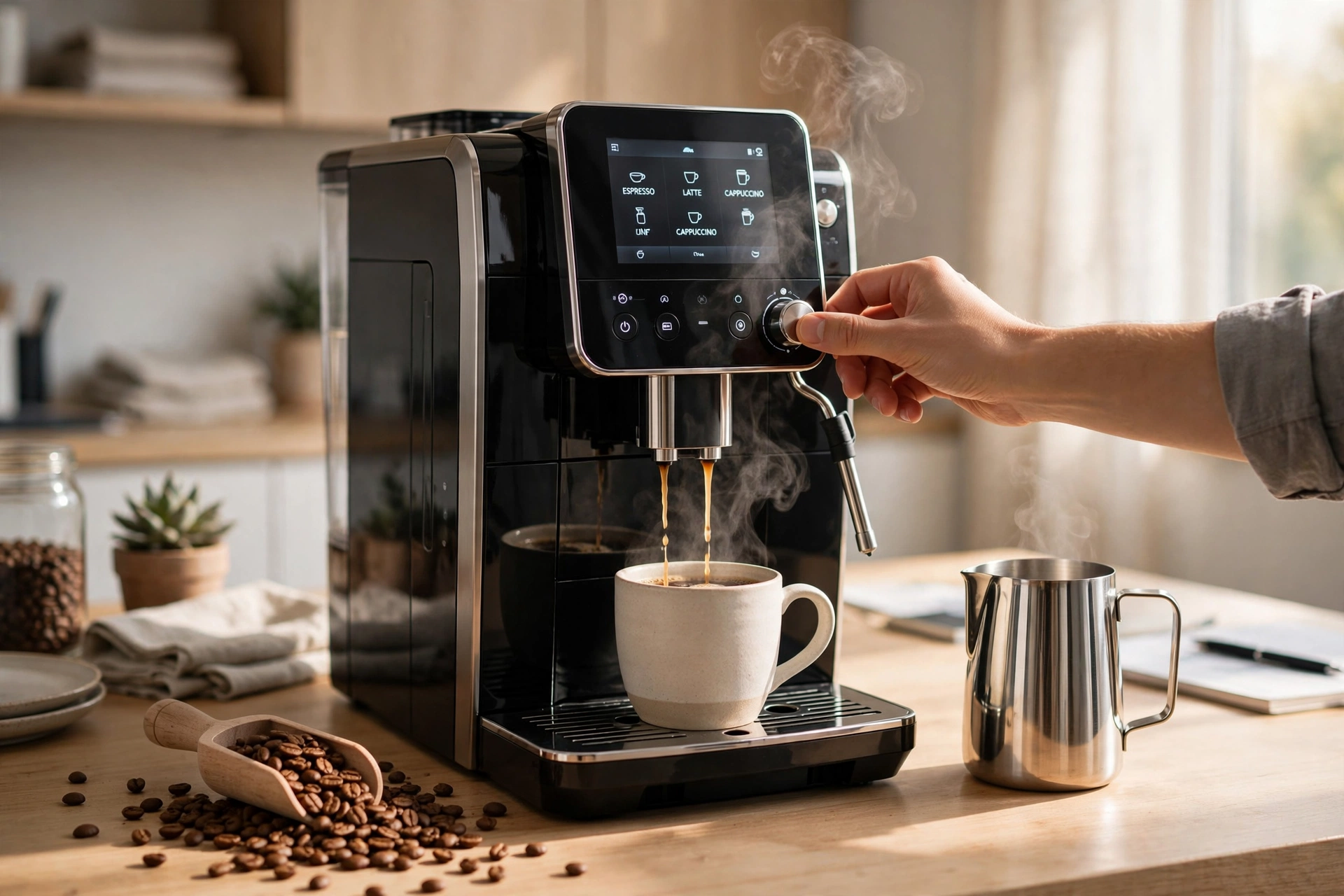
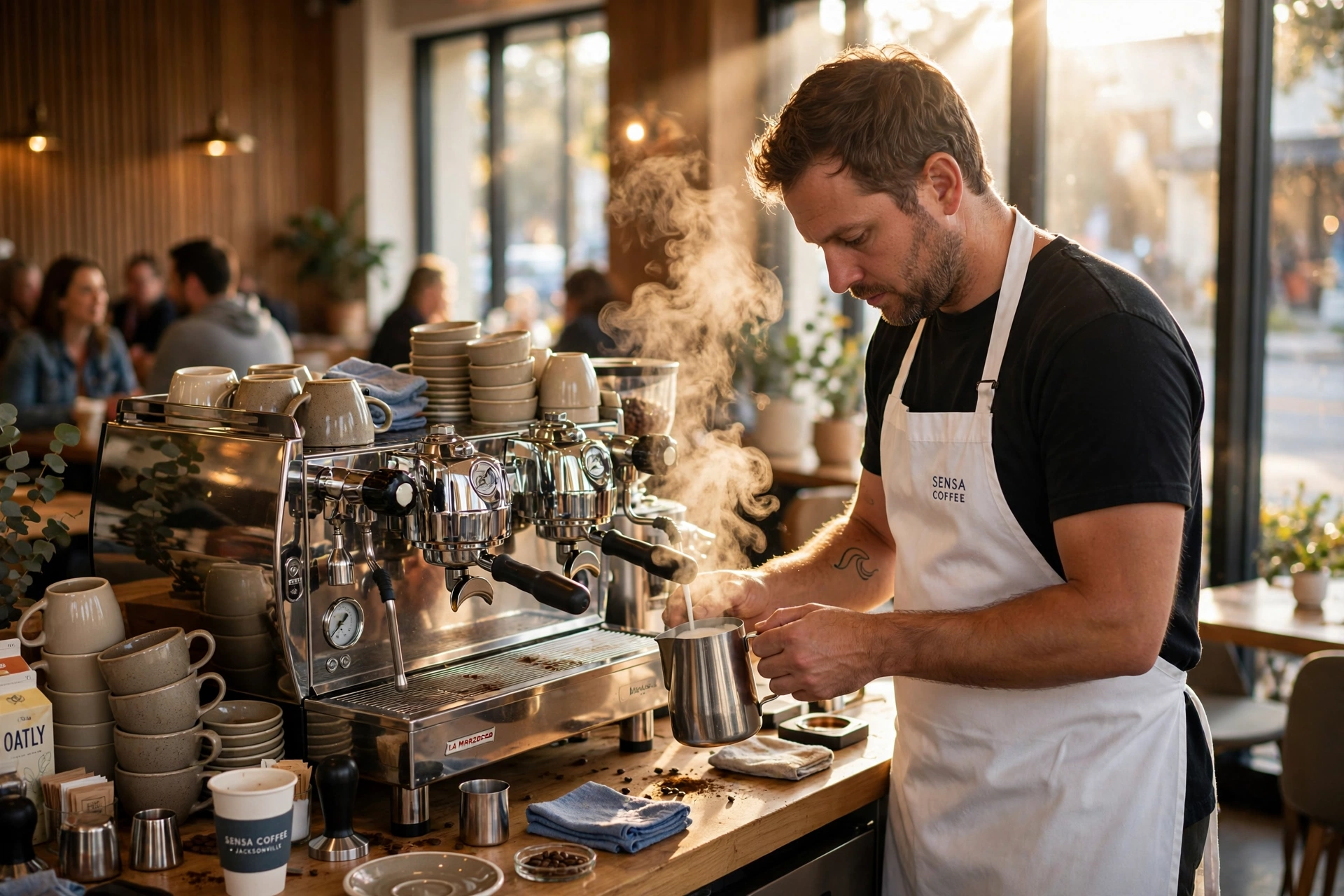
Not necessarily, but it depends on your goals. Managed services often provide "super-automatic" options that deliver café-quality results at the touch of a button, meaning your existing staff can operate them with minimal training. However, if you are running a high-end specialty café, the service provider will usually include barista training as part of the package. They teach your team how to froth milk, pull a perfect shot, and maintain the machine daily. The goal is to elevate the skill of your staff without you having to source a master barista from the open market.
How do you ensure the coffee stays "specialty" grade and not generic?
Quality is maintained through a strict "seed-to-cup" supply chain. Managed services focus on sourcing specialty coffee that meets the rigorous standards of the Specialty Coffee Association (SCA), which evaluates coffee based on flavor, aroma, and acidity. By controlling the coffee roasting process and the delivery schedule, the provider ensures that the beans arriving at your door were roasted within a specific window of time. This prevents the staling that occurs when you buy in bulk from generic wholesalers.
Is a managed service compatible with any brand of equipment?
Typically, a managed service provider will specify the equipment they support. This isn't about restricting your choice, but about ensuring reliability. A provider like Busy Bean Coffee uses premium SENSA equipment because they know the failure rates, the available parts, and the exact calibration settings for those machines. If you use a random mix of brands, the provider cannot guarantee the uptime or the quality of the output. By standardizing the hardware, the provider can ensure a consistent experience across all your locations.
Final Thoughts on Managed Coffee Services
Implementing managed coffee services is about moving from a mindset of "ownership" to a mindset of "outcomes." When you own a machine, your outcome is a piece of hardware that eventually breaks. When you invest in a managed service, your outcome is a consistent, high-quality beverage program that enhances your brand and satisfies your customers without adding to your operational stress.
Whether you are running a boutique hotel in Mount Pleasant, SC, or a high-traffic corporate office, the goal is the same: remove the friction between the bean and the cup. By leveraging the expertise of a partner who handles the technical, logistical, and culinary aspects of coffee, you can focus on what actually matters—growing your business and serving your guests.
Ready to stop worrying about your equipment and start serving better coffee? Visit Busy Bean Coffee to explore our all-inclusive managed membership options and see how we can streamline your beverage program.
Recommended Readings
To deepen your understanding of these topics, we recommend reading the following articles:
- The Complete Guide to White Glove Coffee Service
- Ultimate Guide to All-Inclusive Coffee Service for Businesses
- Ultimate Guide to Automated Coffee Machines for Business
- Ultimate Guide to Specialty Coffee Equipment for Business
Free Coffee Pairing Guide & Specialty Roast Cheat Sheet
Unlock the secrets of perfect brewing ratios, water temperatures, and specialty roast profiles. Download the guide.