How to Optimize Your Beverage Program with Managed Coffee Services
I've seen countless hotel managers and restaurant owners start their morning by fighting with a leaking espresso machine or realizing they're out of high-quality beans right during the breakfast rush. The friction of managing equipment, sourcing beans, and training staff often outweighs the profit from the coffee itself. To fix this, you need to shift from a "buy-and-maintain" model to a strategic partnership. Implementing managed coffee services is the most effective way to ensure consistent quality, eliminate unexpected capital expenditures, and reclaim hours of administrative time every week.
The core process involves auditing your current volume, selecting a scalable equipment tier, and transitioning to a monthly membership that bundles hardware, maintenance, and specialty coffee beans into one predictable line item. Instead of worrying about the technical failure of a boiler or the inconsistency of a roast, you delegate the entire ecosystem to experts who guarantee uptime and taste.
For those operating in high-traffic environments, exploring an automated coffee service in Wilmington NC can provide a blueprint for how automation reduces labor costs while maintaining the standards of a specialty beverage program.
What Exactly Are Managed Coffee Services and How Do They Work?
To understand the value of this model, we first need to define the operational shift occurring. Most businesses operate on a legacy "CapEx" (Capital Expenditure) model where they buy a machine, pay for a warranty, and hope it doesn't break. Managed services flip this on its head.
📚
Definition
Managed coffee services is a comprehensive B2B membership model where a provider supplies high-end brewing equipment, professional installation, preventative maintenance, and a consistent supply of specialty coffee beans for a fixed monthly fee.
In my experience working with hospitality groups, the "hidden" cost of coffee isn't the beans; it's the downtime. When a primary espresso machine goes offline in a hotel lobby, you aren't just losing the $5 from a latte; you're losing the guest's perception of quality. Managed services eliminate this risk by including "white glove" maintenance and rapid replacement guarantees.
This approach is grounded in the concept of "Equipment-as-a-Service" (EaaS). According to research by the Specialty Coffee Association (SCA), maintaining strict temperature and pressure standards is the only way to consistently produce a high-scoring cup of specialty coffee. When a business manages this themselves, they often miss the subtle drift in machine calibration. A managed provider handles the technical calibration, ensuring that the Coffea arabica beans you purchase are extracted to their full potential every single time.
The workflow typically follows a three-stage cycle: Assessment, Integration, and Optimization. First, the provider analyzes your daily cup count and peak hours. Second, they install equipment (such as SENSA technology) and train your team. Third, they monitor consumption and equipment health, adjusting bean delivery and performing preventative service before a breakdown occurs.

Why Does This Model Outperform Traditional Coffee Procurement?
The shift toward managed services is driven by the need for predictability in a volatile economy. For a foodservice operator, the most dangerous expense is the "emergency repair." A single motherboard failure on a commercial machine can cost upwards of $1,000 plus labor, often arriving at the most inconvenient time.
From a financial perspective, moving coffee to an operational expense (OpEx) improves cash flow. Instead of dropping $15,000 on a suite of machines, you preserve that capital for marketing or renovations. Furthermore, the quality of the coffee bean is drastically improved. Many businesses settle for "commercial grade" coffee because they lack the roasting expertise to source true specialty coffee. By partnering with a managed provider, you gain access to curated, high-altitude Arabica coffee that competes with the best third-wave cafes in the city.
Data from the National Coffee Association USA (NCA) indicates that consumer demand for specialty coffee continues to rise, with a significant portion of the market now prioritizing "premium" experiences over convenience. If your hotel or restaurant is still serving burnt, over-roasted commodity coffee, you are actively pushing guests toward the local cafe down the street.
Beyond the guest experience, there is the labor impact. Training a new employee to be a proficient barista is time-consuming and costly. Most "training" in a traditional setting is haphazard. Managed services typically include professional barista training, ensuring your staff knows how to dial in the grind and steam milk to the correct texture. This reduces waste—specifically milk and coffee waste—which can otherwise bleed 5-10% of your beverage margins.
If you are managing a larger corporate footprint, you might find that a white glove coffee service in Los Angeles CA offers the level of precision needed to maintain brand standards across multiple sites.
Practical Application: How to Transition to a Managed Program
Transitioning your beverage program isn't as simple as swapping out a machine. It requires a strategic audit to ensure you aren't overpaying for capacity you don't use, or underserving your guests during peak hours.
Step 1: The Volume Audit
Track your coffee consumption for 14 days. Don't just look at the total number of cups; look at the timing. Do you have a massive spike between 7 AM and 9 AM? This determines whether you need a high-capacity super-automatic machine or a semi-automatic setup with a dedicated barista.
Step 2: Evaluating Equipment Standards
Look for certifications. I always tell my clients to check for NSF certification. The NSF International provides the gold standard for food equipment safety and sanitation. If a provider offers you a "deal" on an uncertified machine, walk away. The risk of a health code violation or a catastrophic electrical failure is too high.
Step 3: Setting Up the Membership
When you move to a provider like Busy Bean Coffee, you stop buying "machines" and start buying "outcomes." You agree on a monthly fee that covers:
- The equipment lease/subscription.
- The monthly volume of specialty coffee beans.
- All scheduled preventative maintenance.
- Emergency repair calls.
Step 4: Staff Calibration
The best equipment in the world is useless if the operator doesn't understand the relationship between grind size and extraction time. Your managed service should provide a "launch" training session and quarterly refreshers.
💡
Key Takeaway
The goal of a managed service is to decouple the quality of the coffee from the technical skill of the staff. By automating the consistency via high-end equipment and expert maintenance, any employee can produce a cafe-quality beverage.
For smaller setups or boutique offices, you don't always need a full-scale industrial line. Researching the best office espresso machines for small teams in 2026 can help you identify the "sweet spot" between a home machine and a massive commercial unit.

Comparing Your Coffee Service Options
Many operators struggle to decide between doing it themselves, using a cheap "pod" system, or investing in a fully managed professional service. The difference usually becomes apparent in the second year of operation, when equipment begins to wear.
| Feature | Traditional Self-Managed | Generic Pod/Capsule System | Professional Managed Service |
|---|---|---|---|
| Upfront Cost | Very High (CapEx) | Low to Moderate | Zero to Low (Membership) |
| Coffee Quality | Variable (Depends on staff) | Low to Medium (Processed) | High (Specialty Grade) |
| Maintenance | Reactive (Wait for break) | Replace Unit | Proactive (Scheduled) |
| Labor Burden | High (Sourcing & Cleaning) | Low (Insert pod) | Very Low (Managed) |
| Waste | High (Incorrect dosing) | High (Plastic waste) | Low (Optimized dosing) |
| Best For | Dedicated Coffee Shops | Low-volume break rooms | Hotels, Cafes, High-end Offices |
The "Generic Pod" approach is often a trap. While it seems easy, the cost per cup is astronomical compared to whole-bean specialty coffee. Furthermore, the environmental impact of thousands of plastic pods is increasingly frowned upon by modern guests. A professional managed service provides the convenience of a pod system but the quality and ethics of a specialty roastery.
If you are operating in a hub like North Carolina, you can streamline your logistics by utilizing a coffee delivery service in Charlotte NC to ensure your bean freshness is always peaked.
Common Questions and Misconceptions
Most guides on coffee services get the "cost" conversation wrong. They focus on the monthly fee rather than the Total Cost of Ownership (TCO). Here is where the industry myths usually clash with reality.
Myth 1: "It's cheaper to just buy the machine ourselves."
This is a classic accounting error. When you buy a machine, you are paying for the hardware, but you aren't accounting for the "hidden" costs: water filtration replacement, group head gaskets, boiler descaling, and the lost revenue during a three-day repair window. In my experience, the TCO of a self-managed machine is often 30% higher over five years than a managed subscription.
Myth 2: "Automated machines can't make 'real' coffee."
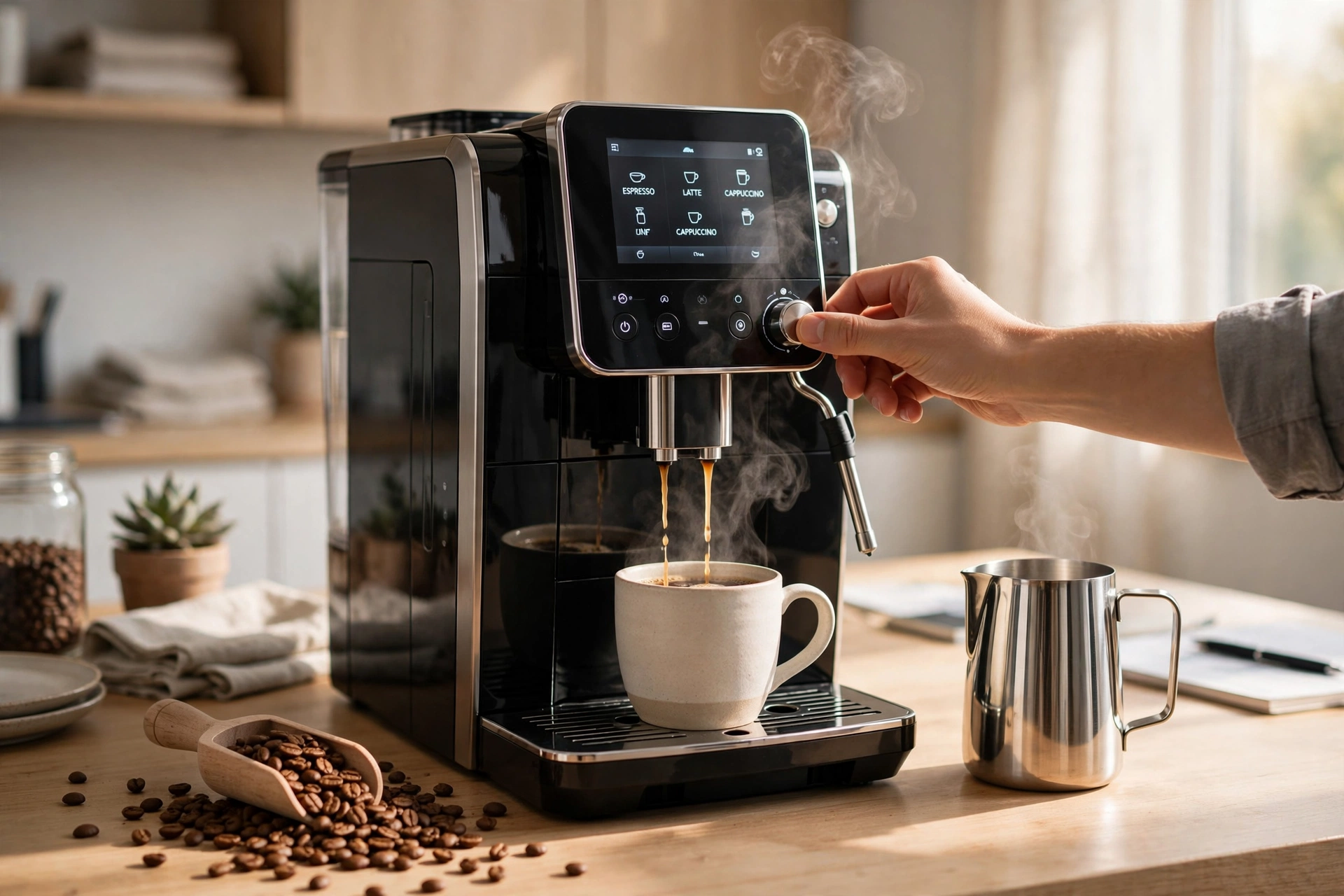
Ten years ago, this was true. Today, the technology in high-end automated espresso machines is staggering. We are talking about precise PID temperature control and volumetric dosing that rivals a manual barista. The difference is that the machine doesn't have a "bad day."
Myth 3: "We don't have enough volume to justify a managed service."
This is actually when you need it most. If you only sell 20 lattes a day, you can't afford to employ a full-time expert barista. A managed service allows you to offer a premium product without the premium payroll.
Myth 4: "Maintenance is just a fancy word for fixing things when they break."
Incorrect. Real managed services perform preventative maintenance. This means replacing seals and cleaning internals before they fail. If your provider only shows up when the machine is leaking, they aren't providing a managed service; they are just a repair company.
Frequently Asked Questions
How do managed coffee services handle equipment failure?
In a professional managed model, the goal is zero downtime. Most high-tier providers offer a guaranteed response time—often within 24 hours. Because the service is a membership, the cost of the technician and the parts is already covered. In many cases, if a machine cannot be fixed on-site, the provider swaps it for a loaner unit immediately. This ensures that your revenue stream from coffee remains uninterrupted, which is a stark contrast to the traditional model where you must wait for a quote, approve the expense, and then wait for the part to arrive.
What is the difference between "specialty coffee" and "commercial coffee" in these services?
Specialty coffee is graded on a 100-point scale by certified Q-graders, requiring a score of 80 or above to qualify. It focuses on the traceability of the bean, typically Coffea arabica, and the precision of the roasting process. Commercial coffee is a commodity, often blended from various sources to maintain a consistent, albeit lower-quality, flavor profile. Managed services that prioritize specialty coffee provide a noticeably cleaner, more complex taste that allows you to charge a premium price per cup, significantly increasing your margins.
Will my staff need extensive training to use these systems?
One of the primary benefits of managed services is the reduction of the "skill gap." While a manual espresso machine requires a barista with years of experience, the professional equipment provided by Busy Bean Coffee is designed for intuitive use. We provide an initial "onboarding" training that covers the basics of operation, cleaning, and simple calibration. Because the technical heavy lifting is handled by the equipment and the managed provider, your staff can focus on hospitality and speed rather than stressing over the technicalities of a perfect extraction.
How does the monthly pricing actually work?
Managed coffee services typically operate on a tiered membership. This fee is usually calculated based on your estimated monthly cup volume and the level of equipment required. For example, a high-volume hotel lobby will have a different tier than a small executive office. This fee covers the equipment "rent," the delivery of a set amount of specialty beans, and all maintenance. If you exceed your bean allotment, you can simply purchase additional coffee at a preferred member rate, making your beverage costs entirely predictable and easy to budget.
Can I change my coffee roast or equipment as my business grows?
Yes, and this is one of the most significant advantages over owning your hardware. If you buy a machine and your business doubles in size, you are stuck with an undersized piece of equipment. In a managed membership, you can scale your plan. If you find that your guests prefer a darker roast or if you need to add a second machine to handle a new morning rush, you can upgrade your equipment and adjust your bean profile without having to sell old gear or take on new debt.
Final Thoughts on Managed Coffee Services
The transition to managed coffee services is more than just a way to get better lattes; it is a strategic move to eliminate operational friction. When you remove the burden of equipment maintenance and bean sourcing, you empower your team to focus on what actually matters: the guest experience.
In the hospitality and foodservice world of 2026, "good enough" coffee is no longer an option. Guests have a sophisticated palate and expect a specialty experience regardless of where they are staying or dining. By implementing a system that guarantees equipment uptime and coffee quality, you protect your brand and your bottom line.
If you're ready to stop fighting with your equipment and start serving world-class coffee, we can help. Whether you need a white glove coffee service in Denver CO or a customized solution for a local cafe, our team at Busy Bean Coffee specializes in end-to-end beverage management.
Visit us at www.busybeancoffee.com to see how we can transform your coffee program from a headache into a profit center.
Free Coffee Pairing Guide & Specialty Roast Cheat Sheet
Unlock the secrets of perfect brewing ratios, water temperatures, and specialty roast profiles. Download the guide.