How Do You Successfully Implement Managed Coffee Services in Your Business?
Most hospitality managers I speak with are exhausted by the "hidden" costs of their beverage programs. They aren't just paying for the beans; they are losing hours of productivity to machine downtime, inconsistent brew quality, and the mental load of inventory management. Implementing managed coffee services allows a business to shift from a capital-expenditure model to an operational-expenditure model, where a single provider handles the equipment, the roasting, the maintenance, and the supply chain for a predictable monthly fee. To do this right, you must first audit your daily cup volume, define your quality standards (specialty vs. commodity), and select a partner who provides a "white glove" installation and maintenance agreement.

What Exactly Are Managed Coffee Services and How Do They Work?
To understand the mechanics of this model, we have to look at the shift from ownership to partnership. In a traditional setup, a business buys a machine, hires a technician for repairs, and orders beans from a wholesaler. When the machine breaks, the business stops making money until a part arrives.
📚
Definition
Managed coffee services is an all-inclusive beverage solution where a provider supplies high-end equipment, professional installation, preventative maintenance, and a consistent supply of specialty coffee for a fixed monthly membership or service fee.
In my experience working with high-volume hotels and restaurants, the "managed" part of the service is where the real value lies. It isn't just about the delivery of the coffee bean; it is about the removal of risk. A truly managed service includes "proactive" rather than "reactive" maintenance. This means the provider tracks the machine's cycle counts and performs descaling or gasket replacements before the machine fails.
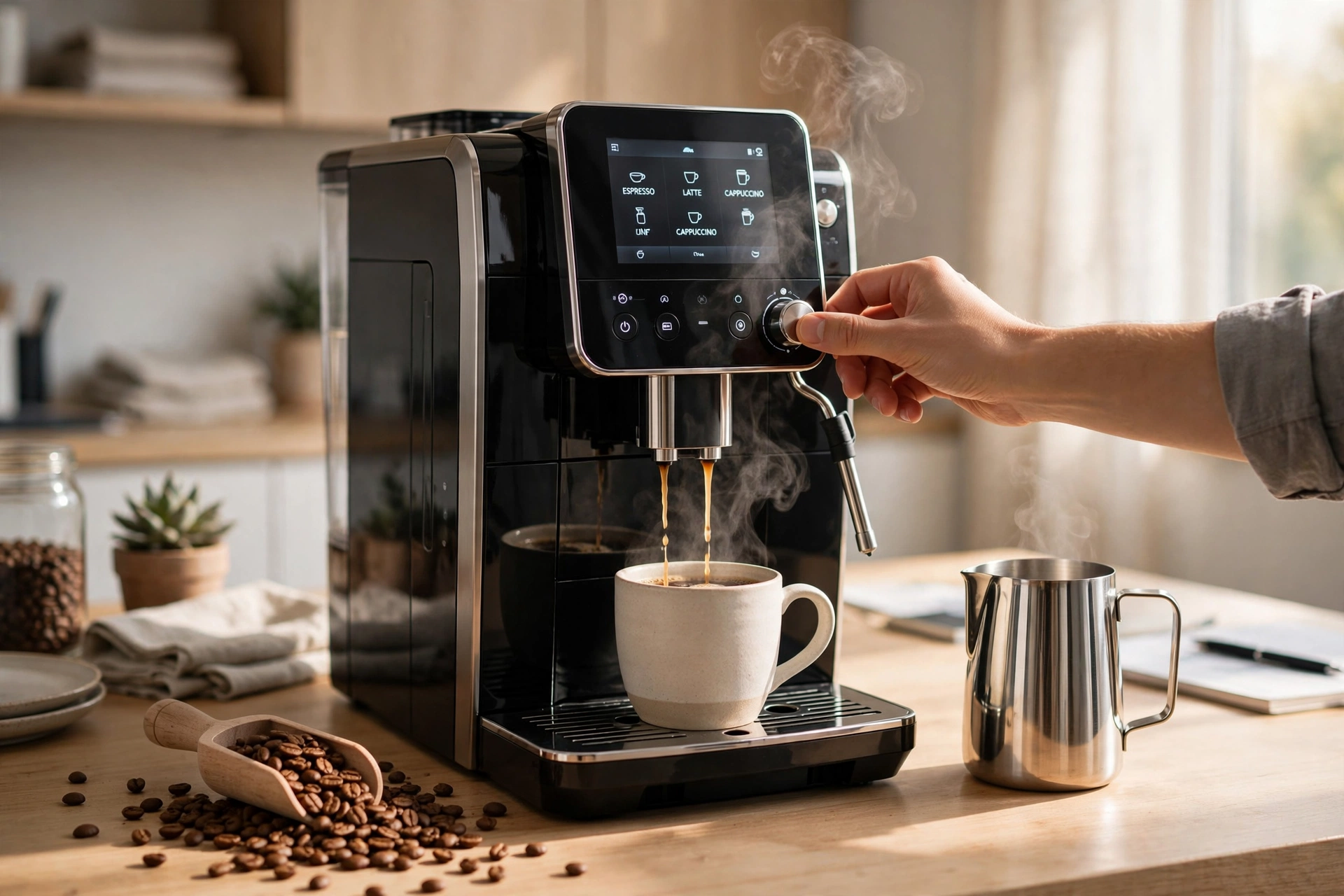
From a technical standpoint, this usually involves the deployment of professional-grade hardware, such as SENSA equipment, which is designed for the rigors of a commercial environment. According to the Specialty Coffee Association (SCA), the precision of water temperature and pressure is the primary driver of cup quality. Managed services ensure these variables are calibrated by a professional barista or technician, rather than leaving it to a staff member who may not have formal training in coffee roasting or extraction.
The workflow typically follows a three-stage cycle: Provisioning (matching the equipment to the floor plan), Optimization (training staff on the specific Coffea arabica profiles being served), and Sustenance (the ongoing delivery of beans and technical support). This eliminates the "equipment graveyard" effect often seen in businesses that buy cheap machines and let them degrade over three years.
Why Does Switching to a Managed Model Matter for Your Bottom Line?
The financial implications of a managed coffee program are often misunderstood. Many owners believe that owning the equipment outright is cheaper because there is no monthly fee. However, this ignores the cost of "operational friction." When a machine goes down during a breakfast rush, the lost revenue isn't just the price of the coffee; it is the diminished customer experience and the potential loss of a repeat guest.
Data from the National Coffee Association USA (NCA) indicates that consumer expectations for coffee quality in hospitality settings have risen sharply, with a significant increase in the demand for specialty coffee over standard drip options. If your equipment cannot deliver a consistent, high-quality extraction, you are essentially leaving money on the table.
The business impact breaks down into three primary categories:
1. Elimination of Capital Expenditure (CapEx)
High-end espresso machines and industrial brewers can cost thousands of dollars upfront. By moving to a managed service, that cost is absorbed into the monthly operating budget. This frees up cash flow for other critical business needs, such as staffing or marketing.
2. Labor Efficiency
The mistake I made early on—and that I see constantly in the industry—is underestimating the time it takes to maintain a machine. Cleaning a commercial group head, backflushing a machine, and managing inventory for different roasts takes hours per week. When these tasks are managed by an expert, your baristas can focus on the guest, not the hardware.
3. Waste Reduction
Poorly calibrated machines lead to "dialing in" waste. If a barista has to pull five shots of espresso before the grind is correct, that is wasted product. Managed services often include precision-engineered equipment and training that reduces this waste by 15-20% across the board.
Furthermore, the International Coffee Organization (ICO) has highlighted the volatility of the global coffee market. A managed service provides a buffer against these price swings, offering predictable pricing that allows for more accurate menu costing and profit margin protection.
How to Implement a Managed Coffee Program: A Step-by-Step Guide
Transitioning to a managed model requires a strategic approach to ensure there is no disruption in service. You cannot simply swap machines overnight without considering the flow of your space and the skill level of your team.
Step 1: Conduct a Volume and Quality Audit
Before talking to a provider, track your actual output. How many cups are served per hour during peak times? What is the ratio of espresso-based drinks to drip coffee? Determine if your clientele expects a high-end specialty coffee experience or a standard "fuel" coffee. This data determines whether you need a single-group or multi-group espresso machine and how many pounds of coffee you'll need delivered weekly.
Step 2: Evaluate Your Infrastructure
Commercial equipment requires specific utilities. You need to check your water filtration capabilities and electrical load. In my experience, the biggest delay in installation is discovering that a business doesn't have the correct voltage or that their water is too hard, which will destroy a machine's heating element in months. A professional service like Busy Bean Coffee will handle this assessment during the initial site survey to prevent these disasters.
Step 3: Define Your Service Level Agreement (SLA)
Not all "managed" services are equal. You need to know exactly what is covered. Does the fee include all replacement parts? What is the guaranteed response time if a machine fails? Does the service include on-site training for new baristas? Ensure the agreement covers "preventative" maintenance, not just "break-fix" repairs.
Step 4: Staff Integration and Training
The best equipment in the world is useless if the person operating it hasn't been trained. A successful implementation includes a phase where your team learns the nuances of the specific coffee bean being used. This involves understanding the "Golden Ratio" of coffee to water and the precise tamping pressure required for a perfect shot.
Step 5: The Feedback Loop
Once the service is live, establish a weekly review of quality and volume. Are you running out of beans too quickly? Is the taste consistent across different shifts? A managed partner should adjust delivery schedules and machine calibrations based on this real-time data.
💡
Key Takeaway
The success of a managed coffee service depends on the transition from "buying a product" to "buying an outcome." Your goal is not to own a machine, but to ensure a perfect cup of coffee is available 100% of the time without any staff effort.

Comparing Your Options: Traditional vs. Cheap AI vs. Managed Services
When deciding how to handle your beverage program, you generally face three paths. Most businesses start with the traditional route, try to "optimize" it with cheap automation or generic software, and eventually move toward a fully managed professional service.
| Feature | Traditional Ownership | Generic/Cheap Automation | Modern Managed Service |
|---|---|---|---|
| Upfront Cost | High (Full Purchase) | Moderate | Zero to Low |
| Maintenance | Reactive (You call when it breaks) | DIY / Basic | Proactive (Scheduled) |
| Quality Control | Variable (Depends on staff) | Inconsistent | High (Professionally Calibrated) |
| Inventory | Manual Ordering | Semi-Automated | Fully Managed |
| Risk Profile | High (Equipment failure = loss) | Moderate (Tech glitches) | Low (Guaranteed Uptime) |
| Best For | Very small, low-volume shops | Businesses with zero coffee budget | Hotels, Restaurants, High-End Cafes |
Now, here's where it gets interesting: many businesses try to "bridge the gap" by buying a mid-tier machine and using a generic app to track inventory. This is a mistake. The "Cheap AI" approach to coffee management provides data but no execution. Knowing that you are low on beans is useless if you still have to spend an hour on the phone with a wholesaler and then spend another hour fixing a leaking steam wand. The Modern Managed approach, like that provided by Busy Bean Coffee, combines the data with the actual labor of maintenance and supply.
Common Questions and Misconceptions About Coffee Management
There are several myths in the hospitality industry regarding how coffee services should be handled. Most guides get this wrong by focusing on the "cost per cup" rather than the "cost of ownership."
Myth 1: "Owning the machine is always cheaper in the long run."
This is a classic accounting error. It ignores the depreciation of the asset and the cost of unplanned downtime. If a $10,000 machine breaks and takes five days to repair, the lost revenue often exceeds the cost of a yearly managed membership.
Myth 2: "I can just hire a part-time technician to handle maintenance."
Technicians are great for repairs, but they aren't baristas. A technician can make the machine "work," but they won't tell you that your grind size is too coarse for the specific roast of Arabica coffee you are using. A managed service provides both technical expertise and sensory quality control.
Myth 3: "Managed services limit my choice of coffee."
Actually, the opposite is true. Because managed providers specialize in the supply chain, they often have access to higher-grade specialty coffee and exclusive roasts that a general wholesaler wouldn't carry.
Myth 4: "It's too expensive for a mid-sized business."
When you factor in the removal of CapEx and the reduction in labor hours, managed services often result in a net positive for the monthly P&L. It turns a volatile expense into a predictable line item.
Frequently Asked Questions
How do managed coffee services actually improve the customer experience?
The improvement comes from consistency. In a traditional setup, the coffee tastes different depending on who is on shift and how well the machine was cleaned that morning. Managed services implement standardized calibration and professional-grade equipment, ensuring that the 100th cup of the day tastes exactly like the first. When guests experience a consistent, high-quality brew, it increases their perceived value of the overall establishment, leading to higher ratings and more frequent return visits.
What is the typical ROI for a business switching to a managed beverage model?
While ROI varies by volume, the return is measured in three areas: recovered labor, eliminated capital outlay, and increased sales. By removing the 3-5 hours per week staff spends on inventory and basic maintenance, you save on payroll. By eliminating the upfront cost of equipment, you improve your liquidity. Most importantly, by upgrading to specialty coffee through a managed partner, businesses typically see an increase in the average transaction value for beverage sales.
How does the equipment maintenance process work in a managed plan?
A professional managed plan uses a proactive schedule. Instead of waiting for a leak or a burn-out, the provider performs "Preventative Maintenance" (PM) visits. This includes replacing rubber gaskets, cleaning internal boilers, and checking water filtration cartridges. Because these tasks are done on a schedule, the risk of a catastrophic failure during peak hours is drastically reduced. If a failure does occur, the SLA typically guarantees a technician on-site within a specific window of hours.
Can I customize the coffee roasts provided in a managed service?
Yes, and this is a key advantage of working with an expert provider. Rather than being stuck with a generic "house blend," a managed service allows you to curate a profile that fits your brand. For example, a hotel lobby may prefer a smooth, chocolatey medium roast for broad appeal, while a high-end restaurant may want a bright, fruity single-origin Coffea arabica to pair with dessert. The managed provider handles the roasting and sourcing to match these specific requirements.
What happens if my business volume increases significantly?
One of the primary benefits of a managed model is scalability. In a traditional ownership model, if your volume doubles, you have to buy a second machine, find more space, and pay for a second installation. In a managed service, you simply adjust your membership tier. The provider can swap your current equipment for a higher-capacity machine or add additional units without requiring a massive new capital investment from your end.
Final Thoughts on Managed Coffee Services
Moving to managed coffee services is less about the coffee itself and more about operational excellence. When you remove the friction of equipment failure, inventory stress, and inconsistent quality, you allow your team to focus on what actually matters: the guest experience. In the competitive landscape of 2026, "good enough" coffee is no longer a viable strategy for hospitality businesses.
The transition requires a clear audit of your needs and a partnership with a provider who understands both the technical side of the espresso machine and the sensory side of the coffee bean. If you are tired of the unpredictability of your current beverage program, it is time to shift to a model that guarantees quality and uptime.
For those ready to eliminate the hassle of equipment maintenance and upgrade to a premium beverage experience, Busy Bean Coffee offers a complete, all-inclusive managed solution designed specifically for the needs of foodservice businesses.
Visit www.busybeancoffee.com to discover how to streamline your coffee operations.
Recommended Readings
To deepen your understanding of these topics, we recommend reading the following articles:
- The Complete Guide to White Glove Coffee Service
- Ultimate Guide to All-Inclusive Coffee Service for Businesses
- Ultimate Guide to Automated Coffee Machines for Business
- Ultimate Guide to Specialty Coffee Equipment for Business
Free Coffee Pairing Guide & Specialty Roast Cheat Sheet
Unlock the secrets of perfect brewing ratios, water temperatures, and specialty roast profiles. Download the guide.