Which Managed Coffee Service Actually Fits Your Business Model?
I once watched a hotel manager spend six thousand dollars on a high-end espresso machine, only to have it sit idle for three weeks because the staff didn't know how to calibrate the grind. That is the hidden cost of "buying a machine" versus investing in a system. When businesses evaluate managed coffee services, the choice usually boils down to whether they want a simple supplier or a strategic partner who handles the equipment, the beans, and the technical maintenance. For most foodservice operators, the best option is an all-inclusive membership that eliminates capital expenditure and shifts the risk of equipment failure to the provider.

What Exactly Are Managed Coffee Services and How Do They Work?
At its core, a managed coffee service is a comprehensive operational model where a provider takes over the entire coffee lifecycle of a business. Instead of the business owner purchasing an espresso machine, sourcing beans from a roaster, and calling a technician when a gasket leaks, the provider manages all these variables for a predictable monthly fee.
📚
Definition
Managed coffee services are end-to-end beverage solutions that integrate high-performance hardware, recurring specialty coffee bean supply, and proactive technical maintenance into a single service agreement.
In my experience working with dozens of hospitality groups, the biggest misunderstanding is that this is just a "rental agreement." It isn't. A true managed service is about uptime and quality consistency. If a machine goes down during a breakfast rush at a hotel, every minute of downtime is lost revenue. A managed service ensures that the equipment is monitored and maintained—often before a failure even occurs—so the business can focus on guests, not plumbing.
To understand the scale of this industry, the National Coffee Association USA (NCA) consistently highlights that the demand for specialty coffee continues to grow across all demographics, meaning the "standard" pot of burnt coffee is no longer acceptable to the modern consumer. When you move toward a managed model, you are essentially outsourcing the expertise required to maintain that high standard.
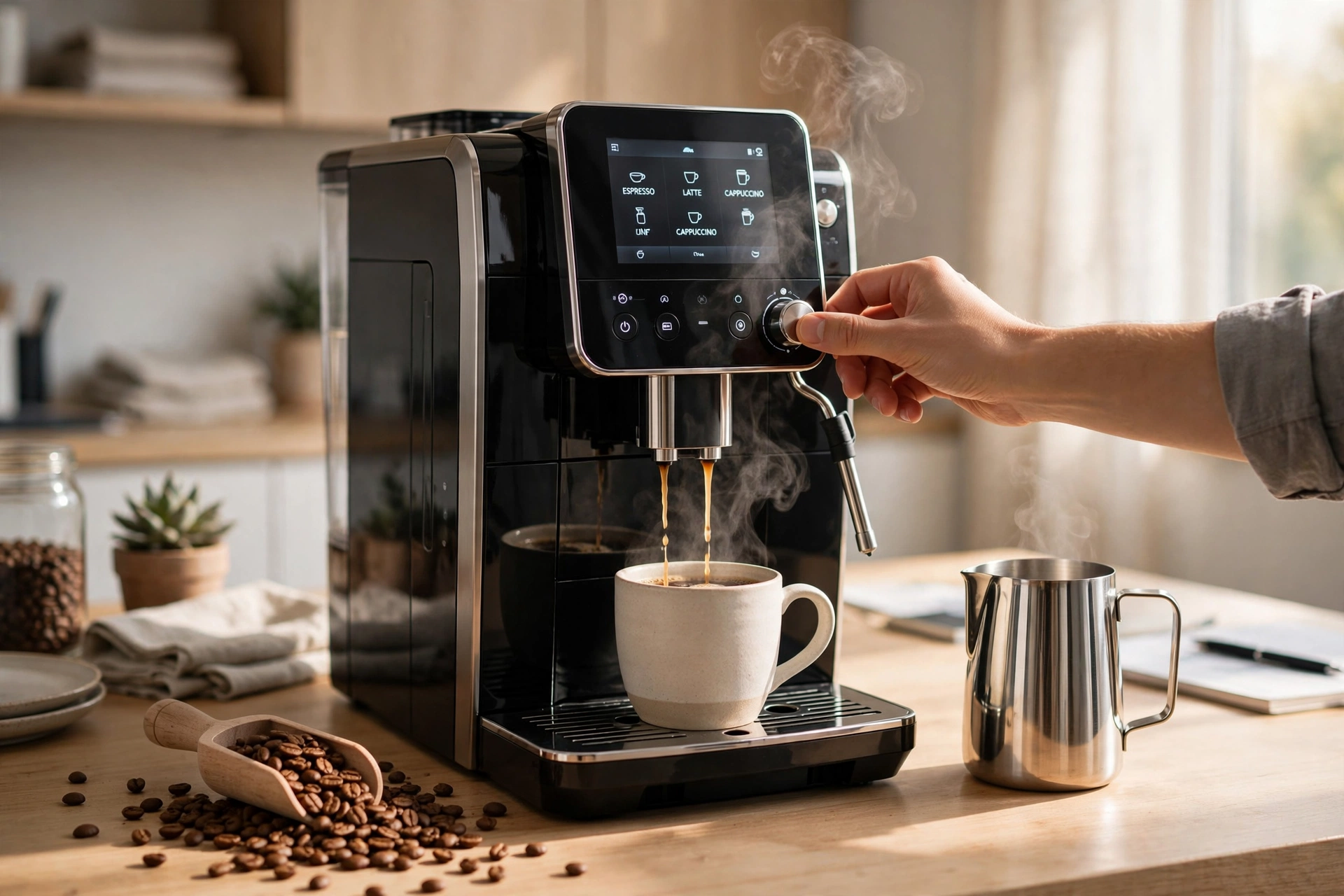
For those operating in smaller environments, choosing the right hardware is the first step toward a successful setup. You might want to explore the Best Office Espresso Machines for Small Teams in 2026 to understand how different capacities impact your daily volume.
Why Does the Choice of Service Model Impact Your Bottom Line?
The financial implications of choosing the wrong coffee model are often invisible until the first major equipment failure. Most businesses start with the "CapEx Model," where they buy the machine upfront. This looks good on the balance sheet initially, but it ignores the "Total Cost of Ownership" (TCO). Between electricity, water filtration replacements, technician call-out fees, and the inevitable degradation of the boiler, the costs spike unpredictably.
According to the Specialty Coffee Association (SCA), maintaining strict brewing parameters—such as water temperature and extraction time—is fundamental to delivering a specialty-grade cup. If your staff isn't trained or your equipment is drifting out of calibration, you are wasting expensive Coffea arabica beans on a product that tastes mediocre. This results in "silent churn," where customers simply stop ordering coffee without telling you why.
The business impact is measurable. A professional coffee service reduces labor costs by removing the need for intensive manual cleaning and troubleshooting. When we analyze the data from our clients, we see that switching to a managed membership typically reduces the "cost per cup" variability by 15-20% because the maintenance and bean costs are locked in.
Furthermore, health and safety compliance is a major risk factor. The NSF International sets rigorous standards for commercial food equipment to prevent contamination. A managed service ensures that your machines meet these health codes through regular professional sanitation, which is a task often skipped by overworked staff in a busy kitchen.
How to Implement a Managed Coffee System Step-by-Step
Implementing a managed service isn't as simple as plugging in a machine; it requires an audit of your actual consumption patterns. I've seen companies overpay for high-volume machines when they only have a few peak hours, or conversely, install a "prosumer" machine that breaks under the pressure of a 400-room hotel.
First, conduct a volume audit. Track how many cups you serve during your busiest hour, not your average day. This determines whether you need an automated super-automatic machine or a semi-automatic setup that requires a trained barista. If you are in a high-traffic area like North Carolina, you might consider a Coffee delivery service in Charlotte NC - Complete Guide | Busy Bean Coffee to ensure your bean freshness matches your volume.
Second, evaluate your water quality. Coffee is 98% water. If you have hard water and no filtration, your equipment will scale up and fail within months, regardless of the brand. A managed service should include professional-grade filtration and a schedule for filter replacement.
Third, define your "Service Level Agreement" (SLA). You need to know exactly how fast a technician will arrive if the machine fails. At Busy Bean Coffee, we prioritize a "no-hassle" approach where the equipment is covered under a membership, meaning the business never pays a surprise $300 repair bill for a broken pump.

💡
Key Takeaway
The most successful managed coffee implementations focus on "Uptime over Ownership." The goal is to have a functioning, calibrated machine every single morning, not to own a piece of hardware that depreciates in value.
If you are operating in a corporate environment, you might find that an Automated Coffee Service in Fort Worth TX - Complete Guide | Busy Bean Coffee offers the best balance of speed and quality for your employees.
Comparing the Three Primary Coffee Service Options
When deciding which path to take, you generally have three directions: the Traditional Purchase, the Cheap Lease, and the Managed Membership. Most people mistake a lease for a managed service, but there is a massive difference in the level of support.
| Feature | Traditional Purchase (CapEx) | Generic Lease / Rental | Managed Membership (Busy Bean) |
|---|---|---|---|
| Upfront Cost | Very High | Moderate | Zero to Low |
| Maintenance | Pay-per-visit (Expensive) | Basic / Reactive | Proactive & Included |
| Bean Quality | Variable (User-sourced) | Generic | Premium Specialty Coffee |
| Technical Support | On-demand (Wait times) | Limited | Dedicated Account Manager |
| Scalability | Difficult (Buy new gear) | Rigid Contracts | Flexible and Adaptive |
| Best For | Hobbyists / Tiny Cafes | Low-budget offices | Hotels, Restaurants, High-end Offices |
The "Generic Lease" is the most dangerous option. These companies often provide the cheapest single-boiler machines and only show up if the machine completely stops working. They don't care about the flavor profile of your coffee bean or whether your milk is steaming at the correct temperature.
A modern managed approach, like what we provide at Busy Bean Coffee, treats the coffee station as a critical utility. It is the same way a business views its internet connection—you don't want to know how the router works; you just want it to stay connected and fast.
Depending on your location, the logistics of these services vary. For instance, those needing high-touch support in California should look into a White Glove Coffee Service in Los Angeles CA - Complete Guide | Busy Bean Coffee to see how "white glove" differs from a standard delivery service.
Common Questions and Misconceptions About Managed Services
There are several myths that persist in the hospitality industry regarding coffee. Most guides get this wrong by suggesting that "owning" the equipment gives you more control. In reality, ownership gives you more responsibility for failure.
Myth 1: "It's cheaper to just buy the machine and the beans separately."
This is a mathematical error. When you factor in the cost of labor to clean the machine, the cost of professional descaling, and the inevitable downtime when a part breaks, the "cheaper" route often costs 30% more annually. Managed services flatten the cost curve into a predictable monthly expense.
Myth 2: "Automated machines can't produce specialty-quality coffee."
Ten years ago, this was true. Today, high-end automated systems can maintain precise pressure and temperature profiles that rival a manual pull. The key is the coffee roasting quality and the calibration of the machine. A managed service ensures the machine is tuned to the specific roast profile of the beans being used.
Myth 3: "I can just use a local repairman for my espresso machine."
Most local general appliance repair people are not trained in the specifics of high-pressure boilers and volumetric dosing. Using an unqualified technician can void your warranty and lead to improper repairs that waste coffee and water. Specialized technicians are a core part of a managed coffee service.
Frequently Asked Questions
Which managed coffee service is best for a hotel breakfast area?
For hotels, the best service is one that offers "all-inclusive" equipment and maintenance. Breakfast rushes are high-pressure environments where equipment failure can lead to guest complaints and negative reviews. You need a system that provides high-volume output without requiring a professional barista on-site. A membership-based model that includes both the machine and the premium coffee beans ensures that the quality remains consistent regardless of which staff member is operating the machine.
How do managed coffee services differ from a standard coffee delivery?
A standard delivery service simply drops off bags of coffee and perhaps some filters. They are vendors, not partners. A managed coffee service is an operational partnership. It includes the hardware installation, the ongoing technical support, and the strategic sourcing of specialty coffee. If a delivery service's product is stale, you just buy something else. If a managed service's machine breaks, they are responsible for fixing it immediately to ensure your business doesn't lose revenue.
Is a managed service more expensive than buying a machine?
In the short term, the monthly fee may seem higher than a simple bean purchase. However, when you look at the Total Cost of Ownership, managed services are often more economical. You avoid the massive initial capital expenditure (CapEx) and the unpredictable costs of emergency repairs. By converting a capital expense into an operational expense (OpEx), you improve your cash flow and remove the financial risk associated with equipment obsolescence.
What happens if the coffee quality drops over time?
This is where the "managed" part of the service is critical. Quality drops usually happen due to two things: stale beans or poorly maintained equipment (scale buildup). A professional service prevents this through a scheduled maintenance cadence and a roasting schedule that ensures beans arrive fresh. If you notice a dip in quality, a managed provider will recalibrate the machine's grind and dosage to match the current batch of beans.
Can I customize the type of coffee beans used in a managed service?
Yes, the best managed services allow you to choose between different roast profiles and origins. Whether you prefer a bright, acidic Ethiopian roast or a bold, chocolatey South American bean, a partner like Busy Bean Coffee can tailor the supply to your clientele. This flexibility is essential for businesses that want to offer a "premium" experience to their guests while maintaining the efficiency of a managed system.
Final Thoughts on Managed Coffee Services
Choosing the right managed coffee service is not about finding the cheapest machine; it is about finding the partner who minimizes your risk. Whether you are running a boutique hotel in Mount Pleasant, SC, or a corporate headquarters in a major city, the goal is the same: a perfect cup of coffee, every time, with zero operational stress.
The trade-off is simple. You can spend your time managing boilers, gaskets, and bean inventories, or you can pay a predictable fee and let the experts handle it. For most businesses, the "ownership" of a machine is actually a liability. By shifting to a managed model, you ensure that your beverage program is an asset that drives revenue rather than a chore that consumes your time.
If you are ready to stop worrying about your equipment and start focusing on your guests, explore the solutions at Busy Bean Coffee. For more tailored information based on your region, you can check out our White Glove Coffee Service in Denver CO - Complete Guide or see how we handle high-volume needs in other cities.
Free Coffee Pairing Guide & Specialty Roast Cheat Sheet
Unlock the secrets of perfect brewing ratios, water temperatures, and specialty roast profiles. Download the guide.