📖This article is part of the complete guide to Ultimate Guide to Automated Coffee Machines for Businesses.
Most business owners treat their coffee machine like a toaster: you buy it, you plug it in, and you pray it doesn't break during the morning rush. In my experience working with hotels and high-traffic cafes, that approach is a recipe for disaster. When a machine goes down at 8:00 AM on a Tuesday, you aren't just losing the cost of a latte; you're losing customer trust and employee productivity. The shift toward managed automated coffee services is a response to this volatility, moving the risk from the business owner to the expert provider.
For a comprehensive overview, explore our Ultimate Guide to Automated Coffee Machines for Businesses.
What are Managed Automated Coffee Services?
📚
Definition
Managed automated coffee services are all-inclusive membership models where a provider supplies commercial-grade coffee equipment, installation, proactive maintenance, and a consistent supply of specialty coffee beans for a predictable monthly fee.
Managed automated coffee services function as a "Coffee-as-a-Service" (CaaS) model. Instead of paying a massive upfront capital expenditure (CAPEX) for an espresso machine and then hoping you can find a technician when it leaks, you pay an operating expense (OPEX). This model ensures that your beverage program remains consistent regardless of your internal staffing levels or technical expertise. It is the difference between owning a car and having a full-service chauffeur and maintenance team handle every aspect of your transportation.
When we built our service model at Busy Bean Coffee, we discovered that the biggest pain point for our clients wasn't the cost of the coffee, but the "invisible costs" of downtime. A machine that is out of order for three days can cost a medium-sized hotel thousands in guest dissatisfaction. By bundling the equipment, the technician, and the beans into one managed package, we remove the friction of procurement. You no longer have to manage three different vendors; you have one partner responsible for the entire sensory experience of your coffee service.
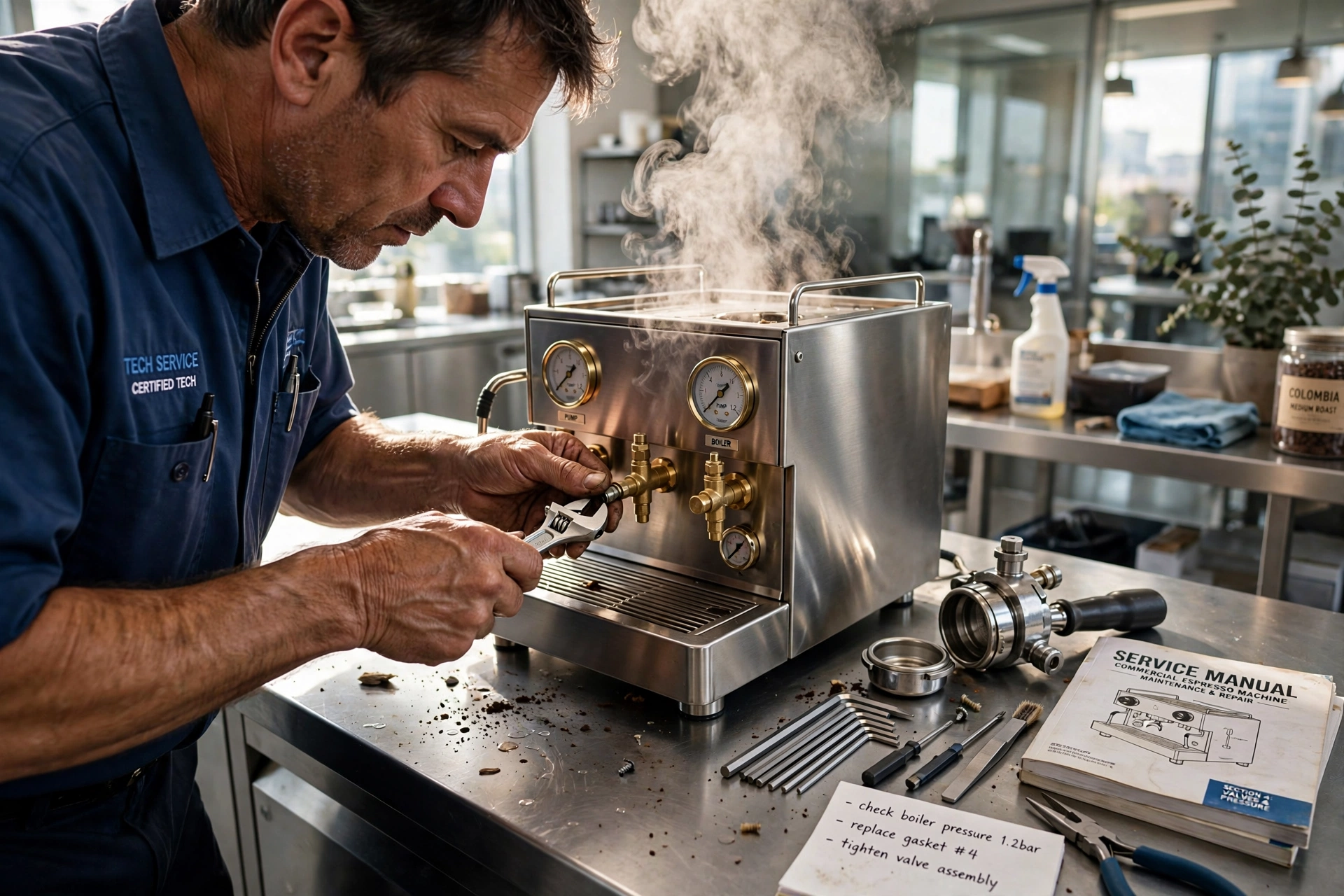
This approach is particularly vital when using high-end bean-to-cup technology. These machines are marvels of engineering, but they require specific cleaning cycles and calibration to maintain the profile of the Coffea arabica beans. If a machine isn't descaled or the grinders aren't tuned, your expensive specialty coffee will taste bitter or sour. Managed services automate this oversight, ensuring that the quality of the output remains identical from the first cup of the day to the last.
Why Does Managed Coffee Matter for Your Business?
Managed services matter because they decouple the quality of your coffee from the skill level of your staff. In a tight labor market, finding a trained barista is difficult and expensive. By implementing managed automated coffee services, you ensure that a non-specialist employee can produce a cafe-quality cappuccino at the touch of a button, while the technical complexity is handled behind the scenes by experts.
From a financial perspective, the predictability is the primary driver. According to the National Coffee Association USA (NCA), coffee consumption patterns in professional environments are shifting toward premiumization, meaning customers expect higher quality than a standard pot of drip coffee. Meeting this demand without hiring a full-time barista requires automation, and maintaining that automation requires professional management.
Consider the impact on guest experience in hospitality. For those operating automated coffee machines for hotels, the coffee is often the first interaction a guest has with the brand in the morning. A broken machine or a burnt-tasting roast creates a negative halo effect over the entire stay. Managed services prevent this by providing proactive monitoring and rapid-response maintenance.
Furthermore, sanitation and compliance are non-negotiable. The FDA maintains strict guidelines regarding food and beverage safety. Commercial machines that aren't cleaned properly can become breeding grounds for mold and bacteria. Managed services include scheduled deep cleans and sanitation checks, ensuring your business remains in compliance with health codes without your manager having to remember a complex cleaning checklist.
💡
Key Takeaway
Managed services shift the burden of technical maintenance and quality control from your staff to a specialist, guaranteeing consistent quality and eliminating unexpected repair costs.
How to Implement Managed Coffee in Your Workflow
Implementing a managed service is significantly simpler than a traditional purchase, but it requires a strategic assessment of your volume and space. The goal is to match the machine's capacity with your peak-hour demand to avoid bottlenecks.
First, conduct a volume audit. Track how many cups are served during your busiest two-hour window. If you are a restaurant, this might be the breakfast rush. If you are an office, it's likely 9:00 AM. Use this data to determine if you need a single high-capacity unit or multiple smaller stations. This is where understanding how to choose an automated coffee machine for business becomes essential, as the wrong machine size leads to long lines and frustrated customers.
Second, evaluate your infrastructure. Managed services typically include professional installation, but you must ensure your location has the correct electrical outlets and, ideally, a direct water line. While some machines use reservoirs, a plumbed-in system is the gold standard for managed services because it eliminates the manual labor of refilling water and allows for automatic filtration systems that protect the machine from scale buildup.
Third, define your roast profile. One of the greatest benefits of a managed service is access to specialty coffee. Instead of buying generic bags from a wholesaler, you can work with your provider to select a roast that complements your brand. Whether it's a bright, citrusy light roast or a bold, chocolatey dark roast, the provider ensures the beans are delivered fresh and the machine is calibrated specifically for that roast's density and oil content.
Finally, establish a communication protocol for support. Your managed service agreement should clearly state the response time for technical issues. In my experience, the most successful partnerships have a "single point of contact" system. Instead of calling a general support line, you have a dedicated account manager who knows your machine's history and your business's specific needs.

Managed Services vs. Traditional Ownership
Many businesses hesitate to move to a managed model because they prefer the idea of "owning" the asset. However, in the world of commercial coffee, ownership often equals liability. An espresso machine is not a static asset; it is a mechanical system that degrades with every shot pulled.
| Feature | Traditional Ownership | Generic/Cheap Rental | Modern Managed Service (Busy Bean) |
|---|---|---|---|
| Upfront Cost | High CAPEX (Thousands $) | Moderate | Low to Zero Entry Cost |
| Maintenance | Reactive (Fix when broken) | Basic/Limited | Proactive & Included |
| Coffee Quality | Variable (User dependent) | Standard/Generic | Specialty Coffee (SCA Standards) |
| Downtime | Long (Wait for technician) | Moderate | Minimal (Rapid Response/Swap) |
| Budgeting | Unpredictable Repair Bills | Fixed but Low Quality | Predictable Monthly Fee |
When you own the machine, you are the one who must track the bean to cup commercial coffee machines specifications, manage the cleaning chemicals, and source the beans. If a pump fails, you are paying for the part and the labor at an emergency rate. With a managed service, those costs are smoothed out over the year, creating a predictable line item in your budget.
Moreover, technology in the coffee industry moves fast. A machine bought today may be obsolete in three years. Managed services often include upgrade paths, allowing you to swap to newer, more efficient models without having to sell off old equipment at a loss. This agility is a competitive advantage for businesses that want to maintain a premium image.
Common Mistakes to Avoid with Managed Coffee
One of the most frequent mistakes I see is choosing a provider based solely on the monthly price. A "cheap" managed service often hides the true cost in the coffee bean pricing. Some providers offer a low monthly fee for the machine but charge an exorbitant premium for the beans. This is a predatory model. Always calculate the total cost per cup to understand the true ROI. A premium service like Busy Bean Coffee provides transparent pricing because we know the value of a high-quality roast.
Another common error is neglecting the water quality. Even the best managed service cannot overcome terrible city water. If your water is too hard, it will cause scale buildup that can choke a machine in months, regardless of how often a technician visits. Ensure your managed service includes a professional filtration system. According to NSF International, water quality is the single most important factor in the longevity and hygiene of commercial food equipment.
I also see businesses fail to train their staff on the basics of the automated system. While these machines are "automated," they aren't magic. Staff still need to know how to empty the dregs drawer and refill the bean hopper. When employees ignore the basic daily alerts, it can lead to avoidable breakdowns. A good managed service provider doesn't just drop off a machine; they provide ongoing training for your team to ensure the equipment is treated with respect.
Finally, avoid "locked-in" contracts that don't allow for roast changes. Your business evolves, and your customers' tastes change. If you are stuck with one type of bean for three years, you lose the ability to innovate. Ensure your agreement allows you to rotate through different specialty coffee offerings to keep the experience fresh for your clients.
Deep Dive: The ROI of Managed Coffee
To truly understand the value of managed automated coffee services, you have to look at the "Total Cost of Ownership" (TCO). Let's break down a hypothetical scenario for a mid-sized restaurant using automated coffee machines for restaurants.
In a traditional ownership model, the business spends $8,000 on a high-end machine. Over the first year, they spend $1,200 on filters, cleaning tablets, and a one-time technician visit for a leak. They spend $3,000 on beans. Total first-year cost: $12,200. However, if the machine breaks in month 14, they face another $500 repair bill and potential lost revenue from downtime.
In a managed model, the upfront cost is $0. The monthly fee is $400, which includes the equipment, maintenance, and a set amount of premium beans. Total first-year cost: $4,800. The difference is a $7,400 cash-flow advantage in year one, with the added benefit of zero risk. The business doesn't worry about the machine's lifespan because the provider is incentivized to keep it running perfectly.
Beyond the balance sheet, there is the productivity ROI. If a manager spends 2 hours a week troubleshooting the machine or ordering supplies, that's 104 hours a year spent on a non-core activity. At a manager's hourly rate, this is a hidden cost of thousands of dollars. Managed services reclaim that time, allowing your leadership to focus on growth and guest satisfaction rather than plumbing and bean inventories.
💡
Key Takeaway
The ROI of managed services isn't just in the lower upfront cost, but in the elimination of hidden labor costs and the prevention of revenue loss during equipment failure.
Frequently Asked Questions
Is a managed service more expensive than buying a machine?
In the short term, it is significantly cheaper because it eliminates the large initial capital expenditure. Over several years, the total spend may be similar to ownership, but the managed model includes all maintenance, parts, and often the coffee beans themselves. When you factor in the cost of professional repairs and the loss of revenue during downtime, managed services are almost always more cost-effective for businesses that prioritize consistency and reliability over asset ownership.
What happens if the machine breaks down during a rush?
This is exactly why managed services exist. Most professional agreements include a Service Level Agreement (SLA) that guarantees a response time—often within 24 hours. In many cases, the provider can diagnose the issue remotely via IoT connectivity. If the machine cannot be fixed quickly, a managed provider will often swap the unit entirely for a loaner, ensuring your coffee service is never interrupted. This eliminates the stress of waiting weeks for a part to arrive from overseas.
Can I use my own coffee beans with a managed service?
This depends on the provider, but most managed services bundle the beans to ensure quality and machine longevity. Using low-quality or oily beans in a high-end automated machine can clog the grinders and void the warranty. By providing specialty coffee that meets Specialty Coffee Association (SCA) standards, managed providers guarantee that the roast is perfectly calibrated for the machine's settings, which protects the equipment and ensures a superior taste for the customer.
How long are the typical contracts for managed coffee services?
Contracts typically range from 12 to 36 months. Shorter contracts offer more flexibility but may have higher monthly fees. Longer contracts usually provide the best value and may include free equipment upgrades. It is important to review the terms regarding "exit clauses" or the ability to scale the number of machines up or down as your business grows. A flexible partner will work with you to adjust your plan based on your actual consumption patterns.
Does a managed service include staff training?
Yes, a professional managed service should always include initial and ongoing training. Automation simplifies the process, but your staff still needs to know how to perform daily maintenance, such as emptying waste bins and loading beans. We provide comprehensive onboarding to ensure your team feels confident. Without proper training, even the best machine can be misused, leading to poor quality coffee or unnecessary service calls.
Conclusion
Moving to managed automated coffee services is about more than just getting a machine; it is about securing a consistent, high-quality experience for your customers and a stress-free operation for your team. By eliminating the volatility of equipment failure and the complexity of sourcing specialty coffee, you can treat your beverage program as a reliable revenue stream rather than a maintenance headache. Whether you are running a boutique hotel or a high-volume restaurant, the predictability of a managed model allows you to scale without the risk of capital loss.
If you are ready to stop worrying about your equipment and start focusing on your guests, it's time to explore a professional partnership. For a comprehensive overview of all your options, revisit our Ultimate Guide to Automated Coffee Machines for Businesses to see how the right technology can transform your business.
To experience the Busy Bean difference in your own space, visit us at www.busybeancoffee.com.
Free Coffee Pairing Guide & Specialty Roast Cheat Sheet
Unlock the secrets of perfect brewing ratios, water temperatures, and specialty roast profiles. Download the guide.