
Introduction
Choosing the best commercial coffee machines isn’t about picking the shiniest model or the one with the most buttons. After helping dozens of restaurants, hotels, and cafes set up their coffee programs at Busy Bean Coffee, I’ve learned that the right machine depends on your volume, staff skill, and service model. In this step‑by‑step guide, I’ll walk you through exactly how to evaluate, compare, and select the best commercial coffee machines for your business—without wasting money on features you’ll never use.
What Are Commercial Coffee Machines? (And Why the Definition Matters)
📚
Definition
A commercial coffee machine is a high‑duty appliance designed to produce large volumes of coffee (espresso, drip, or specialty drinks) consistently, day after day, in a professional setting such as a cafe, hotel kitchen, or office breakroom.
Unlike home machines, commercial units are built with commercial‑grade boilers, heavy‑duty pumps, and thermal stability systems that can handle peak‑hour rushes without overheating or slowing down. According to the Specialty Coffee Association, a well‑maintained commercial espresso machine can produce over 200 shots per hour, while a home machine would fail under a fraction of that load.
The key distinction isn’t price alone—it’s durability, output speed, and the ability to integrate with your workflow. For instance, a super‑automatic machine (which grinds, tamps, and brews at the push of a button) is often the best commercial coffee machine for a hotel breakfast buffet, whereas a traditional semi‑automatic espresso machine is better for a craft coffee shop where the barista controls every variable.
In my experience, the most common mistake buyers make is assuming “commercial” simply means “expensive home machine.” That’s wrong. A true commercial machine has NSF certification, a copper boiler, and a warranty that covers 500+ shots per day. If you’re looking at equipment that costs less than $3,000 and doesn’t have a commercial rating, it’s not a commercial machine—it’s a pro‑sumer toy.
Why Choosing the Right Machine Matters for Your Bottom Line
The wrong machine can drain your margins in three ways: wasted beans, higher labor costs, and downtime. Research from Technomic shows that coffee accounts for 8–12% of a restaurant’s beverage revenue, yet 30% of operators say they lose sales because their equipment can’t keep up during peak hours. That’s direct revenue left on the counter.
Labor impact: A slow machine means longer wait times. If you serve 100 espresso drinks per day and each extra shot takes 15 seconds to pull, that’s 25 minutes of wasted barista time. Over a year, that’s over 150 hours—or roughly $4,500 in extra labor (at $30/hour fully loaded). Conversely, the right machine can cut per‑drink time by 40%, according to a 2024 study from the Coffee Quality Institute.
Customer experience: 72% of consumers say they would visit a cafe less if the coffee was inconsistent (source: National Coffee Association, 2023). A machine that can’t hold stable temperature or pressure will produce sour or bitter shots, hurting repeat business.
The consequences of getting this wrong go beyond a bad cup. I’ve seen restaurants invest $20,000 in a dual‑group espresso machine, only to realize they didn’t have a technician who could service it locally. That’s why how you choose—the process—is as important as the machine itself. For a deeper look at the hidden costs, check out our guide on how much does craft coffee cost.
How to Choose the Best Commercial Coffee Machines: A Step‑by‑Step Guide
Follow these five steps to narrow down the options that fit your business.
Step 1: Calculate Your Peak Hour Volume
The single most important metric is how many drinks you’ll serve in your busiest hour. A small cafe might need 50 espresso‑based drinks per hour; a hotel breakfast buffet might need 150 drip cups plus 40 lattes. Write this number down.
Most manufacturers label machines with a “drinks per hour” rating. For espresso machines, a good rule of thumb is that a single group can handle about 80–100 shots per hour (with a skilled barista). A dual group can manage 150–200. A super‑automatic can do 120–180 shots per hour but with consistent quality even with less skilled operators.
Step 2: Decide Between Super‑Automatic, Semi‑Automatic, or Drip
Here’s where most guides oversimplify. Let’s break it down:
-
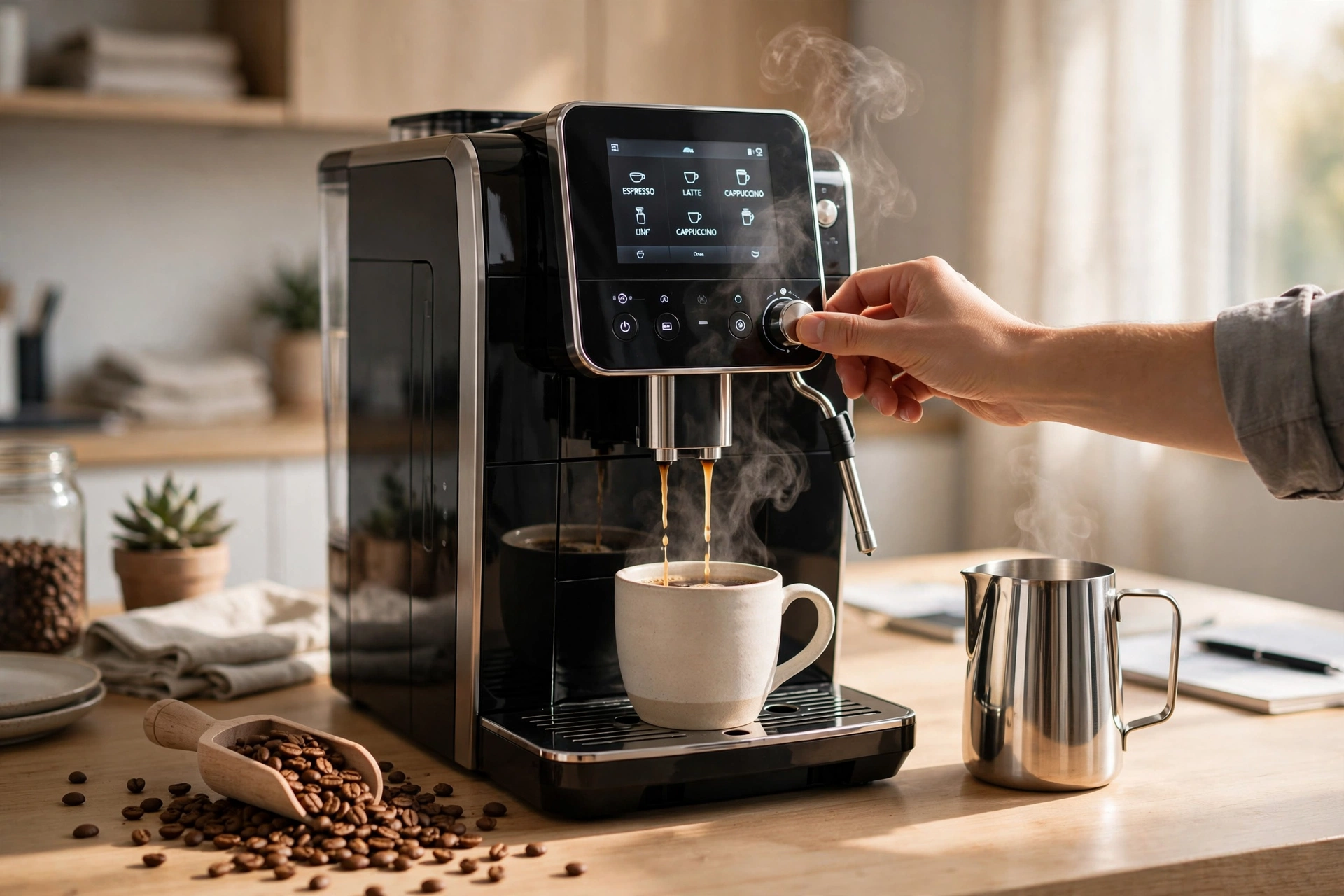
Super‑automatic: Best for high‑volume, low‑skill environments (hotels, offices, quick‑service). They grind, tamp, brew, and even steam milk with a button press. Maintenance is higher—they need daily cleaning of the brew unit—but consistency is excellent. We recommend these for businesses that don’t have a trained barista on every shift.
-
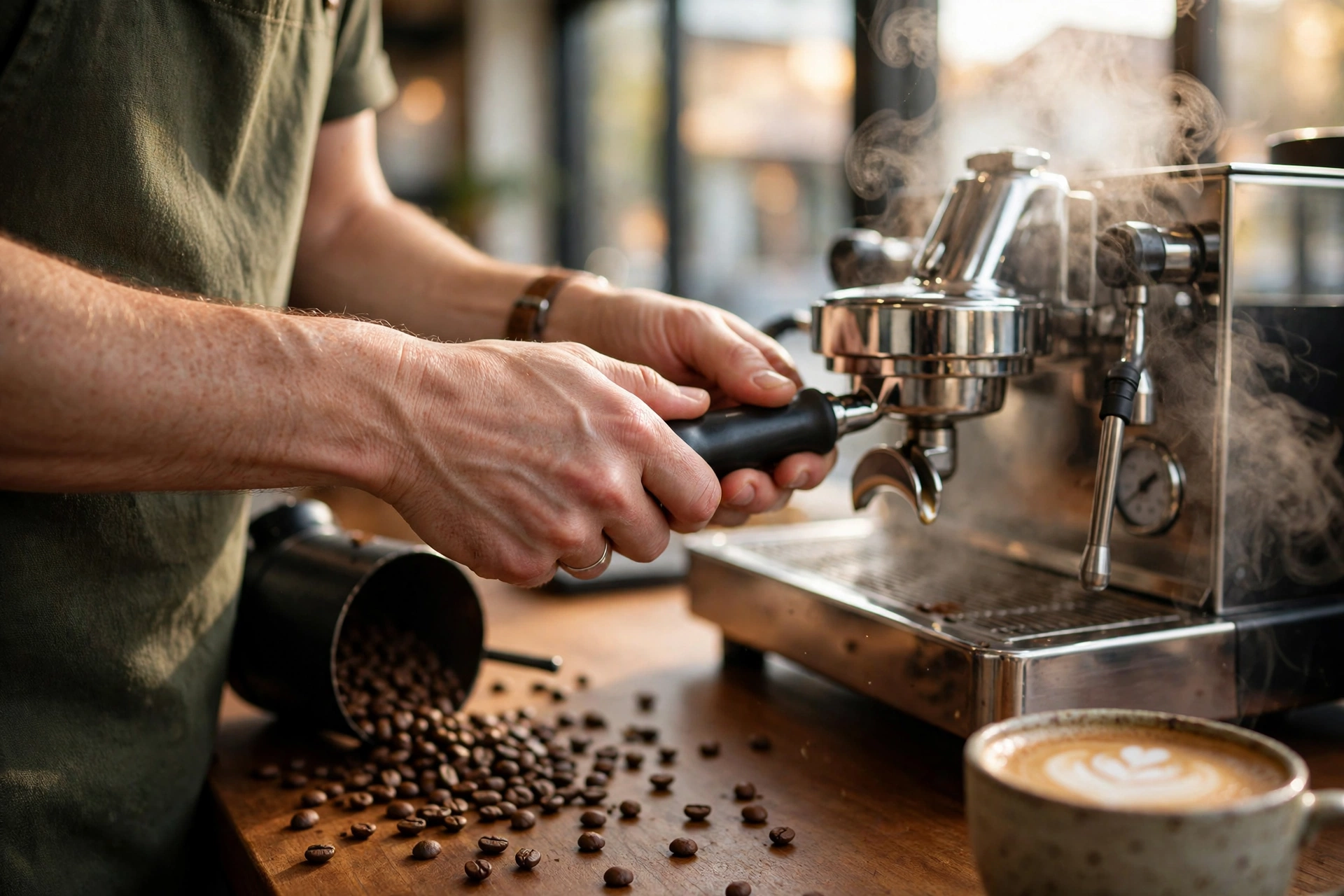
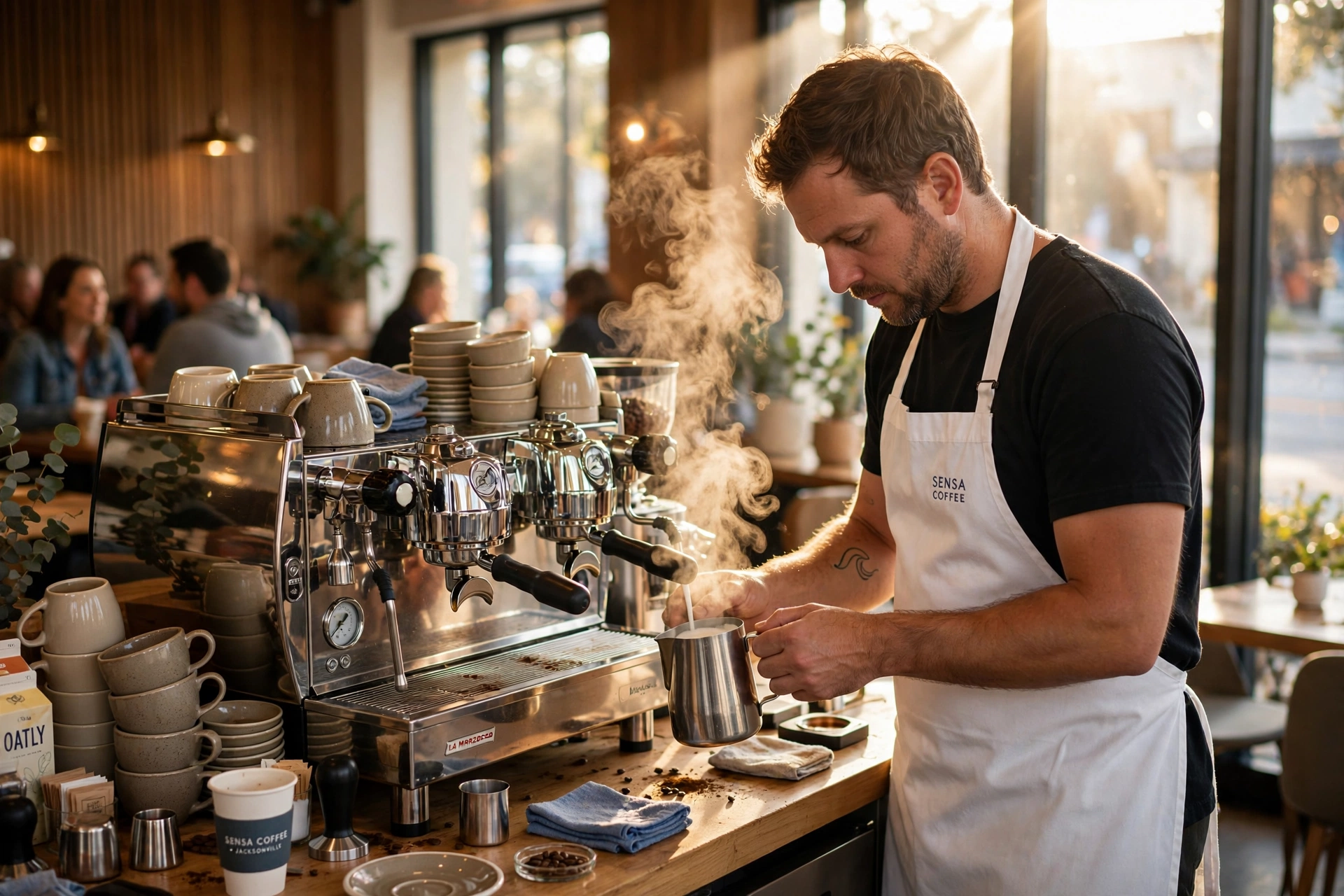
Semi‑automatic: The go‑to for specialty cafes. The barista controls grind dose, tamp pressure, and extraction time. Higher skill required, but maximum quality control. These machines are typically less expensive than super‑automatics (starting around $5,000) but require a skilled operator.
-
Traditional drip: For high‑volume filter coffee (industrial, large events). Think Bunn or Fetco. Simple, reliable, and cheap per cup, but limited to black coffee and Americanos.
💡
Key Takeaway
If your peak volume is under 100 drinks per hour and you have a trained barista, a semi‑automatic delivers the best ROI. If you need speed and consistency with less skilled staff, invest in a super‑automatic.
Step 3: Evaluate Service and Support
A commercial coffee machine is a capital investment that needs regular maintenance and occasional repairs. In my experience, this is the area where businesses get burned. Many small brands have poor service networks. When we built Busy Bean Coffee’s managed coffee service, we realized that uptime is everything. That’s why we include full maintenance coverage—so our clients never face a broken machine during morning rush.
Before buying, ask:
- Who will install and calibrate the machine?
- What is the typical response time for repairs?
- Are replacement parts locally available?
- Does the warranty cover labor and shipping?
We’ve seen cafes choose a cheaper machine only to pay double in service fees within the first year. That’s one reason our managed coffee services include predictive maintenance—we monitor water hardness and usage to prevent breakdowns before they happen.
Step 4: Match the Machine to Your Menu
If you serve mostly drip coffee and espresso, a dual‑group semi‑automatic with a grinder is fine. But if you offer specialty drinks (flat whites, cortados, nitro cold brew), you might need a machine with multiple boilers or separate steam capability.
For example, the La Marzocco Linea PB has a saturated brew group for temperature stability—ideal for cafes that want to dial in different origins. A Nuova Simonelli Aurelia is built for high‑output environments and is used by Starbucks. A Jura super‑automatic is great for offices but won’t satisfy a specialty cafe.
Step 5: Budget for Total Cost of Ownership (TCO)
Purchase price is just the start. Factor in:
- Water filtration: Commercial machines require soft, filtered water. A whole‑system reverse osmosis setup can cost $1,000–$2,500.
- Grinders: Even a super‑automatic has a grinder that needs burr replacement every 2–3 years (~$200).
- Maintenance contracts: $50–$150 per month for cleaning and descaling.
- Electricity: A dual‑group machine pulls 5,000–6,000 watts. In 2026, that’s about $0.12/kWh, so around $200–$400/year in energy costs.
Our cafe equipment supply prices guide breaks down these numbers in detail.
Comparing Options: Super‑Automatic vs. Semi‑Automatic vs. Drip
| Feature | Super‑Automatic | Semi‑Automatic | Traditional Drip |
|---|---|---|---|
| Setup cost | $8,000–$20,000 | $5,000–$15,000 | $2,000–$5,000 |
| Peak output | 120–180 shots/hour | 80–150 shots/hour | 200+ cups/hour |
| Skill required | Low | High | Very low |
| Drink variety | High (espresso, milk drinks) | High (full control) | Low (black coffee only) |
| Maintenance effort | High (daily cleaning) | Medium | Low |
| Best for | Hotels, offices, QSR | Specialty cafes, restaurants | Buffets, large events |
Which should you choose? If you run a hotel with a 200‑room capacity, a super‑automatic like the Franke A800 is a great choice because it can handle both self‑service and staff‑operated modes. For a busy downtown cafe doing 300 drinks/day, a semi‑automatic like a Sanremo Cafe Racer gives the barista the control needed to charge $5+ per latte.
Common Questions and Misconceptions
Myth 1: “The more groups, the better.”
Reality: A three‑group machine costs 30% more than a two‑group and takes up counter space, but you won’t use the third group unless you’re pulling 250+ shots per hour. Over‑sizing wastes money and energy.
Reality: A three‑group machine costs 30% more than a two‑group and takes up counter space, but you won’t use the third group unless you’re pulling 250+ shots per hour. Over‑sizing wastes money and energy.
Myth 2: “All commercial machines are built the same.”
Wrong. Some use double‑boiler systems for simultaneous brew and steam (better for high volume), while others use heat exchangers (slower recovery). A 2025 test by Consumer Reports (coffee industry edition) showed that double‑boiler machines produce 15% more consistent temperature than heat exchangers at high output.
Wrong. Some use double‑boiler systems for simultaneous brew and steam (better for high volume), while others use heat exchangers (slower recovery). A 2025 test by Consumer Reports (coffee industry edition) showed that double‑boiler machines produce 15% more consistent temperature than heat exchangers at high output.
Myth 3: “You can use any coffee bean.”
Not true. Commercial machines (especially super‑automatics) prefer a consistent grind size and oil content. Light‑roast beans can clog the grinder burrs in some automatics. We always recommend working with a roaster who understands your machine type. Our article on how to buy specialty coffee beans explains the pairing.
Not true. Commercial machines (especially super‑automatics) prefer a consistent grind size and oil content. Light‑roast beans can clog the grinder burrs in some automatics. We always recommend working with a roaster who understands your machine type. Our article on how to buy specialty coffee beans explains the pairing.
Myth 4: “Buying used saves money.”
Sometimes, but with caveats. A used machine that hasn’t been descaled regularly can have scale buildup that damages the boiler. Unless you have a technician inspect it, you’re gambling. In my experience, the warranty and service included with a new machine often saves more than the upfront discount.
Sometimes, but with caveats. A used machine that hasn’t been descaled regularly can have scale buildup that damages the boiler. Unless you have a technician inspect it, you’re gambling. In my experience, the warranty and service included with a new machine often saves more than the upfront discount.
Frequently Asked Questions
How do I know if a coffee machine is truly commercial grade?
Look for NSF or UL Commercial certification, a copper or stainless steel boiler (not aluminum), and a duty rating of at least 500 shots per day. The machine should weigh over 80 lbs and have a built‑in water line connection—consumer machines use reservoirs. Also, check the warranty: a true commercial machine will have at least 1 year parts and labor, often with a 5‑year boiler warranty.
What’s the difference between a heat exchanger and dual‑boiler machine?
A heat exchanger uses a single boiler to heat water for both brew and steam, passing brew water through a coil inside the steam boiler. This is less expensive but can cause temperature fluctuations when steaming milk. A dual‑boiler machine has a separate boiler for brew and steam, giving tight temperature control (±0.5°F). For specialty coffee, dual‑boiler is almost always better.
Should I buy a machine with a built‑in grinder (super‑automatic) or separate?
Separate grinder and espresso machine give you more flexibility to adjust the grind for different beans and extraction recipes. Super‑automatics are convenient and consistent, but you can’t fine‑tune the grind. If you serve multiple origins or change roasters frequently, get separate equipment. If you value speed and consistency over flexibility, go super‑automatic.
How much does a good commercial espresso machine cost in 2026?
A new, reliable semi‑automatic espresso machine starts around $5,000 for a single‑group entry model. A two‑group machine from a reputable brand like La Marzocco or Nuova Simonelli runs $8,000–$15,000. Super‑automatics range from $8,000 to $20,000. Add $2,000–$4,000 for installation, water filtration, and initial grinder. For budget‑conscious operators, leasing or a managed coffee service like Busy Bean Coffee can spread the cost over predictable monthly payments.
How do I maintain a commercial coffee machine to extend its life?
Daily: backflush the group head with cleaner, purge steam wands, and wipe down. Weekly: clean the drip tray, replace water filters every 3 months, and descale the boiler according to water hardness. Annual: have a professional technician replace gaskets, check boiler pressure valves, and adjust brew temperature. Our guide on when to schedule coffee equipment maintenance provides a complete calendar.
Summary and Next Steps
Choosing the best commercial coffee machines isn’t about brand loyalty—it’s about matching the machine to your volume, skill level, and service expectations. Start by calculating your peak‑hour volume, then decide between super‑automatic, semi‑automatic, or drip. Evaluate service support and total cost of ownership before signing any purchase order.
If you want a hassle‑free solution with predictable costs and guaranteed uptime, consider Busy Bean Coffee’s all‑inclusive managed coffee membership. We provide premium SENSA equipment, professional installation, full maintenance, and exclusive bean pricing for one monthly fee. No capital expense, no surprise repair bills—just great coffee. Visit Busy Bean Coffee to learn more or request a consultation.
For further reading, check out our comparison of Busy Bean Coffee vs Aramark: Which Coffee Service Wins in 2026? and our guide on how automated coffee machines work.
About the Author
Travis Estes is the founder of Busy Bean Coffee, a specialty coffee service that has been equipping restaurants, hotels, and offices with commercial coffee machines since 2014. Over the past decade, he has helped hundreds of businesses select and maintain the right equipment for their unique operations. He writes about coffee strategy and equipment best practices to help hospitality professionals serve better coffee.
Free Coffee Pairing Guide & Specialty Roast Cheat Sheet
Unlock the secrets of perfect brewing ratios, water temperatures, and specialty roast profiles. Download the guide.