
Introduction
If you operate a cafe, hotel, or office coffee program, the question isn't just "when will I need a technician?"—it's "How much does espresso machine service actually cost?" For most businesses in 2026, a standard service visit runs between $150 and $350 per hour for labor, with parts adding 20% to 50% on top of that. But that hourly rate tells only part of the story. The total cost depends heavily on whether you're calling for emergency repairs, scheduling routine preventative maintenance, or partnering with an all-inclusive managed service provider. Get it wrong, and you'll blow your coffee budget on avoidable breakdowns. Get it right, and you lock in predictable costs, maximum uptime, and consistently great coffee.
What Is Espresso Machine Service?
📚
Definition
Espresso machine service refers to the professional inspection, cleaning, calibration, and repair of commercial espresso equipment to restore or maintain optimal brewing performance, temperature stability, and steam pressure.
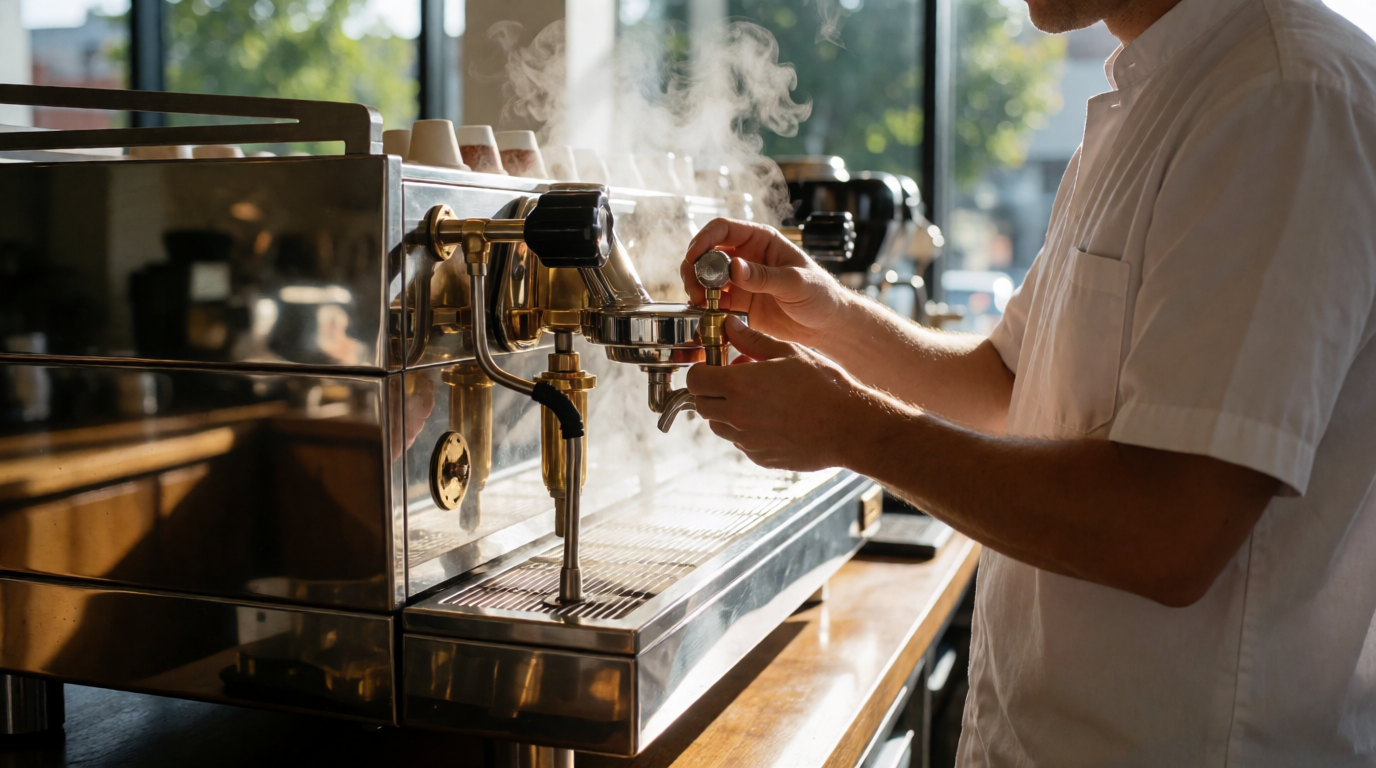
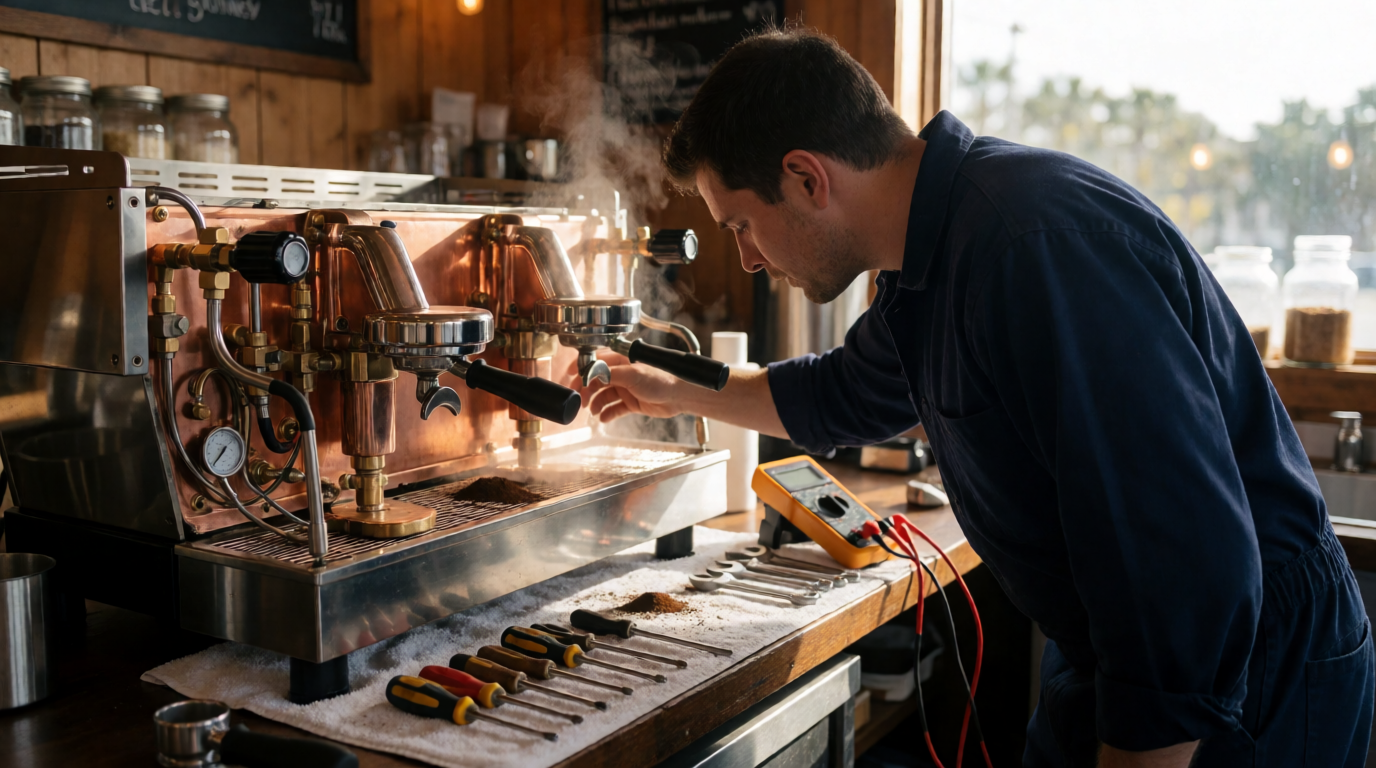
It's easy to confuse "service" with "repair," but they're not the same thing. Repair is what happens after a machine breaks. Service encompasses everything from routine maintenance to emergency fixes. The Specialty Coffee Association recommends a professional deep service every six to twelve months for commercial machines, depending on volume. A full service typically includes group head disassembly and rebuilding, boiler flush and descale, pressure and temperature calibration, steam valve inspection, and a leak check.
The key distinction is between reactive service (calling a tech when the machine is down) and proactive service (scheduling regular visits to prevent downtime). According to a 2024 report from Plant Engineering, reactive maintenance costs companies 3 to 4 times more than planned preventative maintenance over a five-year equipment lifecycle. In the coffee world, I've seen the same ratio hold true consistently.
Why Professional Espresso Machine Service Matters
Here's the reality that many operators overlook: an unserviced espresso machine doesn't just stop working gradually. It stops working suddenly, at the worst possible time.
The National Restaurant Association reports that equipment failure is the second leading cause of revenue loss in foodservice operations, behind only staffing shortages. If your espresso machine goes down for a full morning rush, that's not just a repair bill—that's lost sales of $500 to $2,000 per day depending on your volume.
But the financial impact goes deeper than downtime. Poorly maintained machines produce inconsistent coffee. Extraction temperatures drift, pressure fluctuates, and steam wands lose power. Your customers notice, even if they can't articulate exactly what's wrong. They just stop coming back as often.
💡
Key Takeaway
Investing in regular professional espresso machine service is the single highest-ROI decision you can make for your coffee program. It protects revenue, extends equipment life, and ensures every cup meets your standards.
In my fifteen years at Busy Bean Coffee, I've watched the same mistake repeat itself: operators buy a beautiful $15,000 commercial espresso machine, but they treat service as an afterthought. They wait for the warning signs—a gurgling boiler, a slow steam wand—and by then, they're paying emergency dispatch rates for a technician to undo months of neglect. A proactive approach costs a fraction of that.
The Real Cost of Espresso Machine Service: A Complete Breakdown
This is the section that answers the core "how much" intent. Let's break down the four service models you'll encounter:
1. Emergency / Reactive Call-Out
This is the most expensive option. A technician charges a base dispatch fee ($75–$150) plus an hourly rate that often jumps to $250–$400 per hour for after-hours or weekend work. Parts are marked up 50–100% above wholesale. One emergency call can easily cost $500 to $1,500 and you still risk being down for 24–48 hours while waiting for a slot.
2. Time & Materials (Standard Repair)
A standard weekday service call usually runs $150–$250 per hour with a one-hour minimum. Parts are typically marked up 30–50%. If your machine needs a simple fix like a gasket replacement, expect a bill around $200–$350. For more complex repairs (boiler replacement, control board issues), the cost can reach $800–$2,000.
3. Preventative Maintenance (PM) Contract
This is where pricing gets predictable. A PM contract costs $80–$150 per hour (lower than T&M) and covers two to four scheduled visits per year. The contract includes labor for routine service, discounted parts, and priority scheduling. Annual cost: $500–$2,000 depending on machine complexity and volume.
4. All-Inclusive Managed Service
This is the model we pioneered at Busy Bean Coffee. Instead of hourly billing, you pay one flat monthly fee that covers equipment, installation, preventative service, repairs, and even consumables like coffee beans. Annual costs typically fall between $3,600 and $6,000 for a single machine setup, but because it replaces multiple vendor bills and eliminates emergency charges entirely, it often saves 20–30% compared to traditional T&M contracts.
| Service Model | Hourly Rate | Typical Annual Cost | Best For | Risk |
|---|---|---|---|---|
| Emergency Call-Out | $250–$400/hr | Unpredictable | Occasional use only | High unpredictable expense |
| Time & Materials | $150–$250/hr | $1,500–$4,000 | Low-volume cafes | High equipment age risk |
| Preventative Contract | $100–$150/hr | $500–$2,000 | Mid-volume, single location | Low risk |
| All-Inclusive Managed | Flat monthly fee | $3,600–$6,000 | High-volume, multi-location | Zero risk |
If you're exploring a managed coffee solution, I'd recommend checking out how our managed coffee services work to see how the pricing compares to traditional approaches.
How to Budget for Espresso Machine Service
💡
Key Takeaway
The cheapest service is the one you never need to call. Daily cleaning and scheduled preventative maintenance are the two levers that will reduce your total service costs by 40–60%.
Here's the practical playbook I've refined after working with hundreds of cafes and offices:
Step 1: Calculate Your True Downtime Cost
Before you can evaluate service options, you need a number. Track your average daily coffee revenue. If you sell 100 drinks at $5 each, that's $500 per day. Every hour of downtime costs roughly $62 in lost sales. Multiply that by your average repair turnaround (24–48 hours for emergency calls) and you'll quickly see why paying a premium for fast, reliable service is justified.
Step 2: Choose Your Service Tier Honestly
Don't overbuy, but don't underbuy either. If you're a hotel serving 50 rooms, a twice-yearly preventative contract with a local tech makes sense. If you're a high-volume cafe doing 200+ drinks per day, the all-inclusive managed model is almost always cheaper when you factor in parts, emergency risk, and equipment lifecycle.
Step 3: Invest in Daily Maintenance Training
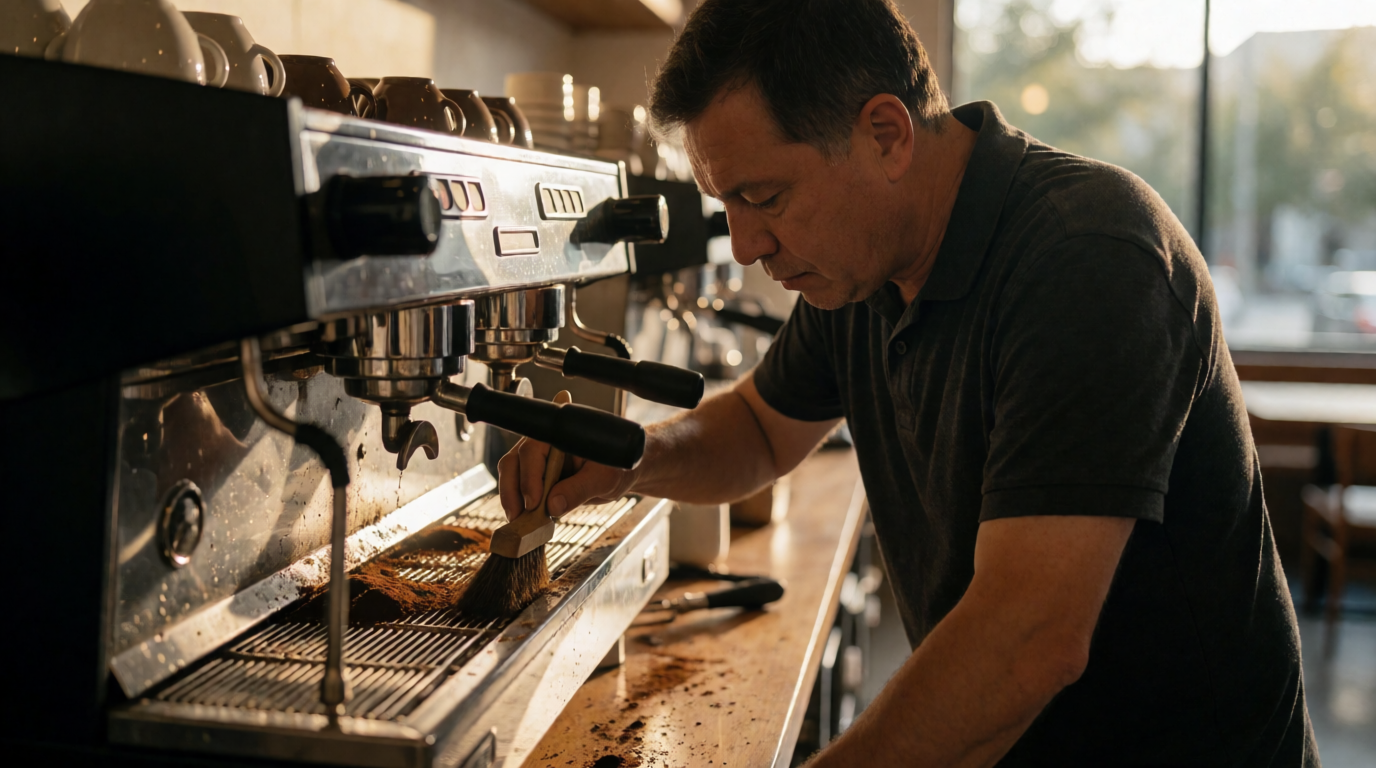
The single biggest driver of service costs is operator error. I've coached dozens of teams on proper backflushing, steam wand purging, and cleaning procedures. Facilities that follow a strict daily cleaning routine reduce their service call frequency by 60–70%. It's the highest-ROI training you can provide your staff.
Deep Dive: One client I worked with—a 10-location coffee chain—was spending $4,800 per year per location on reactive repairs. After switching to a managed service model and investing in a 90-minute training program for their baristas, their annual service costs dropped to $1,200 per location. Total savings across the chain: $36,000 per year.
Common Questions and Misconceptions About Espresso Machine Service
Myth 1: "It's cheaper to buy a new machine than to service an old one"
This is only true for consumer-grade machines. Commercial machines like La Marzocco, Nuova Simonelli, and Rancilio are built to last 10–15 years with proper service. Rebuilding a group head costs $150–$300. Replacing a boiler costs $800–$1,500. Replacing the entire machine costs $10,000–$20,000. The math overwhelmingly favors service.
Myth 2: "All service technicians are the same—just pick the cheapest"
This is dangerously wrong. A poorly trained technician can misdiagnose a problem, damage internal components, or leave your machine out of calibration. I've walked into cafes where an "affordable" tech had wired a pressure stat backward, causing the boiler to overheat and crack. A $200 repair turned into a $2,000 replacement. Use certified technicians, ideally those trained by the manufacturer.
Myth 3: "If the machine is making good coffee, it doesn't need service"
Internal scale buildup and component wear happen silently. A machine can drift 10 degrees in temperature without affecting taste immediately—but over weeks, extraction quality degrades. By the time you notice, you're already losing consistency. Service is proactive, not reactive.
Myth 4: "Warranties cover everything"
Most manufacturer warranties are parts-only for 1–2 years. Labor, travel, and preventative maintenance are your responsibility. Read the fine print carefully.
Frequently Asked Questions
How much does a standard preventative maintenance visit cost for a commercial espresso machine?
A standard preventative maintenance visit typically costs $200 to $500 per machine. This covers a complete disassembly of each group head, deep cleaning of the boiler and heat exchanger, descaling of internal lines, replacement of worn gaskets and seals, steam valve inspection, and calibration of brew temperature and pressure. The price depends on the number of group heads (single, two, or three) and the complexity of the machine. High-end machines with volumetric dosing or integrated grinders take longer to service, pushing the cost toward the higher end. Many technicians offer discounts if you sign a contract for two or more visits per year.
Is an espresso machine service contract worth the money?
Yes, particularly if you pull 50 or more shots per day. An annual contract costing $800–$1,500 typically includes two full services and priority scheduling. Compare that to a single emergency call—$500 to $1,200—and the contract pays for itself after one avoided breakdown. Contracts also guarantee you're on the technician's calendar, which means faster turnaround during busy seasons. The one exception is very low-volume locations (under 20 shots daily), where paying per visit might be more cost-effective.
What factors increase espresso machine service costs the most?
Three factors drive costs higher than anything else. Hard water scaling is the number one culprit. In areas with high mineral content, machines require more frequent descaling, and severe scale buildup can burn out heating elements, requiring boiler replacement. Operator neglect—failing to backflush or purge steam wands—causes clogs that take longer to clear. And emergency after-hours calls double or triple the labor rate. According to the National Coffee Association, proper daily cleaning can extend the time between professional service visits by up to six months.
How does an all-inclusive managed coffee service compare to paying a repair tech by the hour?
An all-inclusive managed service like Busy Bean Coffee bundles equipment, installation, maintenance, repair, and consumables into a single monthly fee. Instead of paying $200/hour for a repair tech and hoping nothing serious breaks, you pay one predictable price. For a single-machine setup, this ranges from $300–$500 per month. When you factor in the cost of a commercial machine ($8,000–$20,000), plus annual service ($800–$2,000), plus emergency repair risk, the managed model often saves 20–30% over a five-year horizon. It also eliminates the operational headache of vetting technicians and scheduling service. You can compare it directly to traditional contracts in our Busy Bean Coffee vs Aramark comparison.
What is the average labor rate for espresso machine repair in 2026?
The average labor rate for qualified commercial espresso machine technicians in 2026 is $150 to $250 per hour during standard business hours. Emergency or after-hours rates typically rise to $300 to $400 per hour. According to data from Indeed and the Bureau of Labor Statistics, specialty equipment repair technicians command higher wages than general appliance repair because of the specific knowledge required—hydraulic systems, PID temperature controllers, and high-pressure boilers all require specialized training. Always ask for an estimate of the total labor cost before authorizing work, and confirm whether travel time is billed at the same rate.
Summary and Next Steps
Understanding the true cost of espresso machine service is the foundation of a profitable coffee program. Whether you choose a local repair tech, a preventative maintenance contract, or an all-inclusive managed solution, the key is to move from reactive to proactive. Emergency repairs will always be the most expensive option—financially and operationally.
At Busy Bean Coffee, we've built our entire model around predictable, transparent pricing. We supply premium SENSA equipment, handle all installation and service, and ensure your machine produces perfect coffee every day—all for one flat monthly fee. No surprise invoices, no hour-long waits for a return call.
If you're ready to eliminate espresso machine service costs from your worry list, visit Busy Bean Coffee and see how managed coffee service works. For a deeper look at how to budget equipment maintenance across multiple locations, read our guide on how much coffee equipment maintenance costs.
Recommended Readings
To deepen your understanding of these topics, we recommend reading the following articles:
About the Author
Travis Estes is the Founder of Busy Bean Coffee, where he has spent over a decade helping hotels, restaurants, and offices transform their coffee programs. He has personally overseen the installation and maintenance of hundreds of commercial espresso systems, and he writes to help business owners make smarter, more profitable decisions about their coffee service.
Free Coffee Pairing Guide & Specialty Roast Cheat Sheet
Unlock the secrets of perfect brewing ratios, water temperatures, and specialty roast profiles. Download the guide.