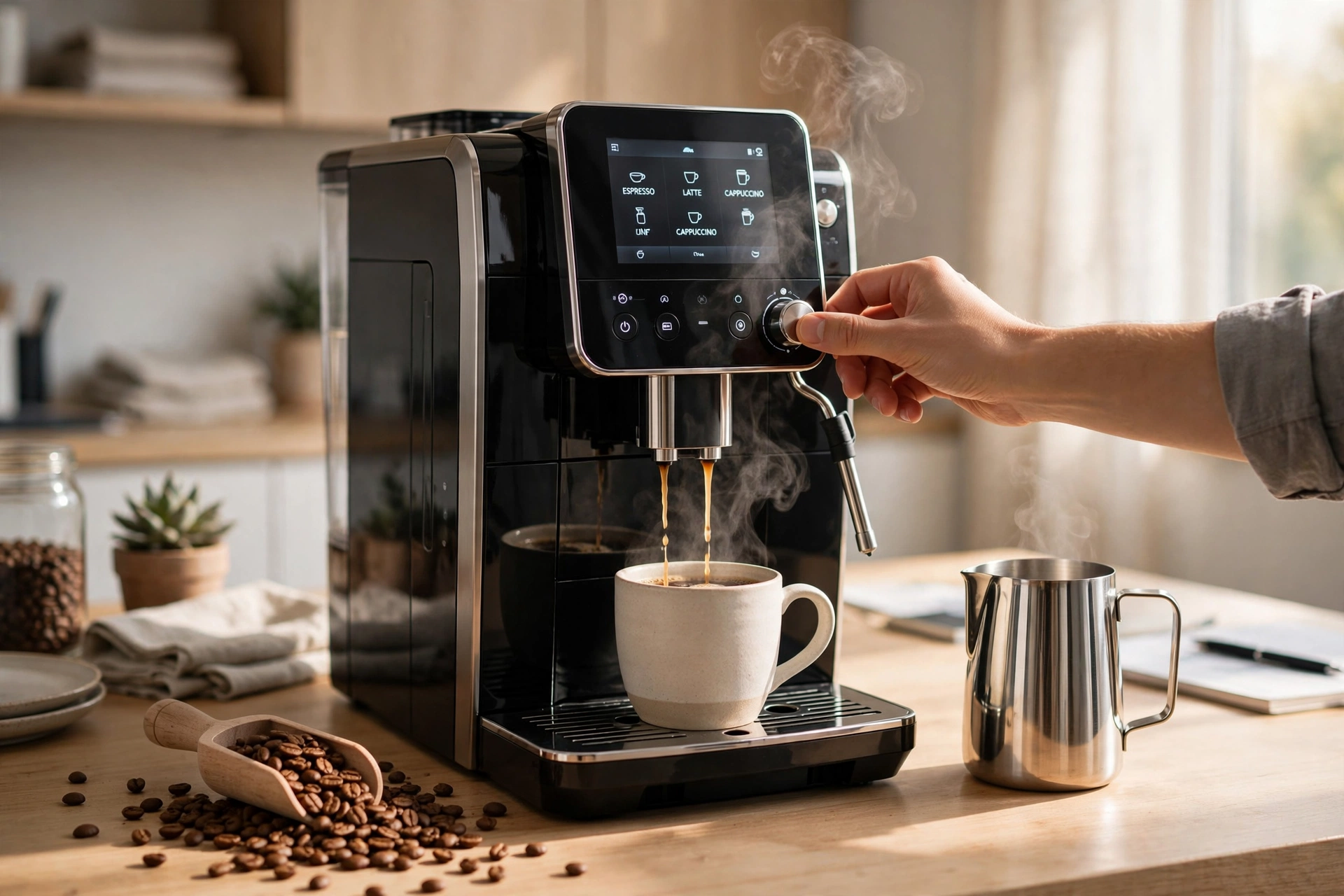
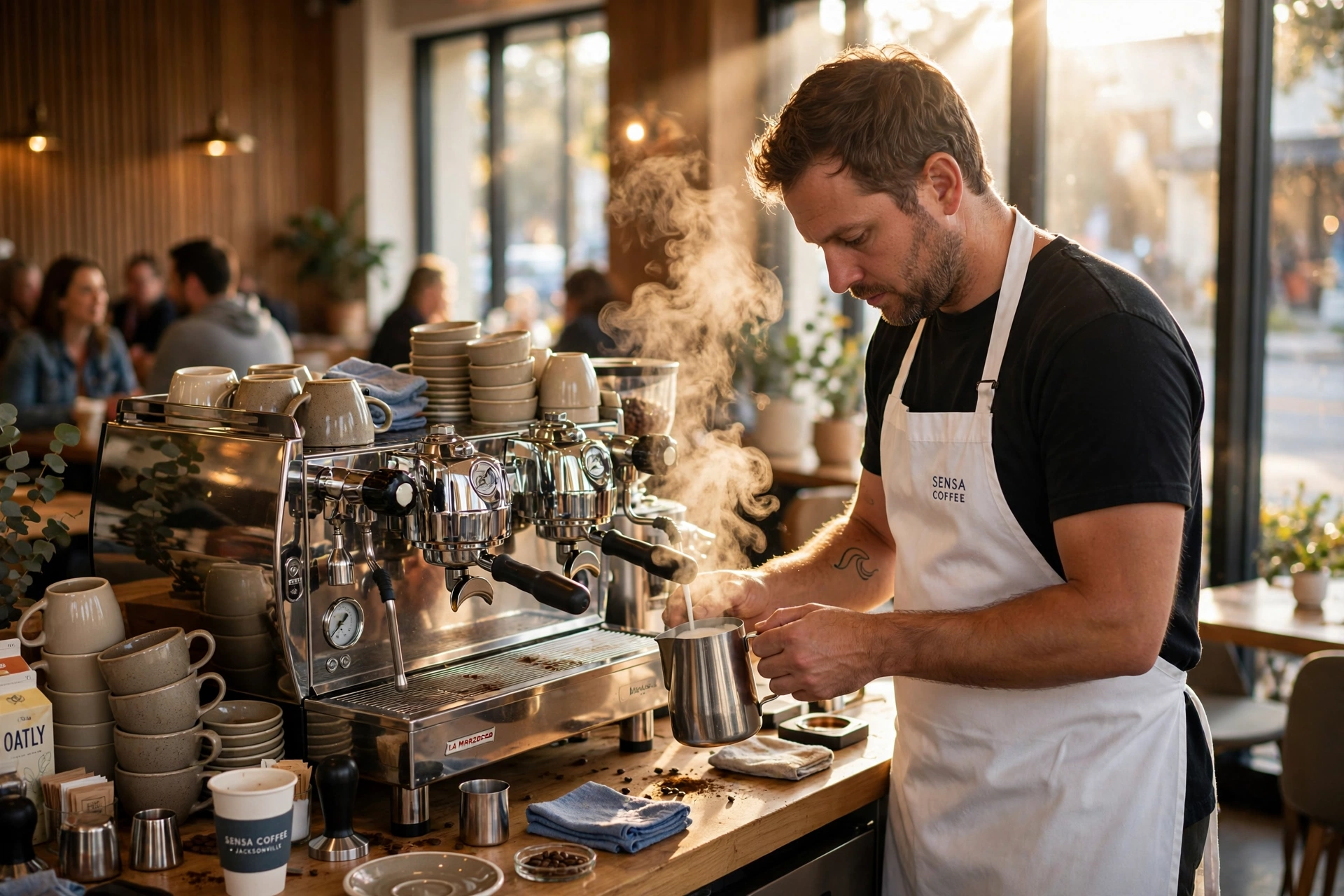
Seattle is the epicenter of coffee culture, which means your guests have the highest standards in the world. A successful foodservice coffee program in seattle wa is a comprehensive strategy that integrates high-end espresso equipment, sustainably sourced specialty coffee, and a managed service model to ensure consistency, speed, and profitability without the burden of capital expenditure. For most operators, this means moving away from fragmented equipment rentals and toward an all-inclusive membership that guarantees uptime and premium roast quality.
In my experience working with hospitality groups across the Pacific Northwest, the biggest mistake I see is attempting to 'DIY' a professional coffee setup with residential-grade gear or inconsistent wholesale beans. Seattle consumers can taste the difference between a properly calibrated espresso machine and one that has been neglected for a month. To compete, you need a system that scales with your volume while maintaining a strict adherence to specialty coffee standards.

Why Seattle Businesses Are Adopting Managed Foodservice Coffee Programs?
Seattle's market is uniquely volatile. With the rise of boutique roasteries on every corner, the baseline expectation for a 'cup of coffee' has shifted from a basic amenity to a core part of the guest experience. According to the National Coffee Association USA (NCA), coffee consumption patterns are shifting toward specialty brews and cold brews, particularly in urban hubs. For a hotel or restaurant in the Emerald City, failing to offer a high-quality brew isn't just a missed opportunity; it is a brand liability.
Many operators are moving toward managed programs because the cost of technical failure is too high. When your only espresso machine goes down during a Sunday morning brunch rush, you aren't just losing the cost of a latte; you are losing the customer's trust. This is why businesses are pivoting toward all-inclusive memberships that bundle equipment and maintenance. In practice, this shifts the risk from the business owner to the service provider.
Furthermore, the labor market in Seattle remains tight. Finding a skilled barista who can maintain a machine and dial in a roast daily is expensive and difficult. By implementing an automated or managed coffee service, businesses can maintain specialty-grade quality without requiring a master barista on every shift. This allows the staff to focus on hospitality rather than technical troubleshooting. I've seen this transition save operators up to 15% in labor costs while simultaneously increasing their average ticket price through premium coffee offerings.
What Are the Key Benefits of a Professional Coffee Program for Seattle Businesses?
Implementing a structured program transforms coffee from a cost center into a profit center. When you stop buying haphazardly and start managing your beverage program, the margins become clear. For those operating smaller spaces, exploring the Best Office Espresso Machines for Small Teams in 2026 can provide a roadmap for how to maximize limited square footage while maximizing output.
Increased Revenue and Higher Margins
Specialty coffee commands a premium. While a standard drip coffee might sell for $2.50, a well-crafted espresso drink can easily fetch $6.00 or more in the Seattle market. The key is the perceived value, which is driven by the equipment and the roast. Using an industrial-grade espresso machine and a high-quality Arabica bean ensures that the product justifies the price. When the quality is consistent, guests are more likely to return and recommend the venue.
Operational Consistency and Reduced Downtime
Consistency is the hallmark of a professional operation. In the foodservice world, inconsistency is the enemy of scale. A managed program ensures that the equipment is calibrated and serviced on a schedule. This eliminates the 'Monday morning surprise' where the machine isn't heating properly or the grinder is clogged. By utilizing a managed service, you are essentially buying insurance against downtime.
Enhanced Brand Perception and Guest Loyalty
In a city obsessed with coffee, your beverage program is a signal of your overall quality. If a hotel provides poor-quality coffee in the lobby, guests subconsciously associate that lack of quality with the room cleanliness or the service. Conversely, providing specialty coffee—defined by the Specialty Coffee Association (SCA) as coffee that scores 80 points or above on a 100-point scale—elevates the entire brand image.
📚
Definition
Specialty Coffee is a trade term used to describe coffee that meets rigorous quality standards, involving an evaluation by certified Q-graders to ensure the beans are free of primary defects and possess unique flavor profiles.
| Feature | Traditional Equipment Purchase | Generic Rental | Busy Bean Coffee Managed Program |
|---|---|---|---|
| Upfront Cost | High (Thousands of $$) | Low | Zero/Predictable Monthly Fee |
| Maintenance | Owner's Responsibility | Basic/Slow Response | Full Coverage & Proactive |
| Coffee Quality | Varies by Source | Often Generic/Stale | Premium Specialty Roasts |
| Scalability | Hard (Requires New CapEx) | Limited | Easy (Modular Upgrades) |
💡
Key Takeaway
The most significant benefit of a managed program is the elimination of capital expenditure (CapEx), allowing businesses to preserve cash flow while deploying world-class equipment immediately.
Real-World Examples: Transforming Seattle's Beverage Landscape
I've worked with a variety of venues in the region, and the results typically follow a specific pattern: an initial struggle with inconsistency followed by a surge in revenue once the system is professionalized. Here are two scenarios that illustrate the impact of a proper foodservice coffee program in seattle wa.
Case Study 1: The Boutique Hotel Pivot
A mid-sized boutique hotel in downtown Seattle was using a standard commercial drip system and a low-end espresso machine they bought second-hand. They experienced frequent breakdowns and inconsistent taste, leading to negative TripAdvisor reviews specifically targeting their breakfast service. After implementing a managed program with Busy Bean Coffee, they replaced their failing gear with SENSA equipment and a curated roast profile.
The Result: Within three months, their coffee-related revenue increased by 22%. More importantly, their guest satisfaction scores for 'Morning Experience' rose from 3.2 to 4.8 stars. They stopped worrying about repair bills because the maintenance was bundled into their monthly membership.
Case Study 2: The High-Volume Bistro
A busy bistro in the Capitol Hill area struggled with 'rush hour bottlenecks.' Their baristas were spending too much time manually adjusting grinders and fighting with a machine that couldn't keep up with the volume. The result was long wait times and wasted product. By switching to a high-capacity, automated specialty system, they streamlined their workflow.
The Result: They reduced their drink preparation time by an average of 45 seconds per order, allowing them to serve more customers during the peak 8 AM to 10 AM window. This operational efficiency resulted in an estimated additional $1,200 in weekly revenue simply by capturing customers who previously walked away due to the line.

How to Get Started with a Professional Foodservice Coffee Program
Starting a professional program doesn't have to be overwhelming. The goal is to move from a reactive state (fixing things when they break) to a proactive state (preventing breaks and optimizing flavor). If you are scaling your operations, you might also look into White Glove Coffee Service in Los Angeles CA - Complete Guide | Busy Bean Coffee to see how high-touch service models operate in other major metros.
Step 1: Volume Analysis and Equipment Mapping
First, analyze your peak hours. How many drinks are you serving per hour during your busiest window? This determines whether you need a semi-automatic machine for high-skill baristas or an automated system for speed and consistency. Mapping your footprint is also essential; you need to ensure there is adequate drainage and power to support professional-grade gear without overloading your circuits.
Step 2: Selecting Your Roast Profile
Not all specialty coffee is the same. Depending on whether your guests prefer a bold, chocolatey espresso or a bright, floral pour-over, you need to select a roast that aligns with your brand. At Busy Bean Coffee, we help you curate a profile that complements your food menu. For instance, a breakfast-heavy menu pairs well with a medium-dark roast that cuts through the richness of eggs and buttery toast.
Step 3: Staff Training and Workflow Design
Equipment is only as good as the person operating it. Even with automated systems, your staff needs to understand the basics of milk steaming and cup preparation. We recommend designing the 'coffee station' to minimize movement. The grinder, machine, and milk fridge should form a tight triangle to reduce footsteps and increase speed.
Step 4: Implementing the Managed Model
Instead of buying a machine and hoping it lasts, opt for an all-inclusive membership. This includes the equipment, installation, and a guaranteed maintenance schedule. This approach ensures that your coffee program remains a source of profit rather than a source of stress.
Common Objections and the Reality of the Seattle Market
Many operators hesitate to commit to a managed program because of misconceptions about cost and control. Let's look at the data and the reality of the industry.
Objection: "I can just buy my own machine and save money in the long run."
Most people assume that ownership equals savings. However, the data shows otherwise. Between the initial cost of a professional machine and the inevitable repair costs, the 'ownership' model often costs more in the first three years than a managed membership. Furthermore, equipment depreciates rapidly. When a new technology emerges or your volume grows, you are stuck with an obsolete asset. A managed program provides agility; you can upgrade your gear as your business evolves.
Objection: "Automated machines don't produce 'real' specialty coffee."
This is a common myth among coffee purists. In the past, automation meant compromise. Today, modern SENSA and other high-end systems can replicate the precision of a world-class barista. According to NSF International, modern commercial equipment is designed to meet strict sanitary and performance standards that ensure the coffee is extracted perfectly every time. The difference is that the machine handles the technical variables, allowing the human to focus on the presentation and the customer.
Objection: "I don't have enough space for a full program."
Space is a premium in Seattle. However, the move toward 'compact professional' gear has changed the game. You no longer need a massive counter to serve high-margin espresso. By optimizing your layout and using multi-functional equipment, you can fit a full-scale beverage program into a footprint smaller than a standard office desk. If you are curious about smaller-scale implementations, check out our Automated Coffee Service in Fort Worth TX - Complete Guide | Busy Bean Coffee for examples of efficient spatial design.
Frequently Asked Questions
How do I know if my business needs a managed coffee program instead of just buying a machine?
If your business cannot afford four hours of downtime during a peak period, you need a managed program. Ownership puts the burden of maintenance on you, meaning you are at the mercy of a technician's availability. A managed program typically includes priority service and proactive maintenance, ensuring your revenue stream is never interrupted. Additionally, if you want to offer specialty-grade coffee without hiring and training a full-time master barista, the consistency provided by a managed, automated system is the only viable path to maintaining high quality at scale.
What is the typical ROI for upgrading to a professional foodservice coffee program in Seattle?
Most Seattle operators see a return on investment within the first six to twelve months. This comes from two sources: the increase in average transaction value (upselling from basic coffee to specialty lattes) and the reduction in waste. Professional equipment minimizes the amount of coffee wasted during 'dialing in' and reduces milk spoilage through better steaming control. When you factor in the lack of upfront capital expenditure, the cash flow improves immediately, allowing you to reinvest that capital into other areas of your business growth.
Does a managed program include the coffee beans, or just the equipment?
At Busy Bean Coffee, our all-inclusive membership is designed to be a total solution. This typically includes the high-end equipment, professional installation, and a steady supply of premium specialty roasts. We believe that the machine and the bean are two halves of the same whole; you cannot have one without the other. By bundling them, we ensure that the roast is perfectly calibrated for the specific machine in your shop, eliminating the guesswork and ensuring that every cup meets the high standards of the Seattle market.
How do you ensure the coffee quality remains consistent across different staff members?
Consistency is achieved through a combination of high-end automation and a simplified workflow. By using precision-engineered equipment, we remove the 'human error' variable from the extraction process. Whether it is a seasoned manager or a new hire on their first day, the machine delivers the same pressure, temperature, and dose every time. This is supplemented by our training protocols, where we teach staff the essential 'finishing' touches—like proper milk texture and latte art—to ensure the visual presentation matches the taste quality.
What happens if my equipment breaks down during a holiday weekend?
This is where the value of a managed program truly shines. Unlike a traditional purchase where you have to call a repair service and hope they have a part in stock, our membership includes a comprehensive maintenance agreement. We provide priority support to ensure that your business stays operational. In many cases, we can provide a loaner machine or dispatch a technician immediately. The goal is to ensure that your guests never notice a problem, and your revenue never stops flowing, regardless of the date on the calendar.
Final Thoughts on Foodservice Coffee Program in Seattle WA
Building a world-class beverage experience in the most competitive coffee city in the country requires more than just a good bean; it requires a professional system. Whether you are running a luxury hotel, a high-volume bistro, or a corporate dining facility, the shift toward a managed foodservice coffee program in seattle wa is the smartest way to scale. By removing the risks of equipment failure and the burden of capital expenditure, you can focus on what really matters: the guest experience.
If you are tired of inconsistent quality and unpredictable repair bills, it is time to professionalize your operation. From high-end SENSA equipment to expertly roasted beans and a team that has your back, Busy Bean Coffee is here to help you dominate the Seattle coffee scene. For those looking to expand their reach or improve their current setup, we invite you to explore our Coffee delivery service in Charlotte NC - Complete Guide | Busy Bean Coffee to see how we maintain excellence across different regional markets.
Stop guessing and start growing. Visit www.busybeancoffee.com today to schedule a consultation and discover how our managed coffee membership can transform your bottom line.
Free Coffee Pairing Guide & Specialty Roast Cheat Sheet
Unlock the secrets of perfect brewing ratios, water temperatures, and specialty roast profiles. Download the guide.