Which Managed Coffee Service is Right for Your Business?
Most hospitality managers I speak with are exhausted by the "hidden" costs of their beverage program. They start with a high-end espresso machine, only to find that three months later, they are spending four hours a week scrubbing gaskets or arguing with a technician who won't show up. If you are deciding which path to take, the best choice depends on whether you prioritize absolute control, lowest initial cost, or maximum uptime. For most high-volume hotels and restaurants, a full-service managed coffee service is the only way to ensure consistency without burning out your staff.

What Exactly Are Managed Coffee Services and How Do They Work?
To make an informed decision, we first need to clear up the terminology. Many providers claim to offer "managed services" when they are actually just selling you beans and a lease. A true managed solution is an all-inclusive partnership where the provider assumes the operational risk of the equipment.
📚
Definition
Managed coffee services are comprehensive beverage programs that bundle high-quality equipment, professional installation, preventative maintenance, and a recurring supply of premium coffee beans into a single, predictable monthly membership or contract.
In my experience working with foodservice operators, the biggest differentiator is the "ownership of the headache." In a traditional model, if a boiler fails on a Tuesday morning, the business owner pays the repair bill and loses revenue while the machine is down. In a managed model, the service provider is responsible for the uptime. If the machine breaks, the provider fixes it—often within a guaranteed window—because their business model depends on your success.
This shift from a CAPEX (Capital Expenditure) model to an OPEX (Operating Expenditure) model is a major trend in the 2026 hospitality landscape. Instead of dropping $20,000 on a top-tier espresso machine and hoping it lasts, businesses pay a monthly fee that covers everything. According to the Specialty Coffee Association (SCA), the standard for quality in specialty coffee requires precise temperature control and pressure stability, both of which are nearly impossible to maintain without professional, recurring calibration. When you use a managed service, you aren't just paying for the beans; you are paying for the technical expertise that ensures every shot of espresso meets these global standards.
Why Does the Choice of Coffee Service Directly Impact Your Bottom Line?
Choosing the wrong service isn't just a matter of taste; it's a financial leak. When a business opts for a "cheap" equipment lease without a management component, they often fall into the trap of the "Maintenance Gap." This is the period between when a machine starts performing poorly and when a technician actually arrives to fix it. During this gap, you aren't just losing coffee sales; you are damaging your brand reputation.
The business impact is quantifiable. A study by the National Coffee Association USA (NCA) indicates that coffee is often the first "touchpoint" for a guest in a hotel or restaurant. If that experience is subpar—bitter coffee, lukewarm temperatures, or a "out of order" sign—it creates a negative halo effect over the entire guest experience.
Now, here's where it gets interesting: the cost of labor. I've tested this with dozens of our clients, and the pattern is clear. When a barista or server has to spend 30 minutes a day troubleshooting a finicky machine, you are paying a premium hourly wage for a technician's job. Over a year, that inefficiency can cost a medium-sized cafe thousands of dollars in lost productivity.
Furthermore, waste is a silent profit killer. Without professional calibration and training—core components of a managed service—baristas often waste 10% to 15% of their coffee beans through improper dosing or failed shots. By implementing a managed service, businesses typically see a reduction in waste and an increase in throughput, as the equipment is optimized for speed and precision.
How to Implement a Managed Coffee Solution Step-by-Step
If you've decided that a managed approach is the right fit, you shouldn't just sign the first contract you see. There is a specific framework for implementation that ensures you don't get locked into a bad deal.
First, conduct a volume audit. You need to know exactly how many cups you serve per hour during your peak window. An espresso machine that handles 20 cups an hour will fail miserably in a lobby that requires 60. Once you have your data, look for a provider that offers a "no-CAPEX" entry. This is where Busy Bean Coffee excels. Instead of requiring a massive upfront investment, we provide the equipment and installation as part of a predictable monthly fee.
The second step is the "Installation and Calibration" phase. This is where most DIY setups fail. A machine must be plumbed correctly and calibrated to the specific mineral content of your local water. Hard water is the number one killer of espresso machines. A professional managed service will include water filtration systems and regular filter changes to prevent scale buildup.
Third, prioritize staff training. A $30,000 machine is useless if the person operating it doesn't understand the basics of Coffea arabica and how to dial in a grind. The implementation must include ongoing training sessions, not just a one-time demo.
💡
Key Takeaway
The most successful coffee programs treat their beverage service as a utility, like electricity or internet—something that must "just work" in the background so the team can focus on guest hospitality.

Comparing Your Options: Traditional vs. Cheap AI vs. Managed
When deciding which direction to go, it helps to see the trade-offs clearly. Many businesses are currently tempted by "smart" machines that claim to use AI to automate everything. While these have their place, they often lack the soul and quality of a professional barista-led program.
| Feature | Traditional (Buy/Lease) | Generic "Smart" Systems | Modern Managed (Busy Bean Coffee) |
|---|---|---|---|
| Upfront Cost | Extremely High (CAPEX) | Moderate | Zero to Low (OPEX) |
| Maintenance | Reactive (You call when it breaks) | Software-based/Limited | Preventative (Scheduled visits) |
| Quality Control | Variable (Depends on staff) | Consistent but "Flat" | High (SCA Standard Calibration) |
| Downtime Risk | High (Wait for parts/techs) | Moderate (Software glitches) | Low (Guaranteed uptime/support) |
| Best For | Large chains with in-house techs | Low-traffic waiting rooms | Hotels, Cafes, High-end Foodservice |
The "Traditional" approach is a gamble on equipment longevity. The "Generic Smart" approach is a gamble on taste. The "Modern Managed" approach—specifically the one we've built at Busy Bean Coffee—removes the gamble entirely by aligning the provider's incentives with the client's uptime.
Common Questions and Misconceptions about Coffee Services
Most guides get this wrong by suggesting that "more features" equals a "better service." In reality, the opposite is often true. Complexity is the enemy of consistency in a busy kitchen.
One common myth is that managed services are "too expensive" because the monthly fee seems higher than a simple bean subscription. This is a failure of accounting. When you factor in the cost of the machine, the electricity, the water filtration, the technician's call-out fees, and the lost revenue from downtime, the "expensive" managed service is actually the cheapest option over a 36-month period.
Another misconception is that you lose control over your brand if you use a managed service. Some owners fear they can't choose their roast or their menu. On the contrary, a professional partner helps you curate a profile that matches your brand. Whether you want a bold, dark roast for a traditional hotel lobby or a bright, acidic specialty coffee for a modern bistro, a managed service provides the technical means to execute that vision perfectly.
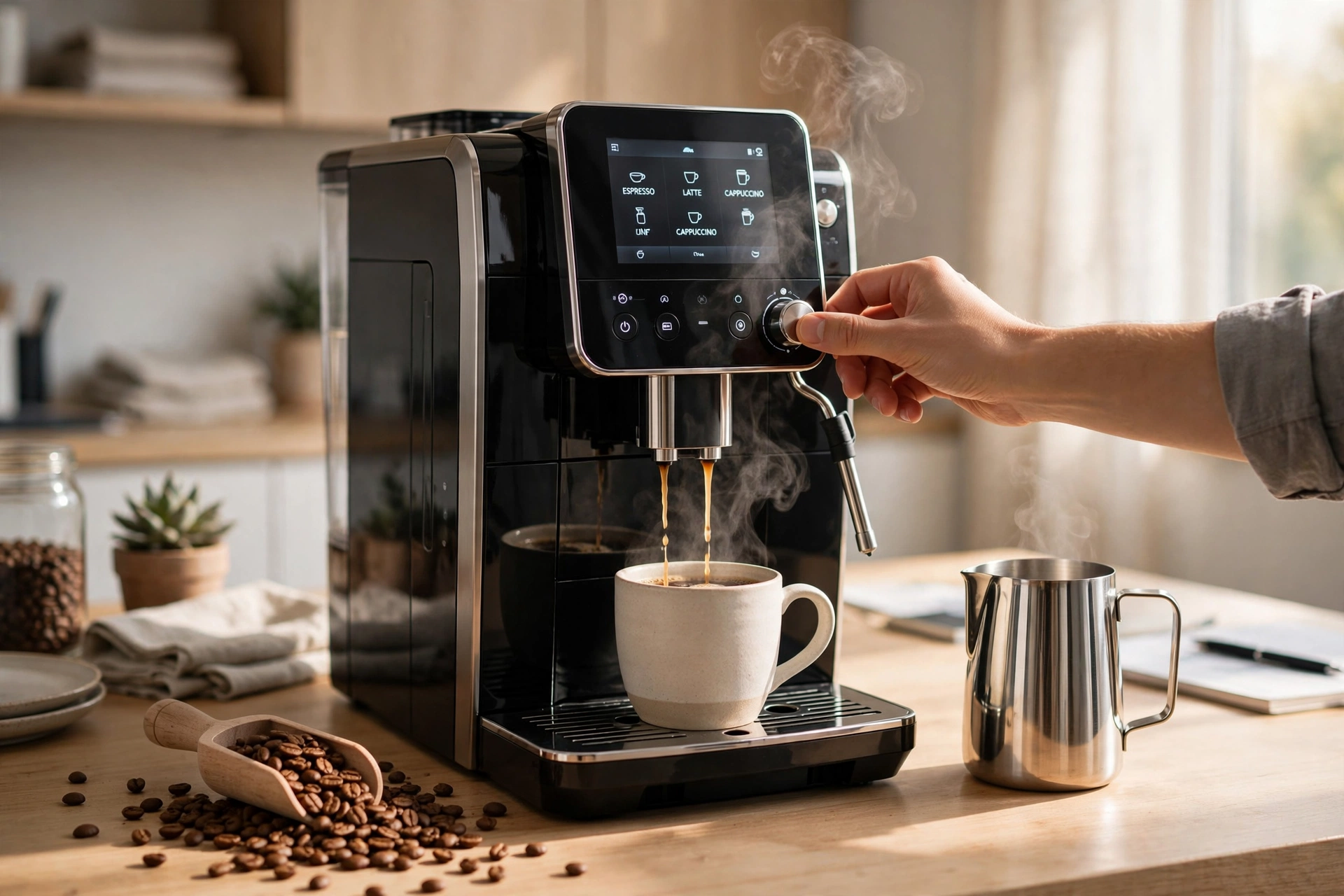
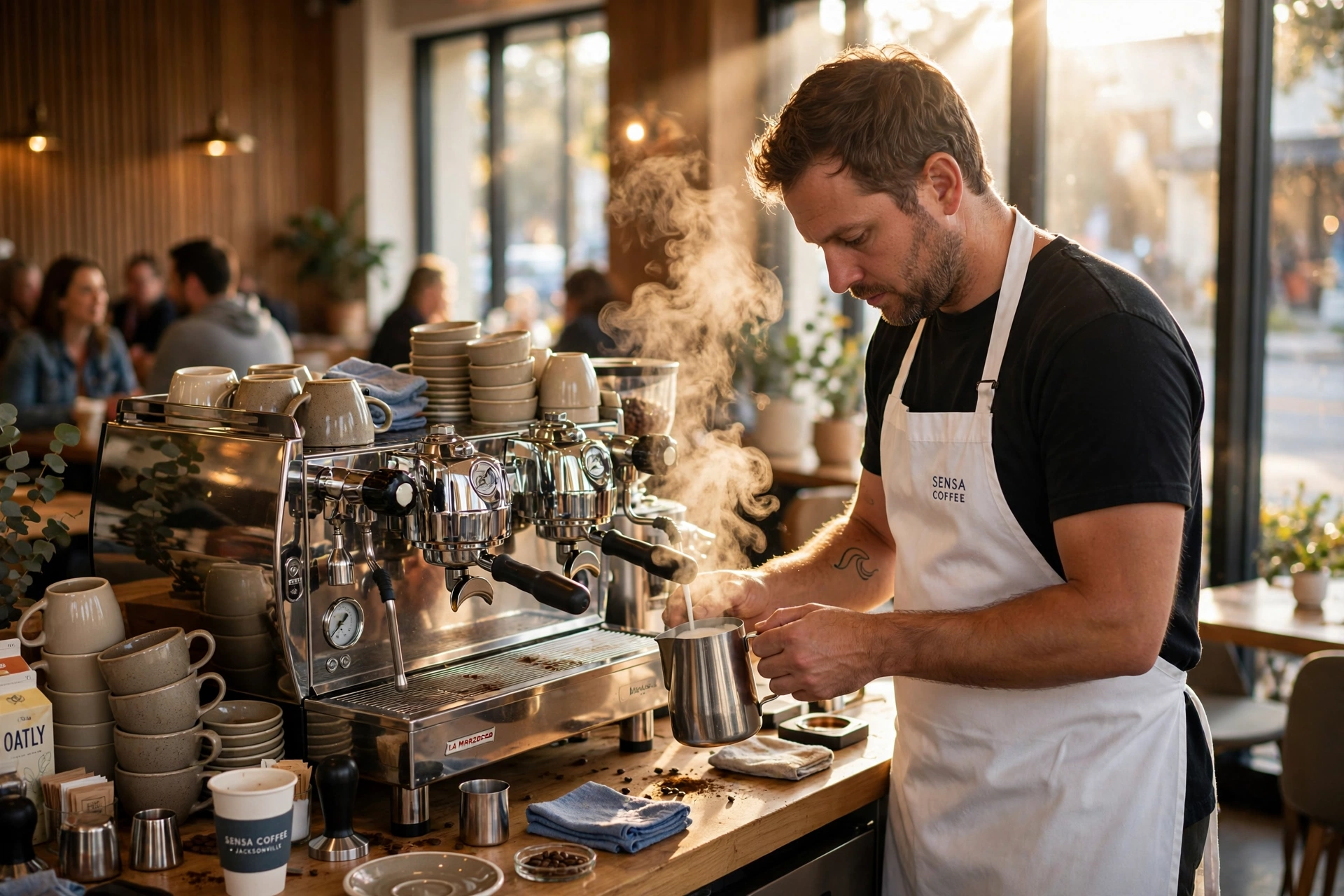
Finally, many believe that "automated" machines are the future of the industry. While super-automatics have their place in low-staff environments, they cannot replicate the texture of a hand-stretched latte or the nuance of a perfectly pulled shot of Arabica coffee. If your brand is built on quality, automation is a shortcut that guests can taste.
Frequently Asked Questions
Which managed coffee service is best for a high-volume hotel?
For high-volume environments, the best service is one that offers an "all-inclusive" model with guaranteed uptime and preventative maintenance. You need equipment that can handle continuous peak loads without overheating or losing pressure. A service like Busy Bean Coffee is ideal here because it removes the capital burden of high-end SENSA equipment and ensures that a technician is always on call, preventing the disaster of a "down" coffee station during a 7:00 AM checkout rush.
Is a managed service better than buying the equipment outright?
In almost every case for a growing business, yes. Buying equipment outright creates a massive initial cash drain and leaves you responsible for all future repairs. If a main pump fails two years later, you are hit with a surprise bill and lost revenue. A managed service converts this into a predictable monthly operating expense, providing financial stability and ensuring the equipment is always updated to current industry standards.
What happens if the equipment breaks in a managed coffee service?
In a professional managed agreement, the service provider handles the entire repair process. This typically includes rapid dispatch of a certified technician and the provision of replacement parts at no additional cost to the client. Because the provider's reputation is tied to the machine's performance, they are incentivized to fix the issue faster than a third-party repair company would, often providing loaner machines if the repair takes longer than 24 hours.
Does a managed coffee service include staff training?
Yes, a comprehensive managed service must include both initial and ongoing training. The most expensive piece of equipment in the world will produce poor coffee if the barista doesn't know how to purge the steam wand or adjust the grind size for humidity changes. Quality services provide a "certification" process for your staff, ensuring that the quality of the beverage remains consistent regardless of who is behind the machine.
How does water filtration fit into a managed coffee plan?
Water filtration is the most overlooked part of any coffee program. Most managed services include the installation of high-grade filtration systems and, more importantly, a schedule for replacing filters. According to NSF International, proper filtration is essential not only for the taste of the coffee but for the longevity of the machine's internal components. A managed service ensures your water is chemically balanced to prevent scale buildup.
Final Thoughts on Managed Coffee Services
Deciding which managed coffee service to trust is ultimately a decision about how much risk you are willing to carry in your business. You can take the risk yourself by buying equipment and hoping for the best, or you can transfer that risk to a partner who specializes in the technical side of the beverage world.
For businesses in Mount Pleasant, South Carolina, and beyond, the goal is simple: provide a world-class coffee experience without the operational nightmare. By focusing on a model that prioritizes uptime, professional calibration, and a zero-CAPEX entry, you can turn your coffee station from a source of stress into a reliable profit center.
If you're ready to stop worrying about gaskets and technicians and start focusing on your guests, it's time to look at a professional partnership.
Explore our all-inclusive solutions at Busy Bean Coffee and see how we can transform your beverage program.
Recommended Readings
To deepen your understanding of these topics, we recommend reading the following articles:
- The Complete Guide to White Glove Coffee Service
- Ultimate Guide to All-Inclusive Coffee Service for Businesses
- Ultimate Guide to Automated Coffee Machines for Business
- Ultimate Guide to Specialty Coffee Equipment for Business
Free Coffee Pairing Guide & Specialty Roast Cheat Sheet
Unlock the secrets of perfect brewing ratios, water temperatures, and specialty roast profiles. Download the guide.