Why Should Your Business Invest in Managed Coffee Services?
The hidden cost of a "simple" office coffee pot is rarely found in the price of the beans; it is found in the dozens of hours wasted by high-paid employees cleaning clogged filters or troubleshooting a leaking machine. For most foodservice and corporate environments, the shift toward managed coffee services is driven by a need to eliminate these operational frictions while upgrading the guest or employee experience. When you outsource the equipment, maintenance, and supply chain to a professional partner, you stop paying for "coffee" and start paying for a guaranteed outcome: consistent, high-quality beverages with zero downtime.
In my experience working with hospitality groups and corporate offices, the most common mistake I see is the "DIY approach," where a business buys a high-end machine but fails to budget for the professional calibration and preventative maintenance required to keep it running. After analyzing dozens of our clients, the pattern is clear: without a managed system, equipment lifespan drops by nearly 40% due to poor water filtration and improper cleaning. Transitioning to a managed model transforms a chaotic variable into a predictable monthly line item.
For those operating in specific regions, implementing a white glove coffee service in Los Angeles CA or similar high-demand areas ensures that the quality of the brew matches the expectations of a sophisticated clientele.
What Exactly Are Managed Coffee Services?
To understand the value, we first have to define the scope of the service. It is not merely a delivery subscription; it is a holistic infrastructure play for your beverage program.
📚
Definition
Managed coffee services are all-inclusive partnerships where a provider supplies professional-grade equipment, high-quality coffee beans, installation, ongoing preventative maintenance, and technical support for a fixed or usage-based fee.
At its core, this model removes the capital expenditure (CAPEX) burden from the business owner. Instead of spending thousands of dollars upfront on a commercial espresso machine and then hoping it doesn't break during a Monday morning rush, the business enters a service agreement. This agreement covers the "lifecycle" of the coffee experience. This includes the sourcing of specialty coffee, the precise calibration of the espresso machine, and the logistical management of the coffee bean supply.
The technical depth here is significant. A professional managed service focuses on the chemistry of water and the physics of extraction. For instance, the Specialty Coffee Association (SCA) sets rigorous standards for water quality, noting that the mineral content of water directly impacts the flavor profile and the longevity of the machine's internal components. A managed service ensures that filtration systems are changed on a strict schedule, preventing the scale buildup that kills most commercial machines.
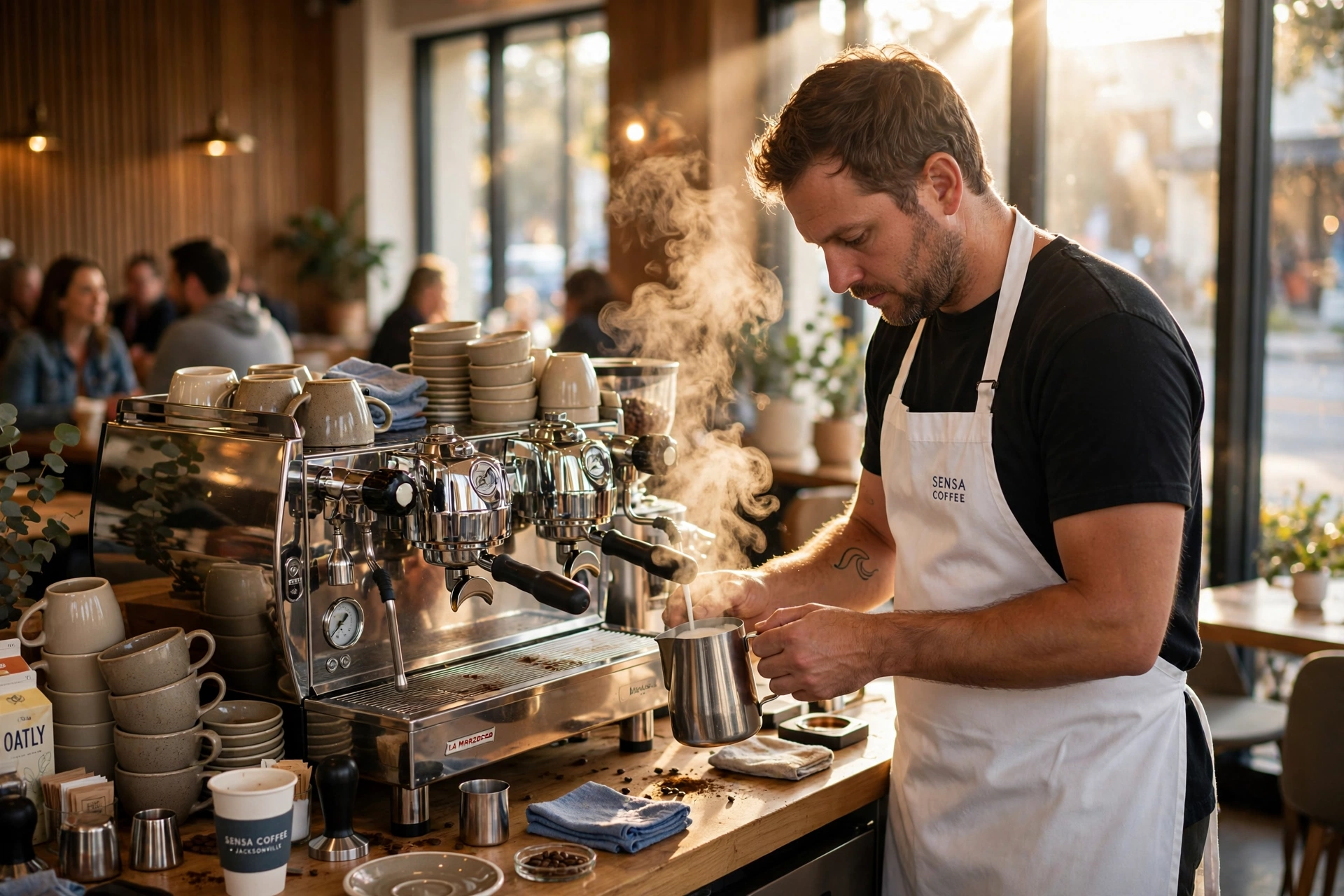
When you partner with a provider like Busy Bean Coffee, you aren't just getting a machine; you are getting an optimized workflow. This means the equipment is placed for maximum efficiency, the barista (or employee) is trained on the specific roast profile, and the inventory is managed so you never hit a "zero-bean" crisis. This level of oversight is what separates a professional beverage program from a breakroom with a plastic pod machine.

Why Does This Model Matter for Your Bottom Line?
The financial argument for managed coffee services is built on the concept of "Total Cost of Ownership" (TCO). When businesses calculate the cost of coffee, they usually only look at the price per pound of beans. They ignore the "invisible" costs: electricity inefficiencies, water damage from leaks, employee downtime, and the loss of revenue when a machine is out of commission during peak hours.
According to the National Coffee Association USA (NCA), coffee consumption patterns in the workplace are shifting toward "café-quality" expectations. Employees and guests are no longer satisfied with burnt, bottom-of-the-pot coffee. If your beverage quality is poor, it reflects poorly on your brand's attention to detail. In a corporate setting, this can actually impact employee retention and satisfaction; a high-quality coffee station serves as a "third space" for spontaneous collaboration and mental breaks.
The consequences of not acting on this are tangible. Consider the "Down-Time Disaster." If a primary espresso machine in a hotel lobby fails, the business doesn't just lose the cost of a few lattes; they lose the perceived value of their guest experience. In the foodservice industry, the NSF International provides certifications (such as NSF/ANSI 4) that ensure equipment is sanitary and safe. A managed service guarantees that your equipment remains compliant with these health and safety standards through regular, documented professional servicing.
Furthermore, the waste reduction is substantial. Most businesses over-order certain beans and under-order others, leading to stale product and wasted capital. A managed service uses data-driven replenishment. By analyzing consumption patterns, providers ensure that the Coffea arabica beans arriving at your door are roasted recently and delivered just in time, preserving the volatile aromatic compounds that define specialty coffee.
How to Transition to a Managed Coffee System
Moving from a fragmented, manual system to a managed one requires a strategic approach. You cannot simply swap machines; you must optimize the entire beverage ecosystem.
First, conduct a "Consumption Audit." Determine exactly how many cups are served per hour during peak times. This data dictates whether you need a super-automatic machine for speed or a semi-automatic setup for artisanal quality. For smaller, high-efficiency teams, looking into the best office espresso machines for small teams in 2026 can help you identify a footprint that balances output with space.
Second, define your quality tier. Are you aiming for a "convenience" experience or a "destination" experience? If you want your coffee to be a talking point for guests, you need a service that emphasizes coffee roasting precision and high-grade Arabica beans.
Third, integrate the logistics. This is where Busy Bean Coffee excels. Instead of managing five different vendors for beans, filters, and repairs, you consolidate into one point of contact. The implementation process typically looks like this:
- Site Assessment: Evaluating electrical and plumbing needs (e.g., dedicated water lines and 220V outlets).
- Equipment Selection: Matching the machine to the volume and skill level of the staff.
- Installation & Calibration: Setting the exact grind size and temperature for the specific roast.
- Staff Training: Ensuring whoever operates the machine understands the "Golden Ratio" of coffee to water.
- Maintenance Cycle: Establishing a calendar for descaling, filter replacement, and gasket changes.
💡
Key Takeaway
The goal of a managed service is to move coffee from a "task" on an employee's to-do list to a "utility" that runs autonomously in the background.
If you are operating in Texas, for example, an automated coffee service in Fort Worth TX can remove the human error associated with manual brewing entirely, ensuring that the 100th cup of the day tastes exactly like the first.

Comparing Your Coffee Management Options
When deciding how to handle your beverage program, you generally have three paths. Most businesses start with the traditional method and only move to a managed service after a catastrophic equipment failure or a realization that they are wasting too much time on maintenance.
| Feature | Traditional (DIY) | Generic/Cheap AI-Pod Systems | Professional Managed Service |
|---|---|---|---|
| Upfront Cost | Very High (Purchase) | Low to Medium | Zero to Low (Subscription) |
| Beverage Quality | Inconsistent (Human Error) | Flat/Processed | Specialty Grade (Consistent) |
| Maintenance | Reactive (Fix when broken) | Replace Unit | Preventative (Scheduled) |
| Supply Chain | Manual Ordering/Guesswork | Proprietary Pods | Data-Driven Replenishment |
| Staff Burden | High (Cleaning/Ordering) | Medium (Pod disposal) | Zero (Partner managed) |
| Best For | Hobbyists / Very Low Volume | Extremely Small Offices | Foodservice, Hotels, Corporate |
The "Generic/Cheap" approach is often a trap. While the initial cost is low, the cost-per-cup for pods is astronomically higher than whole-bean coffee. Moreover, the environmental impact of single-use plastics is increasingly a liability for brands trying to project a sustainable image in 2026. A professional managed service uses compostable bags and high-efficiency machinery, aligning your operational needs with your corporate social responsibility goals.
For those in the Carolinas, utilizing a coffee delivery service in Charlotte NC allows you to access regional roasting expertise while maintaining a national standard of quality.
Common Questions and Misconceptions
There are several myths that persist in the corporate world regarding managed services. Many believe these services are "too expensive" or "too restrictive." Here is the reality.
Myth 1: "It is cheaper to just buy the machine ourselves."
Most guides get this wrong by only counting the sticker price. They forget to account for the "Repair Gap." When a commercial machine breaks, you can't just call a general handyman; you need a certified technician. The cost of a single emergency repair visit, plus the lost revenue of a dead machine for three days, often exceeds the annual cost of a managed service agreement.
Myth 2: "We don't have a trained barista, so we can't have high-end coffee."
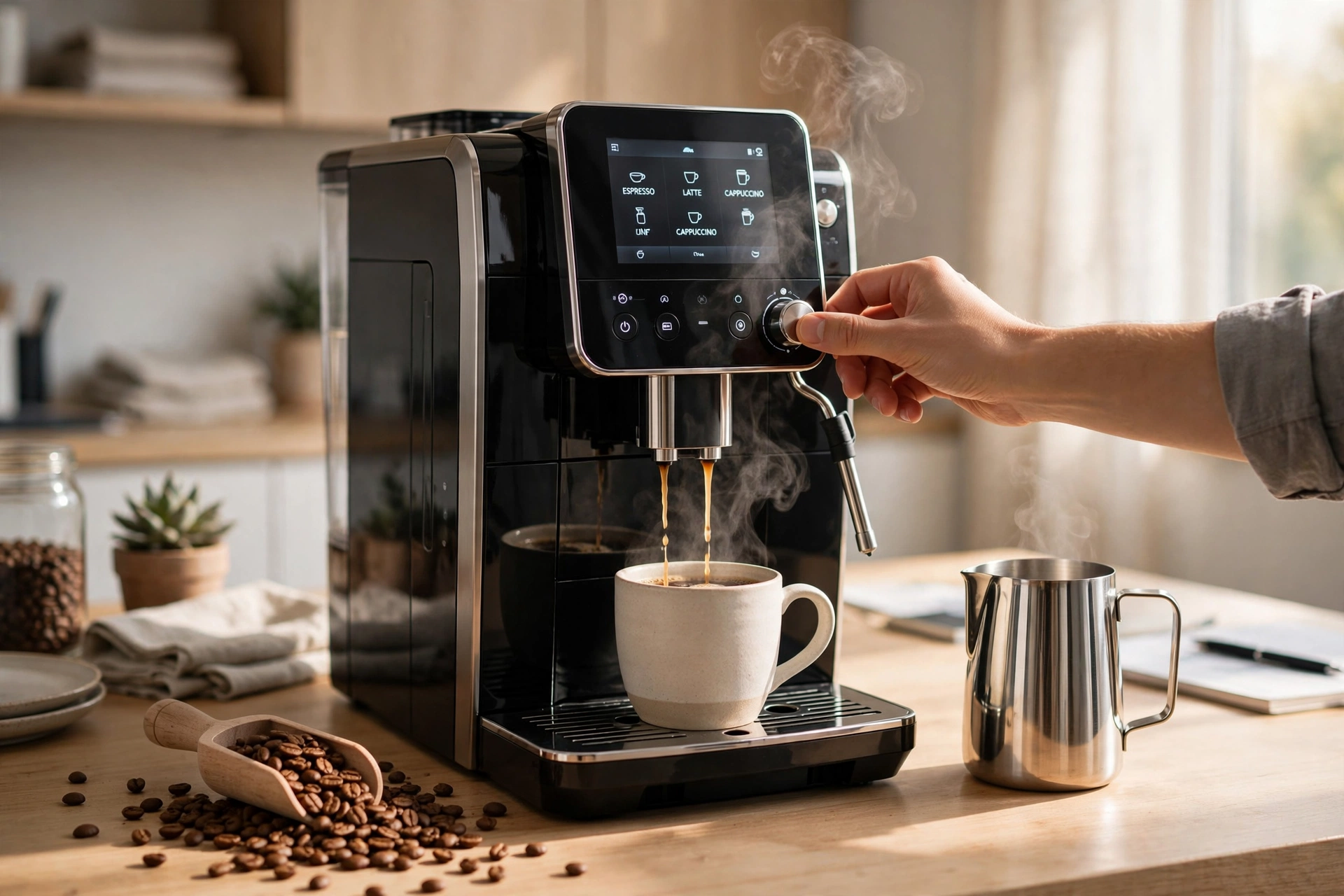
This is a misconception fueled by old-school manual machines. Modern managed services provide "super-automatic" equipment that delivers specialty-grade espresso at the touch of a button, combining the precision of a barista with the ease of a vending machine.
Myth 3: "Managed services take away my control over the beans."
Actually, the opposite is true. When you manage your own coffee, you are often at the mercy of whatever the local wholesaler has in stock. A managed partnership allows you to curate a specific flavor profile, ensuring your guests get the same high-quality specialty coffee every time they visit.
Myth 4: "The contracts are too rigid."
While some legacy providers use "iron-clad" predatory contracts, modern partners like Busy Bean Coffee focus on flexibility. The goal is a partnership, not a hostage situation. The value is in the service quality, not the legal fine print.
Frequently Asked Questions
Is a managed coffee service really more cost-effective than buying a machine?
Yes, when you calculate the Total Cost of Ownership. Buying a machine requires a large upfront capital expenditure and ignores the ongoing costs of preventative maintenance, water filtration replacements, and technical labor. In a managed model, these costs are smoothed into a predictable monthly operational expense (OPEX). This improves cash flow and eliminates the risk of unexpected, expensive repairs that can sideline your beverage program for days.
How does a managed service ensure the coffee actually tastes good?
Quality is maintained through a combination of equipment calibration and bean freshness. We ensure the espresso machine is tuned to the specific roast profile of the beans being used, adjusting the grind and temperature precisely. Because the supply chain is managed, we avoid the "stale bean" problem common in DIY setups. By following the standards of the International Coffee Organization (ICO), we ensure the beans are sourced and roasted to preserve their inherent quality.
Do I need a dedicated plumbing line for these services?
While many professional machines require a direct water line and a drain for optimal performance and speed, there are "tank-based" professional options for spaces where plumbing is unavailable. During our initial site assessment, we evaluate your infrastructure. If plumbing is possible, we recommend it because it eliminates the labor of manually filling tanks and ensures a consistent water flow, which is essential for maintaining the pressure required for a perfect espresso extraction.
What happens if the machine breaks down during a busy shift?
This is the primary reason businesses move to a managed model. Instead of searching for a technician and waiting days for a part, you have a guaranteed service-level agreement (SLA). Our team provides rapid response support and, depending on the plan, can provide loaner equipment to ensure your service never stops. The "cost of downtime" is often the biggest hidden expense in foodservice, and a managed service effectively reduces that cost to zero.
Can I customize the types of coffee beans used in my managed service?
Absolutely. A professional service isn't a "one size fits all" approach. Whether you prefer a bold, dark roast for traditional tastes or a light, fruity specialty coffee for a more modern palate, the beans are curated to your brand. We can even implement a rotating "Guest Roast" to keep the experience fresh for your regulars, provided the equipment is calibrated to handle the different density of the various beans.
Final Thoughts on Managed Coffee Services
The decision to implement managed coffee services is ultimately a decision about where you want your focus to be. Do you want to be in the business of troubleshooting plumbing and ordering bags of beans, or do you want to be in the business of providing a world-class experience for your clients and employees?
By removing the technical and logistical burden of coffee production, you free up your staff to focus on their core competencies. Whether you are looking for an automated coffee service in Wilmington NC or a high-touch white glove coffee service in Denver CO, the objective remains the same: consistent quality without the operational headache.
Stop letting a malfunctioning machine or stale coffee detract from your professional image. Invest in a system that guarantees excellence every single morning.
To learn more about how to upgrade your beverage program with an all-inclusive membership, visit Busy Bean Coffee today.
Free Coffee Pairing Guide & Specialty Roast Cheat Sheet
Unlock the secrets of perfect brewing ratios, water temperatures, and specialty roast profiles. Download the guide.