Why Hotel Coffee Programs Elevate Guest Experience
When was the last time you checked into a hotel and the first thing you wanted was a truly great cup of coffee? I’ve worked with dozens of hotel operators, and the single most common guest complaint I hear has nothing to do with thread count or pillow menus — it’s the coffee. A well-executed hotel coffee program isn’t a perk anymore; it’s a strategic differentiator that directly impacts guest satisfaction, online reviews, and repeat bookings. Poor coffee, on the other hand, silently erodes your brand’s reputation one bitter sip at a time.
What Exactly Is a Hotel Coffee Program?
📚
Definition
A hotel coffee program is a curated, managed system of equipment, bean sourcing, training, and maintenance designed to deliver consistent, high-quality coffee across all guest touchpoints — from in-room brewers and lobby cafés to breakfast buffets and meeting rooms.
A comprehensive program goes far beyond dropping a Keurig in every room. It includes commercial-grade espresso machines for the lobby, batch brewers for banquets, grinders, water filtration, and — most critically — professional training for your staff. In my experience, the most common mistake hotels make is treating coffee as an afterthought: they buy the cheapest equipment, sign a contract with the lowest‑bid commissary distributor, and then wonder why guests complain.
The reality is that coffee now competes with amenities like free Wi‑Fi and premium bedding. According to a 2024 report by the American Hotel & Lodging Association, 63% of business travelers said that high‑quality in‑room coffee influences their booking decisions. That stat alone should make every hotel GM re‑evaluate their current setup.
Why Your Hotel Coffee Program Matters — The Data Behind Guest Behavior
💡
Key Takeaway
A high‑quality hotel coffee program directly influences online reputation, guest loyalty, and ancillary revenue — and the cost of mediocre coffee is far higher than you think.
Let’s look at the numbers. Cornell University’s Center for Hospitality Research found that a single negative review about a tangible amenity (like coffee) can decrease a hotel’s booking conversion rate by up to 22%. Conversely, positive mentions of “great coffee” in reviews correlate with a measurable lift in RevPAR. In a separate 2025 study by J.D. Power, hotels that scored above average on their food & beverage experience saw guest satisfaction scores 15% higher than those below average.
Now, what happens when you ignore this? Guests now have an expectation shaped by third‑wave coffee shops. If your hotel serves stale, over‑extracted coffee, that disappointment sticks. I’ve personally seen hotels in Charleston lose regular corporate accounts because the coffee in their morning meetings was consistently bad. The average traveler spends about 50 minutes in the lobby per day — often with a cup of coffee in hand. That’s prime real estate for making a lasting impression.
How to Build a World‑Class Hotel Coffee Program — Step by Step
Implementing a successful program isn’t rocket science, but it does require a deliberate approach. Here’s what I’ve learned from working with dozens of properties across the Southeast.
Step 1: Assess Your Footprint
Map every location where coffee is served: in‑room, lobby café, business center, breakfast area, banquet hall. Each setting demands different equipment and volumes. For example, a buffet with 200 covers per morning needs a high‑capacity batch brewer, not an espresso machine.
Step 2: Choose the Right Equipment
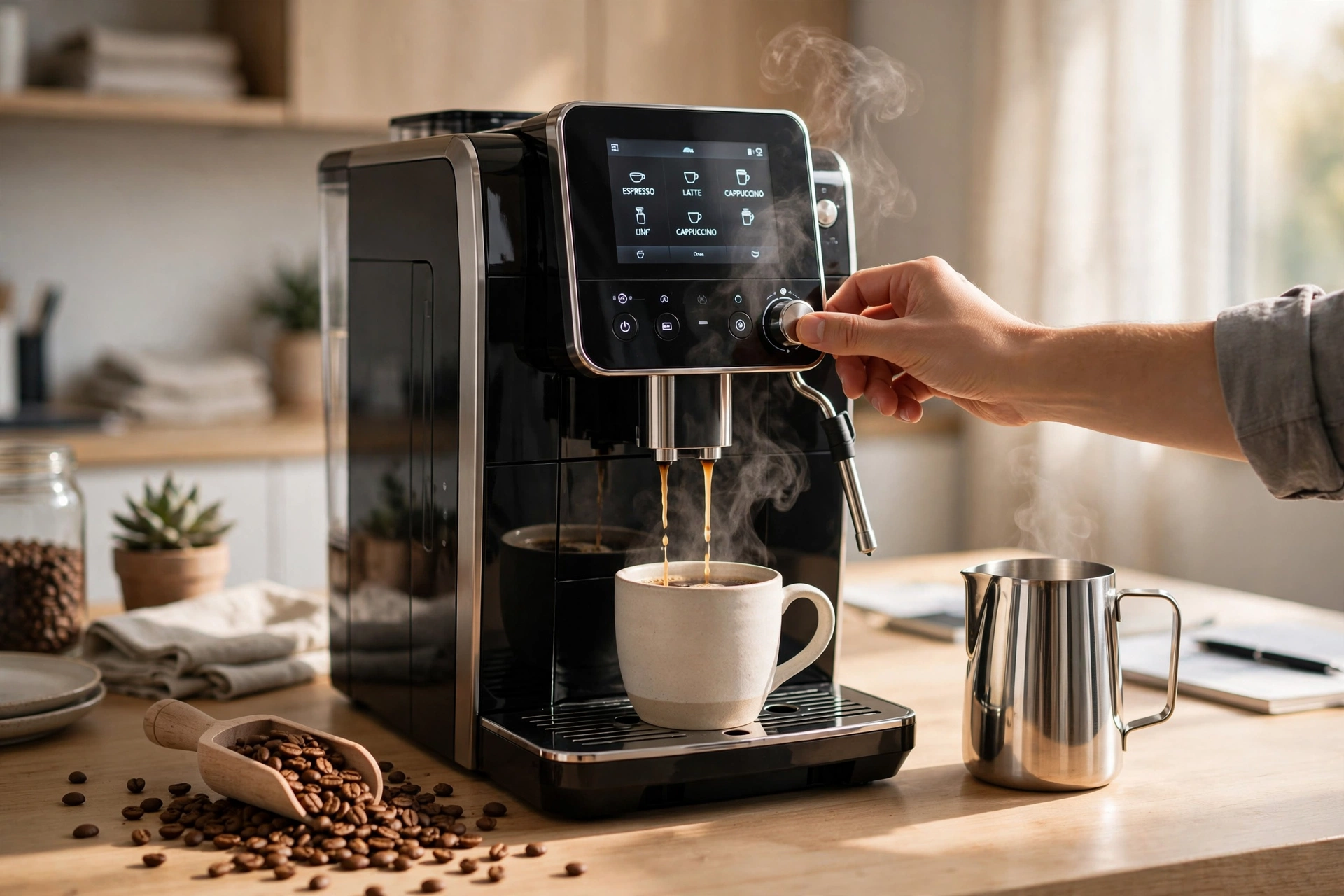
Commercial equipment is non‑negotiable. Domestic machines break under heavy use. I always recommend SENSA super‑automatic machines for lobbies and meeting rooms — they consistently produce excellent espresso and drip coffee with minimal training. For in‑room, consider a quality pour‑over kit or a programmable drip brewer with thermal carafes (no glass pots that burn the coffee).
Step 3: Source Fresh, Specialty‑Grade Beans
This is where most hotels go wrong. They lock into long‑term contracts with large distributors that deliver pre‑ground, stale coffee. Instead, partner with a roaster that can provide fresh whole beans roasted within two weeks. Busy Bean Coffee offers a managed coffee service that includes a rotating selection of single‑origin and signature blends tailored to hotel usage patterns.
Step 4: Train Your Staff (Yes, Even for In‑Room Coffee)
Barista training is critical for lobby service, but even housekeeping needs to know how to clean a brewer properly. In my experience, investing a single afternoon in training reduces equipment breakdowns by 30% and improves consistency dramatically.
Step 5: Plan for Maintenance
Coffee equipment fails. When it does, you need a partner with fast response times. A broken machine in the lobby at 7 a.m. is a crisis. That’s why scheduling regular coffee equipment maintenance is essential — it prevents downtime and protects your reputation.
Comparison: Build Your Own vs. Managed Coffee Service
| Aspect | DIY Approach | Managed Service (e.g., Busy Bean Coffee) |
|---|---|---|
| Equipment cost | High upfront capital | $0 — included in monthly fee |
| Bean sourcing | Requires vetting multiple vendors | Curated, specialty‑grade beans delivered automatically |
| Staff training | Must train internally or hire | Professional training included |
| Maintenance | You handle repairs and parts | Full coverage, 24/7 support |
| Quality consistency | Depends on your team | Guaranteed via regular audits |
| Cost predictability | Variable (repairs, emergency buys) | Flat monthly fee |
Most hotels find that a managed coffee program actually reduces total cost of ownership by 20–30% while delivering better guest experiences. It’s a simple equation: predictable expense, higher quality.
Common Questions & Misconceptions About Hotel Coffee Programs
Myth #1: “Guests don’t care about coffee quality.”
Data proves otherwise. A 2023 survey by Booking.com revealed that 58% of global travelers consider good coffee a deciding factor when choosing accommodation. Younger demographics (Gen Z and millennials) rate it even higher.
Data proves otherwise. A 2023 survey by Booking.com revealed that 58% of global travelers consider good coffee a deciding factor when choosing accommodation. Younger demographics (Gen Z and millennials) rate it even higher.
Myth #2: “All commercial coffee tastes the same.”
Not if you’re using stale commodity beans. The difference between a $5/pound blend and a $12/pound specialty lot is night and day. Guests notice acidity, body, and freshness.
Not if you’re using stale commodity beans. The difference between a $5/pound blend and a $12/pound specialty lot is night and day. Guests notice acidity, body, and freshness.
Myth #3: “A managed service is too expensive for small hotels.”
When you factor in equipment financing, repair costs, and labor, a managed program often saves money. Plus, it frees your team to focus on guests rather than brewing. For boutique properties, a specialty bean supply pricing plan can be tailored to low volume.
When you factor in equipment financing, repair costs, and labor, a managed program often saves money. Plus, it frees your team to focus on guests rather than brewing. For boutique properties, a specialty bean supply pricing plan can be tailored to low volume.
Myth #4: “We can just use an expresso machine from a consumer brand.”
Absolutely not. Those machines are designed for light home use. In a hotel environment, they’ll break in three months. You need commercial‑grade equipment that’s built for high‑volume cycles.
Absolutely not. Those machines are designed for light home use. In a hotel environment, they’ll break in three months. You need commercial‑grade equipment that’s built for high‑volume cycles.
Frequently Asked Questions
What should I look for in a hotel coffee program provider?
Seek a partner that offers end‑to‑end services: equipment selection, bean sourcing, training, and proactive maintenance. Avoid commodity distributors that only deliver beans. A true partner audits your usage and adjusts blends seasonally. They should also provide transparent pricing — ideally a single monthly fee with no surprise repair costs.
How much does a hotel coffee program typically cost?
Costs vary widely based on room count and service levels. A basic in‑room only setup might run $2–4 per occupied room per month. A full program (lobby + breakfast + meeting rooms) with high‑end equipment can be $8–15 per occupied room. However, the increase in guest satisfaction and direct beverage revenue often offsets the investment. For specific numbers, see our how much does craft coffee cost guide.
Can a coffee program help with hotel sustainability goals?
Absolutely. Choose a provider that uses compostable packaging, offers organic or Rainforest Alliance‑certified beans, and provides equipment with energy‑star ratings. Some managed services also include bean‑to‑cup machines that reduce waste compared to single‑serve pods. This aligns with the growing 70% of travelers who prefer eco‑friendly accommodations (as reported by Sustainable Travel International in 2025).
What’s the single biggest mistake hotels make with their coffee?
Underestimating the importance of fresh water. Even the best coffee tastes terrible if made with unfiltered or improperly heated water. I’ve seen hotels spend thousands on equipment only to ruin the end product with poor water quality. Install an inline water filtration system — it’s a small investment that yields enormous flavor improvements.
How do I train housekeeping to maintain in‑room brewers?
Create a simple checklist: daily rinse with hot water, weekly descale cycle, and monthly deep clean of the carafe and filter basket. Provide a printed card near each brewer. Some managed services (like ours) include scheduled visits from a technician who inspects every unit monthly. That takes the burden off your staff entirely.
Summary + Next Steps
A hotel coffee program is no longer a nice‑to‑have — it’s a foundational guest experience driver that directly impacts reviews, loyalty, and revenue. The consequences of ignoring it are measurable: negative reviews, lost bookings, and a brand perception that feels dated. Conversely, investing in great coffee signals that you care about the details.
If you’re ready to transform your coffee experience without the upfront capital and hassle, Busy Bean Coffee’s all‑inclusive managed coffee membership delivers premium equipment (SENSA), professional installation, full maintenance, and curated beans for one predictable monthly fee. No expense. No worry. Just coffee that makes your guests come back.
Learn more about our managed coffee services for hotels or schedule a free consultation at www.busybeancoffee.com.
About the Author
Travis Estes is the Founder of Busy Bean Coffee. Since 2014, he has helped dozens of hotels, restaurants, and corporate offices build exceptional coffee programs. Travis writes about coffee quality, equipment technology, and the business impact of great beverages.
Free Coffee Pairing Guide & Specialty Roast Cheat Sheet
Unlock the secrets of perfect brewing ratios, water temperatures, and specialty roast profiles. Download the guide.