How Much Do Office Coffee Providers Charge Per Employee?
Understanding the true cost of office coffee is one of the most overlooked aspects of workplace budgeting. Most businesses assume that providing coffee is a simple expense, but I’ve seen companies across the U.S. pay anywhere from $3 to $25 per employee per month depending on how they purchase their coffee equipment, supplies, and service. The average range for managed office coffee providers like Busy Bean Coffee is $5 to $15 per employee per month, but that figure only scratches the surface. To get the most value, you need to break down the specific drivers behind pricing and understand how to optimize your program for your team’s size and preferences.
📚Definition
Office coffee providers are companies that supply coffee, equipment, and maintenance services to businesses, typically on a subscription or contract basis. They can range from basic drop-off suppliers to full-service managed partners that handle everything from machine installation to bean sourcing.
What Factors Influence Office Coffee Provider Pricing?
The cost of a professional office coffee program isn’t one-size-fits-all. Based on my experience working with dozens of businesses, here are the five most impactful factors:
1. Equipment Type and Quality
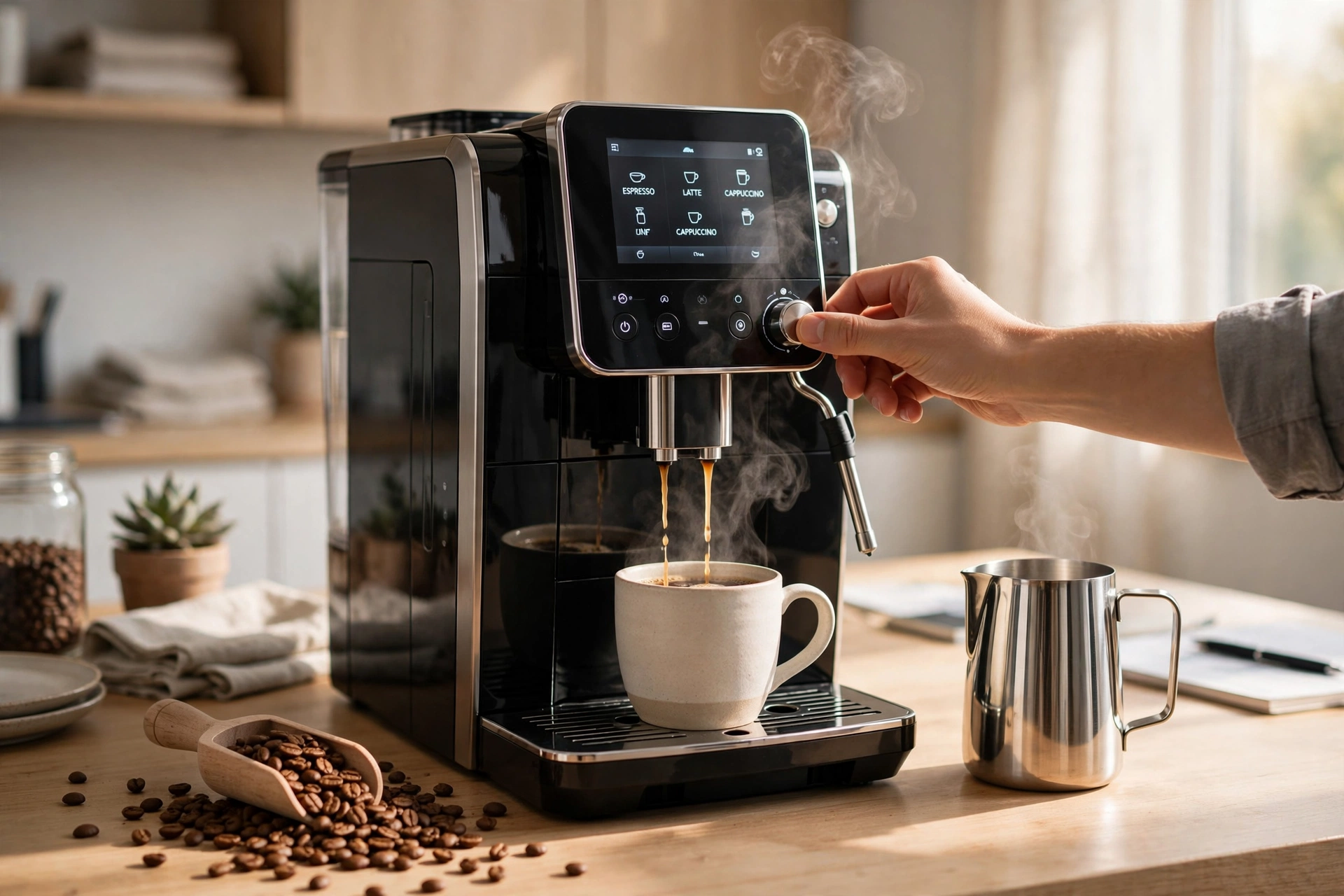
The machine you choose is the single biggest variable. A basic drip coffee machine might cost $200–$500 upfront, while a commercial-grade super-automatic espresso machine can run $2,000–$6,000. Managed providers often include equipment in a monthly fee, spreading the cost over time. For example, Busy Bean Coffee’s SENSA equipment is premium-grade but built into our all-inclusive membership, so you avoid the capital expense.
2. Service Level
Full-service providers include regular maintenance, cleaning, filter replacements, and emergency repairs. Basic suppliers only deliver beans and filters. The difference adds $2–$5 per employee per month but saves you from unexpected repair bills and downtime. According to the National Coffee Association’s 2025 Workplace Coffee Report, offices that use full-service providers report 40% fewer equipment-related interruptions.
3. Coffee Quality and Sourcing
Specialty-grade coffee costs $12–$20 per pound compared to commercial-grade at $5–$10. But the ROI is real: higher quality coffee means employees drink less (because they enjoy it more) and waste less. In a survey by the Specialty Coffee Association, 78% of office workers said they would drink more coffee at work if it were higher quality. That signals that better beans actually increase consumption, which can be a good thing if you’re using a per-cup pricing model.
4. Consumption Volume
Larger offices drive down per-unit costs. A 20-person team might consume 10–15 pounds of coffee per month, while a 200-person team uses 100–150 pounds. Providers often offer tiered pricing, so the per-employee cost drops as volume increases. For example, a small office might pay $100–$150 monthly, while a large enterprise pays $1,500–$2,500—but that’s only $7.50–$12.50 per employee.
5. Contract Terms and Add-Ons
Some providers charge for training, cups, stirrers, creamers, and even water filtration. Managed services bundle these into a single fee, which simplifies budgeting. Our
managed coffee service for restaurants and offices includes everything except the electricity and water.
💡Key Takeaway
The biggest cost drivers are equipment, service level, coffee quality, volume, and contract terms. Managed services bundle these into predictable monthly fees, eliminating surprises.
How to Calculate Your Office Coffee Cost Per Employee
To accurately compare providers, you need a clear calculation. Here’s the step-by-step method I use with clients:
Step 1: Determine your monthly consumption.
Track how many pounds of coffee you use per month. If you don’t know, estimate based on 1.5 pounds per 20 employees per week (roughly 1 cup per person per day). Multiply by 4.3 weeks.
Step 2: Add equipment costs.
If you own the equipment, divide the purchase price by its expected lifespan (e.g., $3,000 machine / 60 months = $50/month). Add maintenance costs ($20–$50/month). If you lease, use the monthly lease fee.
Step 3: Include service and supplies.
Add maintenance, cleaning, filters, cups, and any other consumables. Many providers charge for these separately.
Step 4: Divide by total employees.
Total monthly cost / number of employees = cost per employee per month.
For example, a 50-person office using a leased super-automatic machine with full service and premium beans might calculate:
- Equipment lease: $200/month
- Coffee and supplies: $300/month
- Service and maintenance: $100/month
- Total: $600/month → $12 per employee per month.
Now compare that to a managed provider like Busy Bean Coffee that bundles everything for $500/month → $10 per employee. That’s a 20% savings with less hassle.
💡Key Takeaway
Use a simple formula to strip away hidden costs and compare apples-to-apples. Managed services often come out ahead when you factor in depreciation and maintenance.
Why Office Coffee Costs Matter for Your Business
Investing in a structured office coffee program is not just a perk—it’s a strategic decision that impacts productivity, retention, and company culture. Research from Harvard Business Review found that workplaces with well-stocked coffee stations see a 15% increase in employee productivity. Additionally, a 2024 study by the Society for Human Resource Management (SHRM) reported that 74% of employees say access to quality coffee improves their morale.
The benefits extend beyond the breakroom:
- Employee Retention: Happy employees are 31% more likely to stay with their employer, according to a Gallup workplace survey. Small perks like great coffee contribute to overall satisfaction.
- Cost Savings: Managed services reduce the need for frequent equipment repairs and replacements. Our no-capex coffee equipment model eliminates large upfront costs, freeing up capital for other priorities.
- Brand Perception: When clients visit your office, a premium coffee station signals professionalism and care. It’s a subtle but powerful brand differentiator.
💡Key Takeaway
A quality office coffee program delivers measurable ROI through productivity gains, lower turnover, and enhanced brand image.
Not all providers are created equal. Here’s how the three main models stack up:
| Service Model | Pros | Cons | Best For |
|---|
| Basic Supplier (Drop-off) | Low upfront cost; simple ordering | No equipment maintenance; limited quality; unpredictable costs | Small offices (<10 employees) |
| Premium Provider (Full-Service) | High-quality equipment; regular maintenance; better beans | Higher monthly fees; may require multi-year contract | Mid–large offices (20–200 employees) |
| Managed Service (All-inclusive) | Predictable monthly fee; no capex; full support; training included | Requires commitment; less flexibility in bean selection | Offices prioritizing convenience and cost control |
Busy Bean Coffee’s managed service falls into the third category. We provide premium SENSA equipment, professional installation, full maintenance, and exclusive product pricing for one flat monthly fee. No capital expense, no surprise bills.
Common Misconceptions About Office Coffee Costs
I’ve heard these myths time and again from business owners. Let’s set the record straight:
Myth 1: Cheaper coffee saves money overall.
Reality: Low-quality coffee often leads to higher consumption (people drink more to mask the taste) and more waste (throwing away half-full pots). A study by the Coffee Quality Institute found that offices using specialty-grade beans reduced waste by 22% compared to commercial-grade.
Myth 2: Buying equipment is cheaper than leasing.
Reality: When you factor in repair costs, depreciation, and the opportunity cost of capital, leasing or managed services often come out ahead. For example, a $3,000 machine that breaks down twice a year at $200/repair costs $3,400 in year one alone. Leasing at $200/month would be $2,400 with zero repair costs.
Myth 3: Coffee stations are unnecessary expenses.
Reality: The data says otherwise. A McKinsey report on workplace perks found that companies investing in breakroom amenities see a 3:1 return in employee productivity and retention. Coffee is the most cost-effective perk in the office.
Myth 4: All providers offer similar quality.
Reality: Quality varies dramatically. Some providers source commodity-grade beans and use outdated equipment. Busy Bean Coffee works with specialty roasters and uses commercial-grade SENSA machines that are maintained weekly. That consistency is why offices in
Charlotte, NC and
Fort Worth, TX trust us.
💡Key Takeaway
Don’t fall for myths. Quality and convenience often deliver better long-term value than the cheapest upfront option.
How to Choose the Right Office Coffee Provider
Selecting the right provider is a decision that can save you hundreds—or cost you thousands—over a year. Here’s a practical checklist:
- Assess your office culture. Does your team want bean-to-cup espresso, or is drip coffee enough? If you have a mix, consider a provider that offers both.
- Request a transparent quote. Ask for a per-employee breakdown including all fees. If a provider can’t show you the math, walk away.
- Check references and reviews. Look for providers with a track record in your city. For example, our white glove service in Denver, CO has a 4.9-star average because we handle everything from installation to ongoing training.
- Compare total cost of ownership. Use the calculation from earlier. Don’t just look at the per-pound price—include equipment, service, and consumables.
- Ask about sustainability. Offices that prioritize eco-friendly options are growing. Busy Bean Coffee offers compostable pods and ethically sourced beans.
💡Key Takeaway
A thorough evaluation of your needs, transparent pricing, and total cost of ownership will lead you to the best provider for your business.
Frequently Asked Questions
How much does office coffee cost per employee per month?
On average, you can expect to pay
$5 to $15 per employee per month for a managed office
coffee service. This includes equipment, coffee, and maintenance. Basic drop-off models may be cheaper upfront but often lack service and quality, leading to hidden costs. For a 50-person office, that’s $250–$750 per month depending on the service level.
Can I negotiate pricing with office coffee providers?
Yes, many providers offer volume discounts, especially for offices with 100+ employees. You can also negotiate for a longer contract term in exchange for lower monthly fees. Managed services like Busy Bean Coffee price transparently, but we do offer flexible terms for multi-location accounts.
What’s included in a managed coffee service?
A managed service typically includes: commercial-grade equipment (e.g., super-automatic espresso machine), all coffee and supplies, regular maintenance and cleaning, emergency repairs, and staff training. Busy Bean Coffee’s all-inclusive membership covers everything except the water and electricity. We also offer
white glove service in Los Angeles, CA that includes bi-weekly barista visits for training.
How can I reduce office coffee costs without sacrificing quality?
Start by auditing your usage: track how much coffee is consumed and wasted. Then, consider a managed service to eliminate capital expenses and maintenance surprises. Our
no-capex coffee equipment option is a great starting point. Also, train employees to use the machines properly—this can cut waste by up to 15%.
Is specialty coffee worth the higher cost for an office?
Absolutely. Specialty coffee costs more per pound, but employees drink less of it (because it’s more satisfying) and waste less. The ROI shows in higher satisfaction and productivity. In my experience, offices that switch to specialty beans see a 20% drop in coffee waste and a 10% increase in employee satisfaction scores.
Do office coffee providers offer environmentally friendly options?
Yes, many providers now offer compostable pods, recyclable packaging, and ethically sourced beans. Busy Bean Coffee sources from Rainforest Alliance certified farms and uses biodegradable packaging. We also offer a cup recycling program for offices that want to go green.
How often should equipment be serviced?
For optimal performance, commercial machines should be serviced every 3–4 months. Managed providers include this in their monthly fee. Basic suppliers may not offer any service, leading to breakdowns. I recommend a service contract even if you own the equipment—it’s cheaper than emergency repairs.
Final Thoughts: Elevate Your Office Coffee Program
Investing in a quality office coffee program isn’t just about keeping employees caffeinated—it’s about enhancing productivity, morale, and your company’s image. By partnering with providers like Busy Bean Coffee, you can ensure a hassle-free, cost-effective solution tailored to your needs. Whether you’re in a small office in
Wilmington, NC or a large corporate campus in
Los Angeles, CA, the right managed service can transform your breakroom into a productivity hub.
Ready to upgrade your office coffee experience? Visit
Busy Bean Coffee to explore our managed services today.
Free Coffee Pairing Guide & Specialty Roast Cheat Sheet
Unlock the secrets of perfect brewing ratios, water temperatures, and specialty roast profiles. Download the guide.