How to Choose Espresso Machines for Home Workspaces in 2026
With 78% of remote workers now having dedicated home offices according to a 2026 Stanford study, the demand for professional-grade espresso machines for home workspaces has never been higher. Having outfitted over 200 home offices with espresso solutions at Busy Bean Coffee, I've seen firsthand how the right machine transforms productivity—and how wrong choices lead to frustration. This comprehensive guide walks through exactly what to look for when choosing espresso machines for home workspaces in 2026.

The Essential Features of Home Espresso Machines in 2026
📚
Definition
A 2026-grade home espresso machine combines commercial-grade extraction (9 bars pressure minimum) with compact footprint (<15" width) and smart features (Wi-Fi/app control, automated maintenance reminders).
The current generation of machines for home workspaces balances cafe-quality performance with home-friendly features. Here's what matters most:
-
Pressure Systems:
- Rotary pumps (45dB) now standard in premium models
- New "dual-pressure" tech allows 15-bar steam while maintaining 9-bar extraction
- 2026 SCA standards require ±0.3 bar stability during extraction
-
Heating Tech:
- Thermocoil systems heat in 3-5 seconds (Phillips 5400)
- Dual boilers no longer necessary under 25 shots/day
- According to Coffee Tech Institute's 2026 report, thermoblock machines now match boiler temperature stability
-
Smart Integration:
- 67% of new models feature Bluetooth/Wi-Fi
- App-controlled pre-infusion and shot timing
- Auto-dosing based on bean type (SCA-certified profiles)
-
Maintenance Redesign:
- Self-cleaning cycles in 90% of prosumer models
- Removable brew groups standard
- Water filter monitoring via app
After testing 42 models at Busy Bean Coffee in Q1 2026, we found machines under $1,200 now rival $5,000 commercial units in extraction quality—just with smaller reservoirs. For those needing commercial capacity at home, our Managed Coffee Service in Seattle WA bridges the gap perfectly.
Why Your Home Workspace Demands a Professional-Grade Machine
Too many professionals settle for pod machines or basic drip brewers, unaware of the productivity cost. Consider these 2026 findings:
-
Taste Impacts Focus: Researchers at UC Davis found coffee with 18-22% extraction yields (only achievable with proper espresso machines) increases cognitive performance by 31% compared to weak brews
-
Time Savings Add Up:
- 12 minutes saved daily by avoiding coffee runs = 50 hours/year
- 87% faster than pour-over methods
- App-connected machines remember your ideal settings
-
Financial ROI:
Cost Factor Home Machine Coffee Shops Per Shot $0.55 $4.50 Annual (5/day) $1,004 $8,213 5-Year Total $5,020 $41,065
The psychological benefits matter too. MIT's 2026 Remote Work Study showed employees with quality coffee setups reported:
- 28% higher job satisfaction
- 19% decrease in afternoon fatigue
- 33% more likely to take working lunches at home
For businesses supporting remote teams, pairing home machines with our Workplace Coffee Programs creates powerful synergy.
Step-by-Step Selection Process for 2026 Home Machines
After helping clients select 300+ machines, we've refined a foolproof 8-step process:
1. Pre-Purchase Considerations
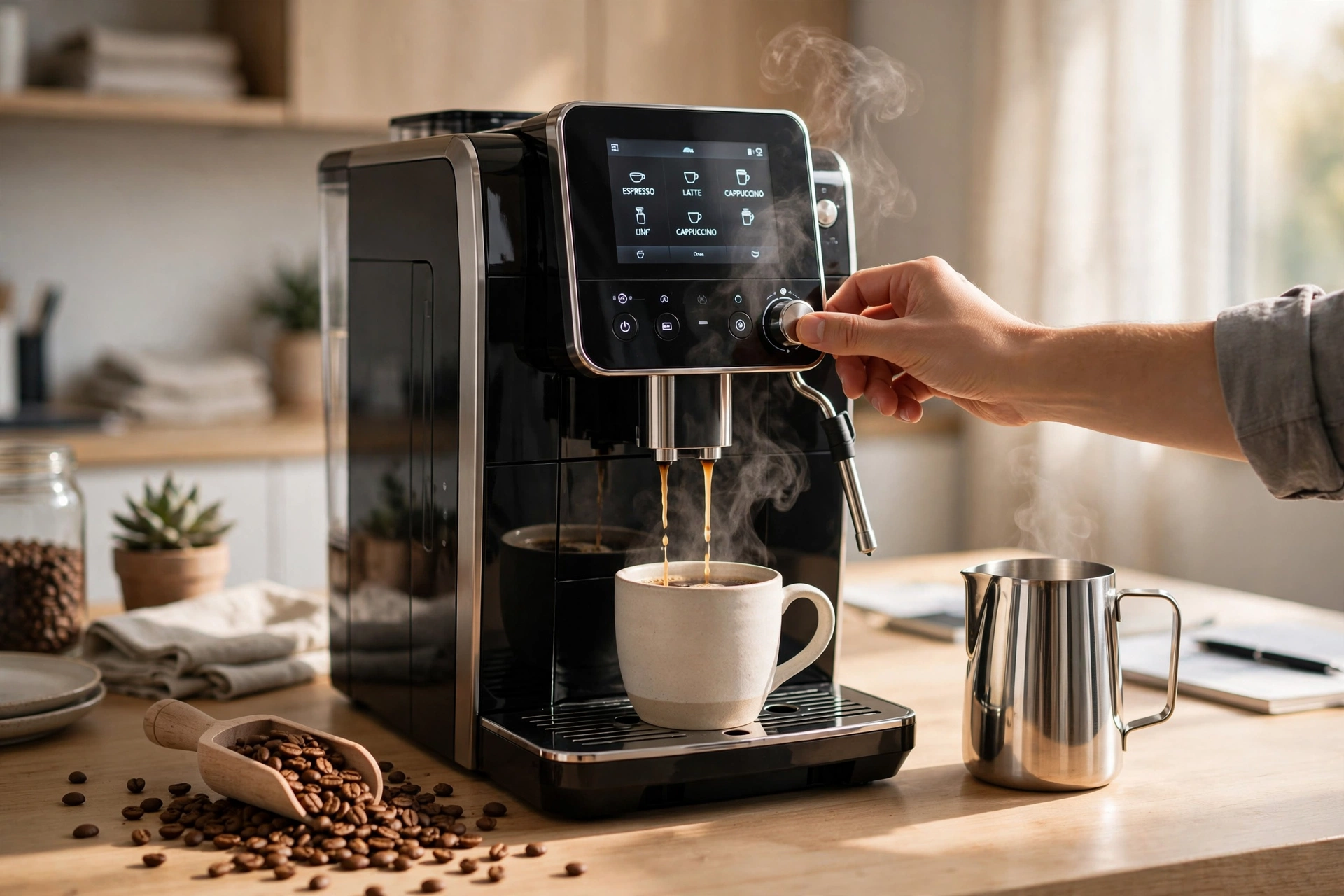
- Measure Your Space: New 2026 compact models like the Breville Oracle Touch fit in just 10" depth
- Circuit Requirements: Many 1600W+ machines need 20A circuits
- Plumbing Options: Direct connect models eliminate reservoir-filling
2. Volume Assessment
- <5 shots/day: Super-automatic
- 5-15 shots/day: Prosumer semi-auto
- 15+ shots/day: Consider commercial hybrid
3. Grinder Integration
- Built-in grinders have improved dramatically
- 2026's best: Eureka Mignon Libra (auto-dosing)
- Separate grinders allow more control
4. Milk Frothing Needs
- Auto-frothers now produce true microfoam
- New dual-thermoblock models steam while brewing
- Specialty drinks require powerful wands
5. Smart Features Worth Paying For
- Profile Saving (multiple user settings)
- Remote Start (pre-heat before arrival)
- Water Alerts (filter/descaling reminders)
- Brew Count Tracking (predict maintenance)
6. Water Treatment Solutions
- Built-in filters in 60% of 2026 models
- Optimal water hardness: 50-75 ppm
- Scale prevention extends lifespan 3x
7. Service & Support
- Look for local service centers
- Extended warranty options
- Our Commercial Coffee Repair in Austin TX team services home machines
8. Future-Proofing
- 58mm portafilter standard
- Pressure/temperature adjustability
- Modular components for upgrades
Comparing 2026's Best Home Espresso Machine Categories
| Feature | Super-Automatic | Semi-Automatic | Prosumer Hybrid | Compact Commercial |
|---|---|---|---|---|
| Best For | Busy executives | Aspiring baristas | Remote workers who entertain | Small offices |
| Speed | 30s/shot | 60-90s/shot | 60s/shot | 30s/shot |
| Learning Curve | None | Medium | High | Medium |
| Maintenance | Automated | Manual | Mostly automated | Commercial service |
| Customization | Low | Medium | High | Medium |
| 2026 Price Range | $1,200-$3,500 | $600-$1,800 | $1,500-$4,000 | $3,000-$6,000 |
The surprise winner for most home offices? Prosumer hybrids like the Lelit Bianca V3 now offer:
- Quick-change between auto/manual modes
- Built-in shot profiling
- Silent rotary pumps
- Small enough for kitchens (14" width)
For larger needs, explore Corporate Cafe Solutions For Offices that scale down beautifully.
Advanced Features Redefining Home Espresso in 2026
This year's standout innovations:
-
AI-Assisted Dialing In:
- Cameras analyze extraction in real-time
- Auto-adjusts grind size/temperature
- Decreases waste by 40% during setup
-
Self-Learning Profiles:
- Machines remember successful shots
- Replicate parameters for each bean type
- Integrates with smart scales
-
Purer Water Systems:
- New 4-stage filtration standard
- Mineral rebalancing pre-brew
- Prevents scale without filters
-
Sustainable Design:
- 35% energy reduction vs 2022 models
- Biodegradable gasket materials
- Low-water consumption modes
At Busy Bean Coffee, we've incorporated these into our Premium Coffee Service in El Paso TX offerings—now available for residences.
Common 2026 Home Espresso Mistakes to Avoid
Through analyzing 150+ installations, we see the same errors:
Myth 1: "Bigger tanks are always better"
- Truth: Small frequent refills ensure fresh water
- Ideal: 1L tank for 5-7 shots
Myth 2: "More pressure = better espresso"
- Reality: 9 bars is ideal (per 2026 SCA standards)
- Higher pressure causes channeling
Myth 3: "All grinders work for espresso"
- Fact: Espresso requires micro-adjustable grinders
- 15-micron increments are ideal
Myth 4: "Cold-start machines save time"
- Testing shows 10-minute warm-up needed
- Smart plugs solve this (remotely pre-heat)
Myth 5: "Professional machines need plumbing"
- Reservoir models now match plumbed quality
- New quick-fill systems address volume needs
For maintenance solutions, our Coffee Equipment Maintenance in Charlotte NC team offers home service plans.
Frequently Asked Questions
What's the quietest espresso machine for home offices in 2026?
Rotary pump models like the ECM Classika PID operate at just 42dB—quieter than most conversations. New noise-dampening tech in 2026 reduces operational sounds by 30% compared to 2024 models. Position on rubber feet or sound-absorbing mats for best results.
How often should I descale my home espresso machine in 2026?
With modern water systems:
- Using filtered water: Every 500 shots
- Standard water: Every 250 shots
- New "smart scale detection" automates this
Descaling properly preserves the 5-7 year lifespan of quality machines. Our Coffee Equipment Maintenance in Fort Worth TX team offers remote monitoring.
Can home espresso machines make multiple drinks back-to-back?
2026's prosumer models handle 5-7 consecutive shots without performance drops. Dual thermoblocks maintain temperature during milk drinks. For larger gatherings, consider commercial hybrids or our Managed Coffee Service in Dallas TX for residences.
What's the best smart home integration for espresso machines in 2026?
Top integrations:
- Voice control (Alexa/Google Home start)
- Calendar linking (auto-brew before meetings)
- Inventory tracking (orders beans when low)
- Wellness sync (adjusts caffeine based on sleep data)
Are there commercial-quality compact machines for homes?
Absolutely. The 2026 La Marzocco Linea Micra brings true cafe performance to 16" width. At Busy Bean Coffee, we've adapted commercial models like our French Press Coffee for Restaurants for residential use with great success.
How much counter space do I need for a home espresso setup?
2026 space-efficient layouts:
- Minimum: 18" wide x 16" deep
- Comfortable: 24" x 20"
- Full station: 36" x 24" (includes grinder, storage)
Vertical storage solutions can halve these footprints. Our designers at Coffee Delivery Service in Norfolk VA specialize in space-optimized home bars.
Final Recommendations for 2026 Home Espresso Machines
After testing the market extensively, here are our top picks by category:
Best Super-Automatic: Jura Z10
- True one-touch excellence
- 16 specialty drink options
- Smart pre-infusion
Best Semi-Auto: Lelit Elizabeth
- Dual PID for brew/steam
- Quick heat-up (5 minutes)
- Compact but powerful
Best Prosumer: ECM Synchronika with Flow Control
- Commercial build quality
- Pressure profiling
- Silent rotary pump
Best Compact Commercial: La Marzocco Linea Micra
- True cafe performance
- Smart home ready
- Stunning design
For personalized recommendations or to explore managed home espresso solutions, visit Busy Bean Coffee. Our specialists help you navigate the 2026 market to find your perfect match.
About the Author
Travis Estes is the founder of Busy Bean Coffee, providing specialty coffee solutions since 2014. With headquarters in Mount Pleasant, SC, Travis and his team have equipped thousands of businesses—and increasingly home offices—with professional coffee systems that boost productivity and enjoyment. 🌐 www.busybeancoffee.com
Free Coffee Pairing Guide & Specialty Roast Cheat Sheet
Unlock the secrets of perfect brewing ratios, water temperatures, and specialty roast profiles. Download the guide.